BXRT20–1Refrigerated trailer
- Nominal length
- 20ft
- Listed electrical supply
- 220V · single-phase · 40–60A
- Inventory temperature label
- 32°F
Temporary cold storage in Eugene, Oregon
Eugene refrigerated containers for rent can support a commercial kitchen after a walk-in cooler or freezer failure and during planned renovations. Refrigeration trailers and portable cold storage can also be discussed with mobile kitchen and dishwashing trailers where other facilities move. Restaurants, caterers, schools, hospitals, hotels and industrial kitchens can explore short-term rental or longer lease needs. Worldwide Refrigerated Container Rental Facilities serves Eugene, coordinating the equipment discussion and delivery around the actual site and dates. Share the products needing storage, required conditions and proposed space to request availability and a current project quote.
Emergency cooler or freezer failure in Eugene? A person answers rental inquiries 24/7. Availability and delivery timing are confirmed in your quote.
Plan your rental budget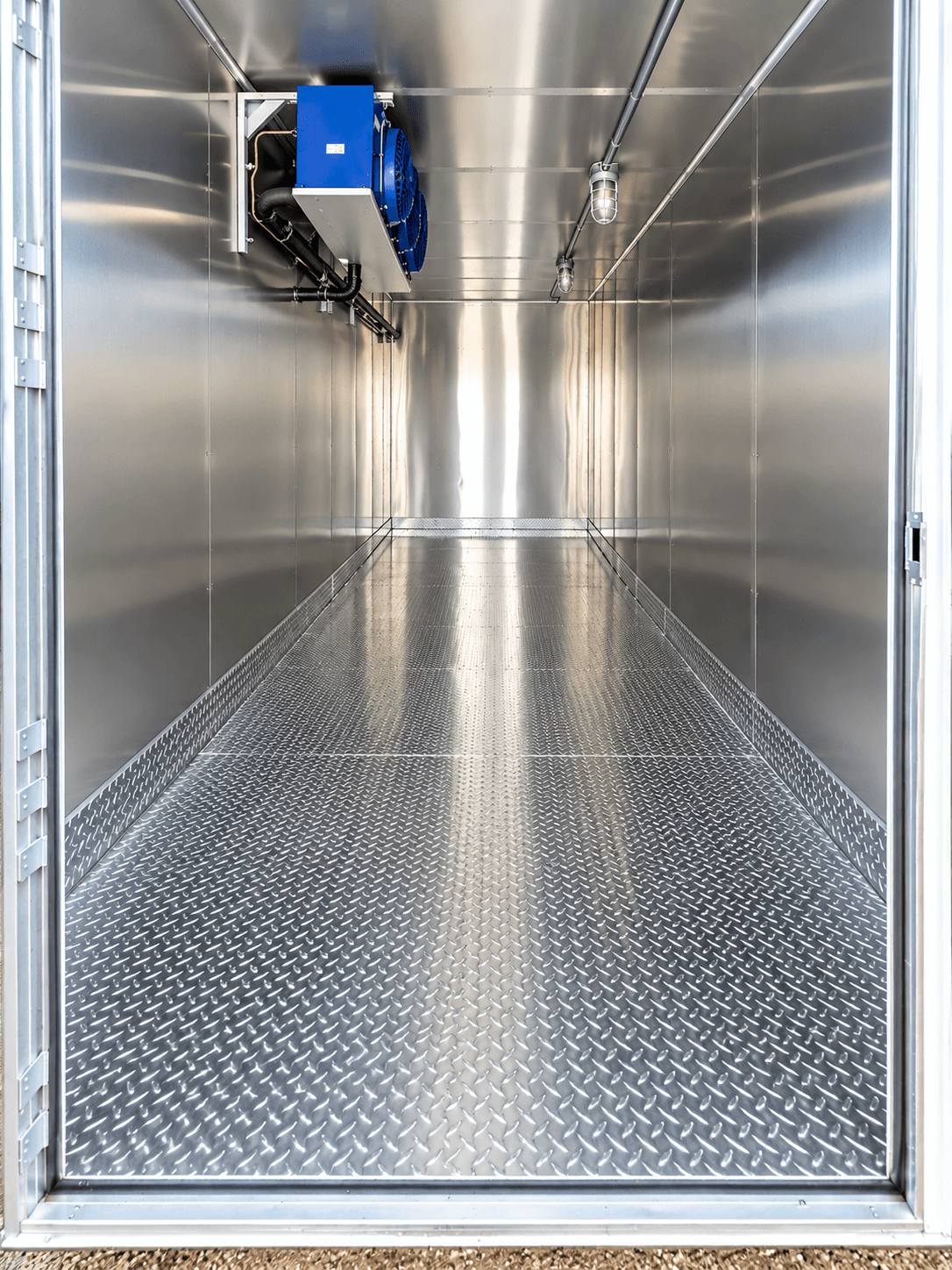
Compare the equipment
These published examples describe named company units. The supplied equipment, configuration and availability are confirmed for your project address.
Listed refrigeration trailer equipment: condensing unit, amps panel, lighting.
Equipment records reviewed October 19, 2026. Temperature labels are inventory labels, not verified operating ranges. Nominal length is a model label, not a measure of usable space or site footprint.
Renting a mobile refrigeration trailer in Eugene gives a school cafeteria somewhere to put chilled and frozen stock while a failed compressor, door or walk-in is repaired. Whether you rent for a weekend event or lease through a multi-month renovation, the rental period, delivery coordination and setup are confirmed in your quote. If cooking is also interrupted, a mobile kitchen trailer rental can sit beside the refrigeration, and a dishwashing trailer for rent can handle returned dishes.
Commercial customers can ask about portable refrigerated trailers, refrigeration containers and walk-in coolers or freezers for emergency, modular or temporary onsite use. A person answers rental inquiries 24/7, so an emergency in Eugene can be reported at any hour, including nights, weekends and holidays. Facilities in Salem, Bend, Beaverton and Hillsboro often ask the same questions as Eugene operators: how long the rental will last, whether a lease makes sense and what the site needs for power and truck access. Cooler and freezer rentals are matched to the stock: chilled produce, frozen protein or both. Walk-in coolers, walk-in freezers and refrigerated trailers cover most requests.
More than 346,000 people attended the 2022 Oregon State Fair in Salem, held August 26 through September 5, a 63 percent increase over 2021. Caterers and concession operators in Keizer, Aumsville and Independence often need onsite refrigeration for a few days, then release the trailer as soon as the event ends. Caterers in Jefferson and Millersburg can rent portable refrigeration for a single event and return it when the guests leave. Refrigerated trailers for rent and portable walk-in coolers hold drinks, produce and prepared food at crowded events, and a refrigeration container suits a longer festival run. Portable refrigerated trailers, refrigeration containers and outdoor walk-in refrigeration units can all be discussed for the same job. A mobile dishwashing trailer and a mobile kitchen trailer are often requested together, with a refrigerated trailer for the stock. Mobile kitchens, dishwashing trailers and refrigerated trailers for rent can be quoted together as temporary facilities. This is published public context, not company work; each request is quoted for its own address and dates.

The Labor Day fires of September 2020 burned more than a million acres in Oregon and destroyed more than 4,000 homes, and the Almeda Fire alone destroyed more than 2,600 homes in Talent, Phoenix, Medford and Ashland. A walk-in failure at a restaurant in Central Point, a hospital kitchen in Eagle Point or a hotel in Grants Pass usually calls for the same first step: a refrigerated trailer rental or container lease sized to the stock. A restaurant in Gresham or a care home in Portland can call about an emergency freezer rental as soon as the temperature alarm goes off. A failed commercial walk-in freezer after an outage is an emergency call, and walk-in coolers, walk-in freezers and refrigerated trailers are the first rentals discussed. Kitchen, dishwashing and refrigeration rentals are separate equipment, and each can be rented short-term or leased long-term. Nothing here assumes available equipment or a delivery time; a person answers rental inquiries 24/7 and the quote confirms the details.
ODOT’s second-quarter 2026 major projects report lists the I-5 Rose Quarter project in Portland, estimated at $1.96 billion to $2.08 billion, among projects in construction, along with the Abernethy Bridge seismic upgrade on I-205 and OR 18 Newberg-Dundee Bypass Phase 2A. Temporary facilities for a remodel in Barlow, Philomath or King City usually combine refrigeration, a mobile kitchen for rent and, if dishes are affected, a dishwashing trailer lease. Facility teams in Tigard can lease portable refrigeration as temporary facilities while a permanent cold room is rebuilt. On long projects, contractors compare a refrigerated trailer lease with a refrigeration container for bulk crew supplies. Onsite temporary facilities can include portable refrigeration, trailers for rent and, if dishes are affected, a dishwashing trailer. A dishwashing trailer lease can be added to the same quote when returned dishes also need washing. The context above comes from public sources and does not describe a completed job; availability and delivery are confirmed in the quote. Outdoor walk-in refrigeration and refrigerated trailers are discussed first when stock is at risk. Commercial refrigeration trailers and cooler or freezer rentals are the core of the service. Walk-in coolers, walk-in freezers and refrigerated trailers cover most requests.
Refrigeration is an emergency need: every call about a failed commercial walk-in freezer or refrigeration unit is an emergency call. A mobile dishwashing trailer and a mobile kitchen trailer are often requested together, with a refrigerated trailer for the stock. Outdoor walk-in refrigeration needs level ground and power nearby, so a long-term lease starts with a site conversation. Portable refrigeration is not a permanent fix; it is a set of temporary facilities for the weeks between a failure and a repaired walk-in freezer.
Emergency refrigeration in Eugene can be rented for a few days or leased long-term, depending on how long the commercial walk-in is down. Short-term or long-term, trailers for rent in Eugene are quoted for the address, the stock and the dates. Dishwashing trailer rentals and kitchen trailer rentals can be quoted alongside refrigerated trailers for rent when the whole kitchen is down. Dishwashing and kitchen outages often arrive together, so dishwashing trailer rentals and a mobile kitchen for rent are quoted beside emergency refrigeration.
Emergency refrigeration can be arranged as a refrigerated trailer, a refrigeration container or a portable walk-in cooler, depending on the stock and the site. Emergency refrigeration rental, trailer rentals and trailer leasing are all handled through one inquiry, so one call can cover every option. A portable refrigerated trailer suits most emergency calls, while a refrigeration container fits a longer, more stationary need. A dishwashing trailer, a mobile kitchen trailer and a refrigerated trailer for rent can each be short-term or long-term, depending on the repair.
A mobile kitchen trailer for rent can sit beside onsite refrigeration, so cooking and cold storage are planned together. Onsite temporary facilities can include portable refrigeration, a mobile kitchen trailer and, if dishes are affected, a dishwashing trailer. Kitchen, dishwashing and refrigeration rentals are separate equipment, and each can be rented short-term or leased long-term. A dishwashing trailer lease can be added to the same quote when returned dishes also need washing.
Modular, mobile or portable, the equipment is chosen to fit the work that continues at the site. Emergency refrigeration, onsite and temporary, is meant to bridge the gap until the commercial walk-in freezer is repaired or replaced. Outdoor walk-in refrigeration can be set up beside the building as temporary facilities, so staff keep working while the permanent walk-in cooler or walk-in freezer is repaired. Short-term or long-term, the same refrigerated trailer rental starts from the address, the stock and the dates.
Portable refrigerated trailers, refrigeration containers and outdoor walk-in refrigeration units can all be discussed for the same emergency. Emergency refrigeration rental covers walk-in coolers, walk-in freezers and refrigerated trailers for commercial kitchens, warehouses and plants.
A caterer’s ingredients can arrive before the public program opens, with several preparation teams drawing from the same temporary room. Describe the greatest quantity held at once, its chilled or frozen requirements and the busiest access period. Guest numbers alone do not establish the usable layout needed.
For an event project in Springfield, show where stock is actually received and where preparation happens. The equipment discussion should address the load held at its proposed position rather than assume the public service address is the storage location. This helps compare packages, carts and the staff route with the actual configuration.
For rent during food-service work, the 20ft Refrigerated Container guide sets out the next questions to settle, starting with the ground and drainage beneath the unit and then how to organize stock for a longer stay.
Receiving can begin before service, and remaining goods may need storage while the preparation area is cleared afterward. Include those stages in the intended period. A useful arrangement follows the stock through the operation instead of tying collection automatically to public closing time.
Readers in Eugene may also want to compare how other nearby cities approach their projects. Corvallis’s guide focuses on commercial food-service, and a separate reading is Albany’s guide on business continuity. Neither guide describes Eugene itself, and both depend on their own site details.
A catering project in Creswell should also consider how other suppliers change access during setup and clearing. Compare the proposed position with those movements and the route staff use to retrieve ingredients. The unit should remain practical when the site is busiest, not only appear convenient while the area is empty.
For hospitality teams in Eugene or Junction City, Oregon, breakfast service and an evening function can draw on shared ingredients at different points in the day. Have the service lead record which supplies must remain together and who updates the plan when menus or supplier orders change.
When a Eugene commercial cooler stops working, identify the products needing an alternative now and the deliveries due during the repair. Separate chilled and frozen loads and any handling requirements. The rental discussion can address that operating picture while the contractor assesses the permanent system.
Keep the proposed period connected to the point when permanent storage is ready for normal use. Staff may need to transfer goods back after repair work ends. One contact coordinating changes helps temporary refrigeration support the full interruption rather than a finish date estimated before the fault was fully understood.
For an institutional kitchen renovation in Junction City, refrigeration may move before cooking or dishwashing does. Map the functions that continue and the route from receiving to preparation through each construction stage. A temporary position should fit that working layout.
Where a mobile kitchen or dishwashing trailer is also considered, give each facility a separate role and dates. Their actual configurations and connections need individual review while the combined staff routes should make sense together. The final stock transfer back into the permanent room belongs in the same operational sequence.
NOAA describes Oregon’s wetter west, drier interior and western rainfall concentrated from autumn through spring. Include the full expected rental period and known property drainage or seasonal access concerns when discussing an outdoor arrangement.
The equipment proposal should identify the configuration, connections and placement requirements actually offered. Review these with daily ingredient retrieval and the approach for arrival and collection. Regional climate information helps frame practical questions, while the actual unit and property conditions remain the basis for deciding whether the proposed position works.
A current quote should explain the equipment, agreed period, transport and site-dependent items. The calculator estimates a range from published rates and adds a setup and delivery starting amount, while collection, taxes and site charges stay separate. Compare the complete scope against the same stock and working route.
Discuss extensions and collection arrangements before confirming, especially where repairs or a renovation can change the end. Clear responsibilities help the operating and property teams manage the final transfer back into normal storage. The temporary room can then support the whole working requirement, from the first incoming order until it is cleared.
Before you book
The largest stock load may occur when incoming orders overlap with preparation, before public service starts. Describe that peak, required product conditions and how staff retrieve goods. The actual equipment layout can then be compared with the working operation rather than guest numbers or event hours alone.
Identify the address receiving and holding ingredients, the load kept there and the route to preparation. A service location does not automatically determine where temporary refrigeration is needed. Describe each site’s role so the equipment and transport discussion addresses the actual proposed storage arrangement.
Describe the stock transfer and clearance needed before equipment can leave, then discuss that working period in the quote. Public service ending or repair work finishing may precede the unit being empty. Confirm collection and any extension process rather than assuming those dates are automatically identical.
Both short-term rentals and longer leases of a mobile refrigeration trailer can be discussed for Eugene. Include the address, how a truck can reach the site, the power available and the temperature the product must hold. Availability, delivery coordination and the rental period are confirmed in the quote for your address.
Mobile and modular refrigeration, from refrigerated trailers for rent to a refrigeration container lease, can be discussed for short-term or long-term needs. A commercial walk-in freezer failure in Eugene is an emergency call, and onsite temporary refrigeration is how most such calls begin. Refrigeration is an emergency need, so describe the failed commercial unit and the stock at risk. The quote confirms availability, delivery and the rental period for the site.
These public references inform the planning examples; equipment availability and delivery arrangements are confirmed for your address.
Temporary refrigeration, kitchens and dishwashing can support many kinds of food-service operations. Each setting below starts with its own schedule, stock and site questions, and every project is reviewed individually.
Hotels, restaurants and resorts can plan temporary refrigeration around breakfast, banquet and dinner service when a walk-in cooler fails or a kitchen is refurbished.
Hospital, nursing home and care-facility kitchens can describe meal schedules, delivery times and displaced stock so temporary storage follows the food-service routine.
Municipal, county and public-building food-service teams can outline receiving arrangements, responsible contacts and project dates before a quote is prepared.
Dining facility managers can explain the products displaced, the receiving arrangements and the proposed period, then review availability and terms with our team.
Schools, colleges and universities can plan around term dates, serving windows and campus kitchen renovations so meal service can continue during repairs or construction.
Plant cafeterias and employee dining areas can describe shift patterns and staged building work so temporary cold storage can be reviewed against the working schedule.
Caterers and venues can plan preparation windows, event days and overflow ingredients, and describe how stock moves between storage, the kitchen and service.
Producers, wholesalers and distributors can describe loading, staging and storage needs when a cooler breaks down or demand temporarily exceeds capacity.
These examples describe planning situations. Equipment, availability and terms are confirmed in a project quote.
Cold storage is only one part of a project. These are the questions we work through with you before anything is booked.
Start with refrigerated containers and refrigeration trailers, then add a temporary kitchen or dishwashing trailer when the project needs one, all in a single conversation.
Access, utilities and the intended position are reviewed before delivery is arranged, so the equipment is matched to your site rather than the other way around.
Whether a walk-in cooler failed this morning or a renovation is months away, describe the real situation and plan around the stock, dates and people involved.
Planning guides cover all 50 states and more than 700 cities. Your address is then confirmed for equipment and delivery.
Use the rental calculator for a rate-range estimate and setup amount, then request a project quote that confirms availability, transport and the rental period.