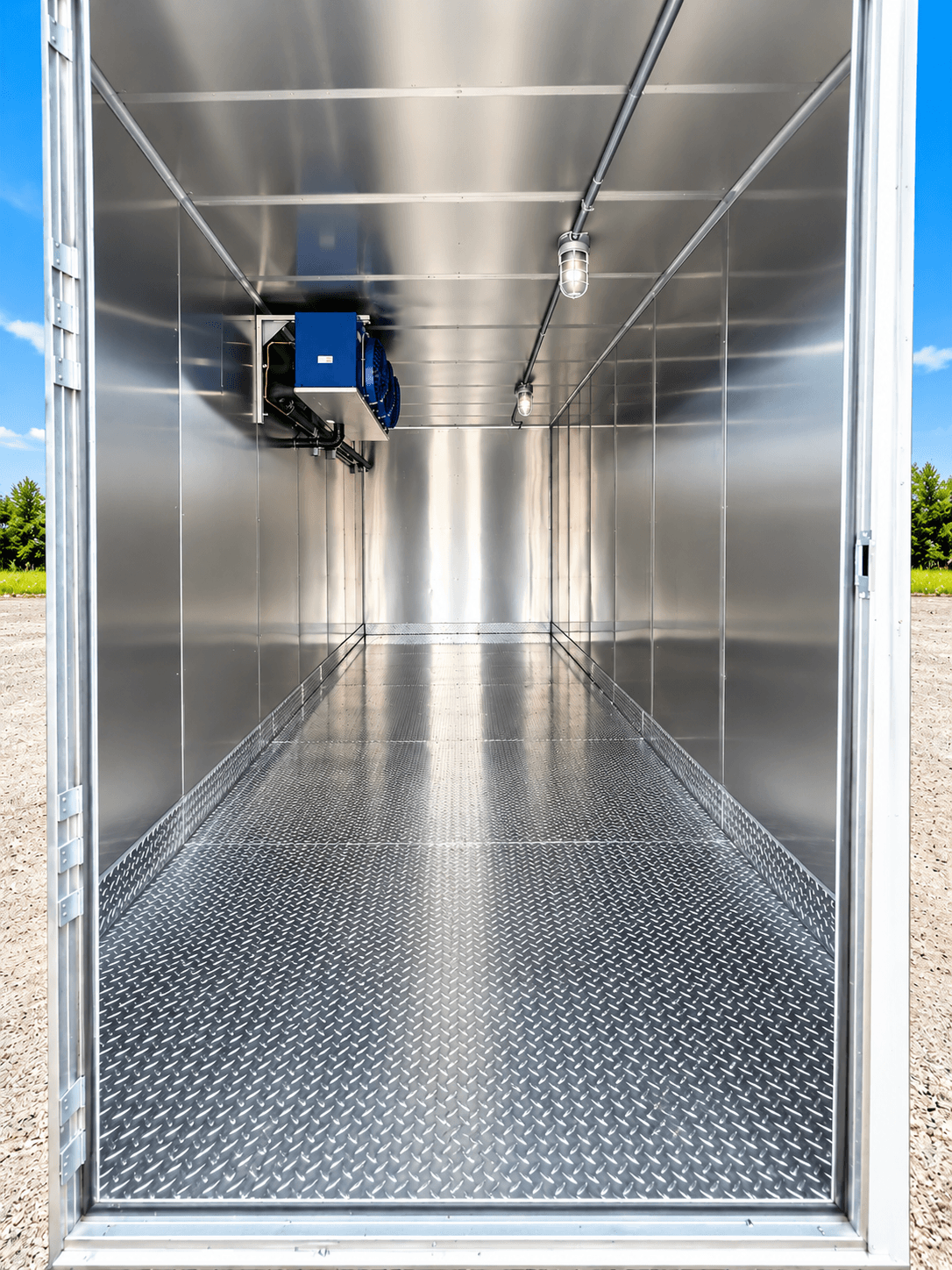
BXRT20–1Refrigerated trailer
- Nominal length
- 20ft
- Listed electrical supply
- 220V · single-phase · 40–60A
- Inventory temperature label
- 32°F
Temporary cold storage in Boulder, Colorado
Boulder refrigerated container rentals start with the food that needs another reliable storage position after a walk-in cooler or freezer breaks down. Kitchen and dishwashing needs can be discussed when preparation or ware cleaning is also displaced. Worldwide Refrigerated Container Rental Facilities serves commercial and industrial inquiries, including a university dining operation. Emergency repairs and planned renovations need different schedules; short-term rental and longer lease requests should follow the actual stock movement. Describe delivery-day ingredients and separate stock for catered meetings, the intended dates and delivery access. Tell us the address and available site services so we can review coordination and provide availability and a project quote.
Emergency cooler or freezer failure in Boulder? A person answers rental inquiries 24/7. Availability and delivery timing are confirmed in your quote.
Plan your rental budget
Compare the equipment
These published examples describe named company units. The supplied equipment, configuration and availability are confirmed for your project address.
Listed refrigeration trailer equipment: condensing unit, amps panel, lighting.
Equipment records reviewed October 19, 2026. Temperature labels are inventory labels, not verified operating ranges. Nominal length is a model label, not a measure of usable space or site footprint.
Emergency portable refrigerated trailer rentals in Boulder are used for breakdowns first, but the same equipment can be leased for renovations, events and seasonal storage. Emergency rentals and planned leases are quoted from the same details: the product, the temperature it must hold, the address and the dates. Kitchen outages often bring more than one need: a mobile kitchen for rent for cooking, a dishwashing trailer lease for warewashing and refrigerated storage for the ingredients.
Commercial customers can ask about portable refrigerated trailers, refrigeration containers and walk-in coolers or freezers for emergency, modular or temporary onsite use. Setup, delivery and the rental period are reviewed for each address rather than assumed. Outdoor walk-in refrigeration and refrigerated trailers are discussed first when stock is at risk. Calls about a failed walk-in cooler or freezer are answered by a person around the clock, and delivery timing and equipment availability are confirmed once the details are reviewed. A site in Thornton, Lakewood and Denver follows the same steps as one in Boulder: describe the stock, give the address and dates, and compare a short-term rental with a longer lease in the quote.
The Great American Beer Festival at the Colorado Convention Center in Denver brings more than 600 American craft brewers together for tasting sessions. Seasonal growers and packers in Glendale, Aurora and Centennial can compare a short-term refrigerated trailer rental with a long-term container lease for harvest and holiday peaks. Distributors in Cherry Hills Village can compare a short-term refrigerated trailer rental with a longer lease for outdoor walk-in refrigeration. Refrigerated trailers for rent and portable walk-in coolers hold drinks, produce and prepared food at crowded events, and a refrigeration container suits a longer festival run. Commercial refrigeration rentals are quoted for the actual address, so power, access and the rental period are confirmed before delivery. Dishwashing trailer rentals and warewashing capacity are quoted beside the kitchen and refrigeration when the whole food-service area is affected. A mobile dishwashing trailer and a mobile kitchen trailer are often requested together, with a refrigerated trailer for the stock. Mobile kitchens, dishwashing trailers and refrigerated trailers for rent can be quoted together as temporary facilities. Nothing here assumes available equipment or a delivery time; a person answers rental inquiries 24/7 and the quote confirms the details.
A Boulder County assessment of the December 30, 2021 Marshall Fire counted 1,084 residential structures destroyed, 550 in Louisville, 378 in Superior and 156 in unincorporated Boulder County, with losses estimated at $513 million. Caterers in Broomfield and Northglenn often need cold storage rental for a single event, while a commissary in Federal Heights may need a longer lease through a busy season. A hotel or grocery in Frederick with a failed cooler can ask about renting a refrigerated trailer. After an outage or storm, refrigerated trailers for rent and walk-in freezers protect frozen stock first, and the quote confirms equipment and delivery. Walk-in coolers hold chilled stock and walk-in freezers hold frozen stock, so the rental should match whichever one is needed. Kitchen, dishwashing and refrigeration rentals are separate equipment, and each can be rented short-term or leased long-term. A dishwashing trailer lease can be added to the same quote when returned dishes also need washing. These are public facts about the area, not a record of company jobs; equipment, availability and delivery are confirmed in the quote.
KRDO reports that the Marshall Fire surpassed the 2013 Black Forest Fire near Colorado Springs as Colorado’s most destructive, and that the 2012 Waldo Canyon Fire in Colorado Springs destroyed 345 homes. Teams in Manitou Springs, Fountain and Monument can describe a failed walk-in cooler at any hour to a person who answers rental inquiries 24/7, then compare a short rental with a lease in the quote. Emergency refrigeration comes first after a storm or outage: a portable refrigerated trailer, a refrigeration container or outdoor walk-in refrigeration can hold stock while power and repairs catch up. A short-term emergency rental can become a long-term lease at the same address, as long as the quote says so. When cooking and dish washing stop together, a mobile kitchen, a dishwashing trailer and portable refrigeration can be one request. This is published public context, not company work; each request is quoted for its own address and dates.
The final phase of the Great Hall program at Denver International Airport is a roughly $1.3 billion project expected to finish between spring 2027 and summer 2028, and its triple escalator from security to the train platform closed for construction on June 8, 2026, until about March or April 2027. Construction crews and facility managers near Lakeside, Edgewater and Greenwood Village may lease refrigerated containers to hold food for a work site or a temporary dining area. Trailer leasing covers the length of a project: a refrigerated trailer for supplies and a refrigeration container for bulk stock, short-term or long-term. Outdoor walk-in refrigeration needs level ground and power nearby, so a long-term lease starts with a site conversation. The context above comes from public sources and does not describe a completed job; availability and delivery are confirmed in the quote.
A dishwashing trailer, a mobile kitchen trailer and a refrigerated trailer for rent can each be short-term or long-term, depending on the repair. Kitchen, dishwashing and refrigeration rentals are separate equipment, and each can be rented short-term or leased long-term. Trailer rentals, refrigerated trailers for rent and trailer leasing are all discussed with the address and the dates in hand. Emergency refrigeration, onsite and temporary, is meant to bridge the gap until the commercial walk-in freezer is repaired or replaced.
Short-term or long-term, trailers for rent in Boulder are quoted for the address, the stock and the dates. Emergency refrigeration rental, trailer rentals and trailer leasing are all handled through one inquiry, so one call can cover every option. Dishwashing and kitchen outages often arrive together, so dishwashing trailer rentals and a mobile kitchen for rent are quoted beside emergency refrigeration. In Boulder, emergency refrigeration usually means a refrigerated trailer, a refrigeration container or a portable walk-in cooler matched to the stock.
Outdoor walk-in refrigeration needs level ground and power nearby, so a long-term lease starts with a site conversation. Refrigeration is an emergency need: every call about a failed commercial walk-in freezer or refrigeration unit is an emergency call. Refrigeration containers are often chosen for long-term storage, while refrigerated trailers are chosen for short-term emergencies; both can be rented. A mobile dishwashing trailer and a mobile kitchen trailer are often requested together, with a refrigerated trailer for the stock.
Portable refrigeration is not a permanent fix; it is a set of temporary facilities for the weeks between a failure and a repaired walk-in freezer. Outdoor walk-in refrigeration can be set up beside the building as temporary facilities, so staff keep working while the permanent walk-in cooler or walk-in freezer is repaired. A commercial kitchen closed for repairs may need a mobile kitchen trailer lease, a dishwashing trailer and emergency refrigeration at the same time. Emergency refrigeration for commercial kitchens often starts with a portable refrigerated trailer and ends with a longer lease if repairs take time.
Emergency refrigeration rental covers walk-in coolers, walk-in freezers and refrigerated trailers for commercial kitchens, warehouses and plants. Temporary facilities for a commercial site usually mean refrigeration first, then a mobile kitchen or dishwashing trailer if cooking or washing is also interrupted. Onsite temporary facilities can include portable refrigeration, a mobile kitchen trailer and, if dishes are affected, a dishwashing trailer. A commercial walk-in freezer failure in Boulder is an emergency call, and onsite temporary refrigeration is how most such calls begin.
A mobile, modular or portable refrigeration setup in Boulder is chosen to match the walk-in cooler or freezer that failed. Dishwashing trailer rentals and kitchen trailer rentals can be quoted alongside refrigerated trailers for rent when the whole kitchen is down.
In Boulder, begin with a cooler fault ahead of a busy teaching day. A dining team should show the stock needed for fixed service periods separately from optional meeting orders. The proposed outside position must remain usable during staff replenishment, not merely during an early receiving visit. Record the time the permanent refrigeration stopped working and the goods still held there. Current product decisions stay with the operator’s responsible team. Boulder’s official history documents the September 2013 flood.
A university meal period may be fixed while optional catered meetings can be rescheduled. If refrigeration becomes unavailable, identify those commitments separately before moving products. The dining team should show the stock needed for the next main service and the goods still held for other bookings, with the next supplier arrival included in the same receiving decision.
Larger commercial food operations can review the 40ft Refrigerated Container guide, which explains how to confirm that a site can receive a unit of that length and how to divide a large interior between teams.
Boulder records the December 17, 2024 Alpine-Balsam groundbreaking ahead of flood-mitigation and Western City Campus construction in 2025. Redevelopment combines building and site-access decisions. Use the published milestone as context for coordination at Boulder, without transferring its schedule to another address. A refrigeration request needs the food operation’s own acceptance sequence. The named project is not presented as a completed rental job or an equipment recommendation for its owner.
Readers in Boulder may also want to compare how other nearby cities approach their projects. Longmont’s guide focuses on recovery and facility work, citing the City of Longmont entry “2013 flood and recovery record”, and a separate reading is Westminster’s guide on catering food-service. Treat each as background for your own questions rather than a description of conditions in Boulder.
A campus opening can include conferences before the normal teaching calendar begins. The kitchen operator should identify those first services and tell the dishwashing team which rooms will support them. Review refrigerated quantities across the largest receiving overlap, including the reserve still held outside when staff start preparing the next fixed meal period.
A food distribution operator in Boulder or Louisville, Colorado, may need a fallback receiving arrangement if supplier arrivals continue before the permanent holding area is handed back. Confirm the stock check and record transfer needed at handback so the operator can reconcile products moving into the permanent working area.
A Boulder operator considering a dining-area mechanical refurbishment should begin with the stock movement. Summer work can overlap conferences and short programs even when normal classes stop. Use the actual food-service calendar when defining the removal, temporary operation and return stages. Review refrigeration around the operating sequence, including any goods that return before the rest of the refurbishment is finished.
For another comparison, the guide for operators in Arvada covers planning during renovations. It describes a different property and is useful mainly for the questions it raises.
Summer refurbishment does not automatically mean food operations stop. Ask the kitchen manager to identify short programs, staff events and regular meals that continue during the work, then coordinate dishwashing returns through the usable rooms. Keep refrigeration through testing and acceptance of the affected permanent storage, with the first full returning service recognized separately.
At the Boulder property, photograph and measure the proposed entrance while explaining pedestrians crossing a campus service area. Receiving in Louisville may follow another timetable, and a Superior manager should provide the entrance actually used by staff. Describe the Lafayette address independently when another facility belongs to the same operator.
Pedestrians may cross a campus service area throughout the working day. Have the site representative confirm the refrigerated position and the receiver’s approach, with a staff transfer route that remains usable between meal periods. Review cold-storage connections at that same position and update the instruction if construction fencing changes before delivery or collection.
The proposed Boulder rental period should account for the first full service period after permanent-room testing. Supply the load, conditions, opening transfer and final return date, with uncertain milestones marked as such. Ask for the refrigerated equipment and transport assumptions in writing so later revisions can be compared against the original operating plan.
Ask the Boulder quotation to follow the first full service after permanent-room acceptance, rather than the academic term date alone. Explain which goods remain outside during that transition and how a changed program is communicated. The refrigeration rate should be written with transport, collection, extension terms and site responsibilities, so proposals can be compared against the same food-service calendar.
Before you book
Describe delivery-day ingredients and separate stock for catered meetings and the first full service period after permanent-room testing. Explain the failed refrigeration, current goods and required conditions, with the first supplier arrival and the person making the receiving decision. That gives the proposal an operating sequence to review.
For a university dining operation, align meal-period demand with the stock removed during repairs. Kitchen and dishwashing requests depend on the functions actually displaced. Review the refrigerated position against the full work period, including the final stock return and any change to the accepted program.
Tell the Boulder property team about delivery-day ingredients and separate stock for catered meetings and explain pedestrians crossing a campus service area. Availability and charges require an address-specific refrigeration proposal. Confirm the receiving contact, site services and conditions before accepting the arrangement; a public project notice cannot supply those details.
Refrigeration and a mobile kitchen trailer can be requested together, and a dishwashing trailer can be included when warewashing is also interrupted. Tell the team the address, what is stored, the target temperature and when the permanent unit should be back. Availability, delivery coordination and the rental period are confirmed in the quote for your address.
Commercial customers can ask about refrigerated trailers for rent, refrigeration containers, portable walk-in coolers and walk-in freezers, with onsite delivery coordination. Modular, mobile or portable, the equipment is chosen to fit the work that continues at the site. For Boulder kitchens, plants and warehouses, trailer leasing and trailer rentals are two ways to get the same portable refrigerated storage. Every call about a failed commercial walk-in freezer or refrigeration unit is an emergency call, and a person answers rental inquiries 24/7. Equipment, availability and delivery timing are confirmed in the quote.
These public references inform the planning examples; equipment availability and delivery arrangements are confirmed for your address.
Temporary refrigeration, kitchens and dishwashing can support many kinds of food-service operations. Each setting below starts with its own schedule, stock and site questions, and every project is reviewed individually.
Hotels, restaurants and resorts can plan temporary refrigeration around breakfast, banquet and dinner service when a walk-in cooler fails or a kitchen is refurbished.
Hospital, nursing home and care-facility kitchens can describe meal schedules, delivery times and displaced stock so temporary storage follows the food-service routine.
Municipal, county and public-building food-service teams can outline receiving arrangements, responsible contacts and project dates before a quote is prepared.
Dining facility managers can explain the products displaced, the receiving arrangements and the proposed period, then review availability and terms with our team.
Schools, colleges and universities can plan around term dates, serving windows and campus kitchen renovations so meal service can continue during repairs or construction.
Plant cafeterias and employee dining areas can describe shift patterns and staged building work so temporary cold storage can be reviewed against the working schedule.
Caterers and venues can plan preparation windows, event days and overflow ingredients, and describe how stock moves between storage, the kitchen and service.
Producers, wholesalers and distributors can describe loading, staging and storage needs when a cooler breaks down or demand temporarily exceeds capacity.
These examples describe planning situations. Equipment, availability and terms are confirmed in a project quote.
Cold storage is only one part of a project. These are the questions we work through with you before anything is booked.
Start with refrigerated containers and refrigeration trailers, then add a temporary kitchen or dishwashing trailer when the project needs one, all in a single conversation.
Access, utilities and the intended position are reviewed before delivery is arranged, so the equipment is matched to your site rather than the other way around.
Whether a walk-in cooler failed this morning or a renovation is months away, describe the real situation and plan around the stock, dates and people involved.
Planning guides cover all 50 states and more than 700 cities. Your address is then confirmed for equipment and delivery.
Use the rental calculator for a rate-range estimate and setup amount, then request a project quote that confirms availability, transport and the rental period.