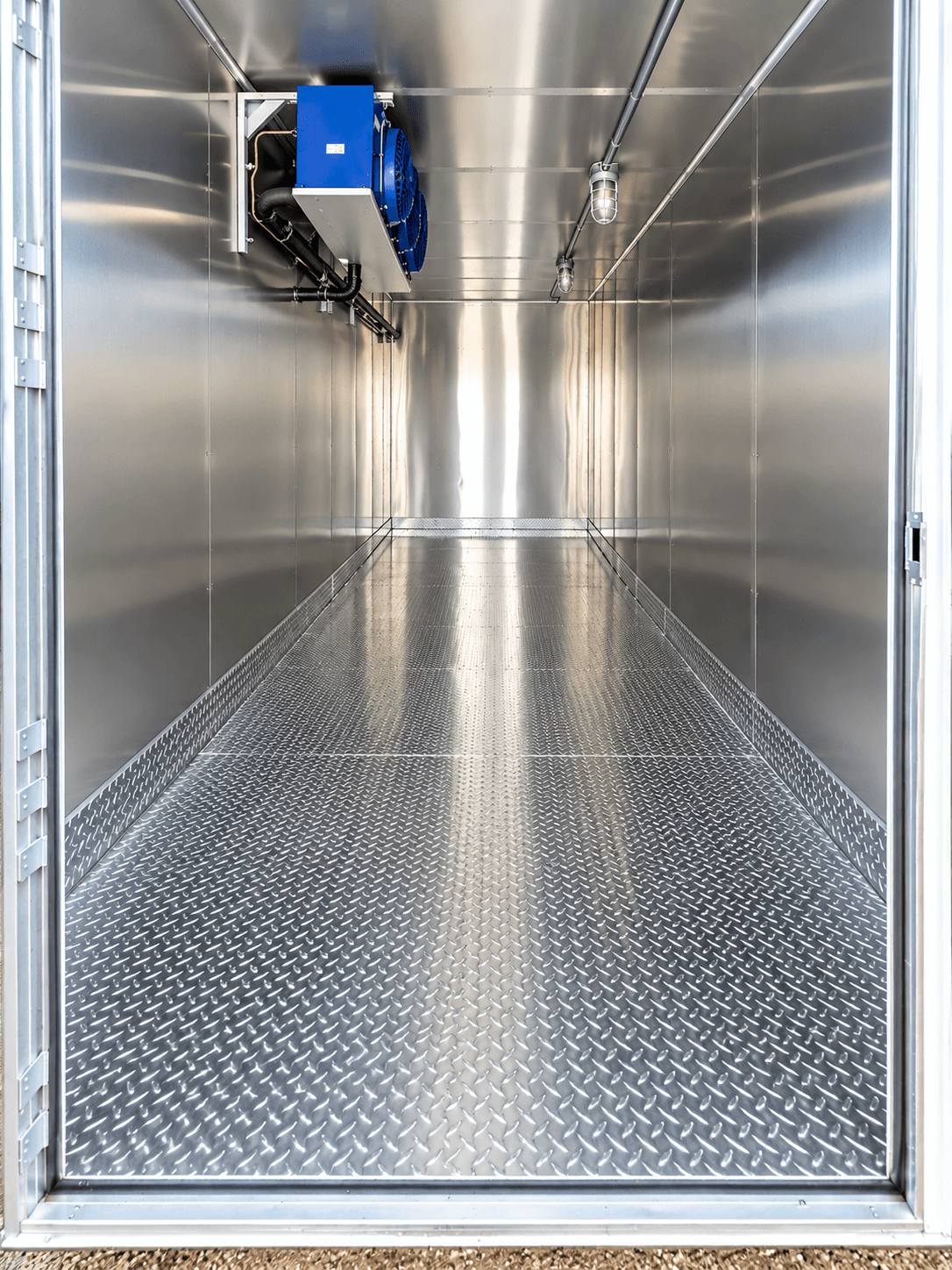
BXRT20–1Refrigerated trailer
- Nominal length
- 20ft
- Listed electrical supply
- 220V · single-phase · 40–60A
- Inventory temperature label
- 32°F
Temporary cold storage in Gettysburg, Pennsylvania
Gettysburg refrigerated container rentals can be reviewed with kitchen and dishwashing rentals for temporary venue and food-service changes. Emergency cooler breakdowns may interrupt a confirmed event, while planned refurbishment allows stock clearance and reopening to be coordinated. Short rentals and longer leasing periods can be discussed for hospitality businesses, institutions, industrial operators and other commercial users. Delivery coordination needs the working entrance, approved equipment position and the contact responsible for site access. Explain your refrigeration conditions, event and receiving dates, and the point when permanent facilities should return. Request availability and an address-specific quote from Worldwide Refrigerated Container Rental Facilities for the complete period goods need storage.
Emergency cooler or freezer failure in Gettysburg? A person answers rental inquiries 24/7. Availability and delivery timing are confirmed in your quote.
Plan your rental budget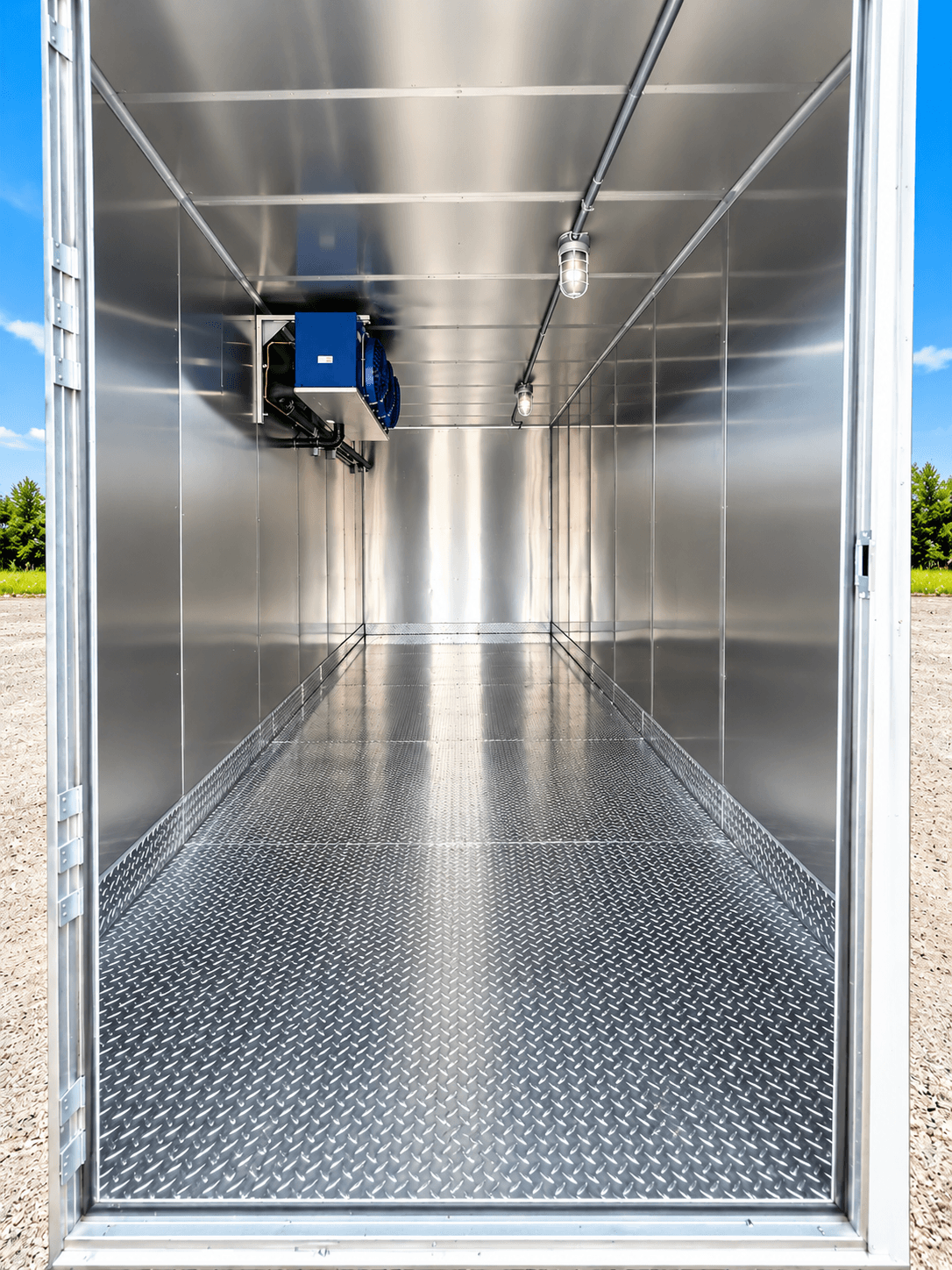
Compare the equipment
These published examples describe named company units. The supplied equipment, configuration and availability are confirmed for your project address.
Listed refrigeration trailer equipment: condensing unit, amps panel, lighting.
Equipment records reviewed October 19, 2026. Temperature labels are inventory labels, not verified operating ranges. Nominal length is a model label, not a measure of usable space or site footprint.
Commercial refrigeration problems in Gettysburg rarely wait, so a catering commissary may ask about a refrigerated container rental as soon as a walk-in cooler or freezer breaks down. The same equipment can be rented for a few days or leased for several months, depending on how long the permanent storage will be out of service. Cold storage is the usual starting point, and the same team can discuss a mobile kitchen rental or a dishwashing trailer lease if the interruption is wider.
Refrigeration is an emergency need: when a commercial walk-in freezer or refrigeration unit breaks down, the call is an emergency, and a person answers rental inquiries 24/7. Short-term cover can be extended into a longer lease if the permanent unit takes longer to repair. Walk-in coolers, walk-in freezers and refrigerated trailers cover most requests. Food-service managers, facility teams and plant supervisors can report a refrigeration failure at any time, since rental inquiries are answered by a person 24/7. Whether the site is in Gettysburg, Lancaster or Lebanon, the inquiry asks for the address, the stock and the dates, and the team reviews rental or lease options for that location, including State College and nearby sites.
The eight-day Pennsylvania Farm Show in Harrisburg is described as the largest indoor agricultural exposition in the country and typically draws more than half a million visitors. Distributors and processors in Wormleysburg, Penbrook and Lemoyne can compare a short-term refrigeration trailer rental with a long-term lease for outdoor walk-in refrigeration. Stadium concessions in Palmyra and venues in West York may need temporary facilities for a season, so a trailer lease can fit better than repeated short rentals. Refrigerated trailers for rent and portable walk-in coolers hold drinks, produce and prepared food at crowded events, and a refrigeration container suits a longer festival run. Commercial refrigeration rentals are quoted for the actual address, so power, access and the rental period are confirmed before delivery. A dishwashing trailer lease can be added to the same quote when returned dishes also need washing. Mobile kitchens, dishwashing trailers and refrigerated trailers for rent can be quoted together as temporary facilities. The context above comes from public sources and does not describe a completed job; availability and delivery are confirmed in the quote.
When the remnants of Tropical Storm Lee flooded the Susquehanna River in September 2011, about 75,000 people in Wilkes-Barre and nearby riverfront towns were ordered out, Harrisburg evacuated 6,000 to 10,000 residents of low-lying areas, and the river reached the second-highest level recorded at Wilkes-Barre. Caterers in Scranton and Taylor often need cold storage rental for a single event, while a commissary in Dunmore may need a longer lease through a busy season. Schools in Moosic and a distributor in Bethlehem can ask the same question: what equipment fits this address, and what will the quote confirm about delivery? Emergency refrigeration comes first after a storm or outage; emergency kitchen trailers and portable kitchen trailers follow only if cooking also stops. Dishwashing trailer rentals and warewashing capacity are quoted beside the kitchen and refrigeration when the whole food-service area is affected. Kitchen, dishwashing and refrigeration rentals are separate equipment, and each can be rented short-term or leased long-term. These are public facts about the area, not a record of company jobs; equipment, availability and delivery are confirmed in the quote.
PennDOT announced a record $655 million in 67 new road and bridge projects across northeast Pennsylvania for 2026, and $1.2 billion in 157 projects improving 197 miles of roads and 77 bridges across eastern Pennsylvania. Construction crews and facility managers near Allentown, Williamsport and Reading may lease refrigerated containers to hold food for a work site or a temporary dining area. Renovation projects in Catasauqua may use a rented refrigeration trailer, and a dishwashing trailer for rent if the dish room is affected. A long-term refrigeration trailer lease keeps supplies cold on site for the whole project, with power and access reviewed before delivery. Short-term rental suits a repair or an event, and long-term leasing suits a renovation, so ask the quote to say which applies. This is published public context, not company work; each request is quoted for its own address and dates.
Dishwashing and kitchen outages often arrive together, so dishwashing trailer rentals and a mobile kitchen for rent are quoted beside emergency refrigeration. A portable refrigerated trailer suits most emergency calls, while a refrigeration container fits a longer, more stationary need. Portable refrigerated trailers, refrigeration containers and outdoor walk-in refrigeration units can all be discussed for the same emergency. A commercial walk-in freezer failure in Gettysburg is an emergency call, and onsite temporary refrigeration is how most such calls begin.
Outdoor walk-in refrigeration needs level ground and power nearby, so a long-term lease starts with a site conversation. Emergency refrigeration in Gettysburg can be rented for a few days or leased long-term, depending on how long the commercial walk-in is down. A dishwashing trailer lease can be added to the same quote when returned dishes also need washing. When cooking and dish washing stop with the walk-in freezer, a mobile kitchen, a dishwashing trailer and portable refrigeration can be one request.
Refrigeration containers are often chosen for long-term storage, while refrigerated trailers are chosen for short-term emergencies; both can be rented. A mobile dishwashing trailer and a mobile kitchen trailer are often requested together, with a refrigerated trailer for the stock. Emergency refrigeration can be arranged as a refrigerated trailer, a refrigeration container or a portable walk-in cooler, depending on the stock and the site. Emergency refrigeration rental, trailer rentals and trailer leasing are all handled through one inquiry, so one call can cover every option.
Temporary facilities can be arranged onsite for an event, a renovation or an emergency, and collected when the permanent kitchen is ready. Outdoor walk-in refrigeration can be set up beside the building as temporary facilities, so staff keep working while the permanent walk-in cooler or walk-in freezer is repaired. Short-term or long-term, the same refrigerated trailer rental starts from the address, the stock and the dates. Emergency refrigeration for commercial kitchens often starts with a portable refrigerated trailer and ends with a longer lease if repairs take time.
Trailer rentals for emergencies are usually short-term, while trailer leasing for construction or seasonal work can run for months. Onsite temporary facilities can include portable refrigeration, a mobile kitchen trailer and, if dishes are affected, a dishwashing trailer. Dishwashing trailer rentals and kitchen trailer rentals can be quoted alongside refrigerated trailers for rent when the whole kitchen is down. In Gettysburg, emergency refrigeration usually means a refrigerated trailer, a refrigeration container or a portable walk-in cooler matched to the stock.
Emergency refrigeration, onsite and temporary, is meant to bridge the gap until the commercial walk-in freezer is repaired or replaced. A dishwashing trailer, a mobile kitchen trailer and a refrigerated trailer for rent can each be short-term or long-term, depending on the repair.
NOAA’s 2022 Pennsylvania summary includes major winter storms in the state’s historical record, including the 1996 blizzard. That statewide example does not prove an interruption at a Gettysburg venue. When service is cancelled or refrigeration fails, the stock question remains: which goods can stay in working equipment, which orders can be changed and which products need another holding location? Kitchen activity may stop before all goods leave the building. Dishwashing returns may continue after the public activity ends. Give the inquiry a current inventory and an accountable operating contact. A freezer requirement can extend beyond the event itself, so describe the actual stock-clearance plan rather than assuming the last guest departure ends every storage task.
The 20ft Refrigerated Container guide fits a project like this one, focused on venue reopening and stock clearance, and walks through how to organize stock for a longer stay as well as the ground and drainage beneath the unit.
Gettysburg College’s review of 2024 initiatives described plans to renovate the College Union Building Ballroom starting in May 2025 after commencement. That owner record provides dated context for scheduling work around an activity calendar; it does not establish completion, ongoing work or rented equipment. An independent venue can use the same distinction between an event finish and contractor possession when defining cold storage needs. Identify the last supplier delivery, final stock removal and first event after reopening. A refrigerated arrangement may cover only part of the refurbishment or continue through the first replenishment cycle. State those operating milestones instead of applying a public project’s dates to a separate property.
Two nearby cities approach their projects differently. Chambersburg’s guide addresses production and receiving changes, while the guide for operators in York addresses food-service projects. Those are separate sites with separate requirements, so use them only as prompts for your Gettysburg request.
For government food-service inquiries in Gettysburg or Littlestown, Pennsylvania, the person describing daily meal operations may differ from the representative authorized to approve a purchase. Request written clarification of equipment, transport and collection responsibilities so the operational team and approving representative compare the same proposed arrangement.
A hypothetical Gettysburg venue may reopen a hall before its permanent service rooms are fully back to normal. Identify the stock needed for the first function and how it will be retrieved without crossing unfinished areas. Kitchen staff should know which preparation tasks resume and where the required goods are held. Dishwashing staff need a clear return location and route during the same period. Temporary refrigerated storage should remain visible in the event operations plan rather than appearing only in the contractor’s drawing. Check the freezer load against committed orders and any unopened goods left from earlier activity. That gives the transition a practical stock basis without assuming a particular equipment model or configuration is available.
A further point of reference is Harrisburg’s guide, which covers commercial food-service handover. Check your own site details separately before relying on any comparison.
Carroll Valley, Littlestown and McSherrystown are nearby communities that can be actual destinations for regional inquiries, not interchangeable labels for Gettysburg. Give the intended property address and distinguish its public entrance from the service route. At a venue, parking can be quiet during setup and full by the time equipment must be collected. Show the approved cold storage position, the approach and any changes expected as barriers or event facilities are removed. Identify who controls access on both dates. Present-day road conditions and permissions need review for the proposed period; neither a visitor map nor a straight-line community distance establishes a transport route or a delivery charge.
For a refrigeration quote, state the earliest stock arrival, maximum simultaneous load and expected final stock-clearance date. Include packaging, holding requirements, site electrical information from an appropriate representative and placement photographs. Explain the event calendar and the construction milestones without treating either as the rental period automatically. Ask the proposal to clarify equipment suitability, the quoted period, delivery and collection assumptions, and how a revised event or opening date would be addressed. Availability and final charges depend on the reviewed site and operation. A clear stock timeline allows purchasing to compare proposals that address the same need instead of comparing figures based on different start and finish assumptions.
Before you book
Explain when goods arrive and when they will leave, because receiving and clearance can sit outside those dates. Include any venue-access restrictions before setup or after teardown. Ask the proposed agreement to identify the period and return arrangements it actually assumes.
Describe which food-service tasks will continue temporarily and the goods assigned to them. Identify the permanent rooms still unavailable and their expected acceptance milestones. The refrigeration assessment should reflect that partial reopening rather than assuming either the entire venue is closed or everything is back to normal.
Provide the additional dates and the expected stock between them. A unit used continuously and one requested for separate periods can raise different availability and agreement questions. Ask for the proposed arrangement to be stated clearly before relying on it for later bookings.
Yes, a mobile kitchen for rent can be quoted alongside a refrigerated container for Gettysburg, and a dishwashing trailer lease can be added if the dish room is affected. Give the address, the stock to be stored and any access limits for a delivery truck. Delivery timing, availability and the rental period are confirmed once the details are reviewed.
Commercial customers can ask about refrigerated trailers for rent, refrigeration containers, portable walk-in coolers and walk-in freezers, with onsite delivery coordination. Portable refrigeration is not a permanent fix; it is a set of temporary facilities for the weeks between a failure and a repaired walk-in freezer. Modular, mobile or portable, the equipment is chosen to fit the work that continues at the site. A commercial walk-in freezer or refrigeration breakdown is an emergency, so call at any hour; a person answers rental inquiries 24/7, and the quote confirms the equipment and delivery for your address.
These public references inform the planning examples; equipment availability and delivery arrangements are confirmed for your address.
Temporary refrigeration, kitchens and dishwashing can support many kinds of food-service operations. Each setting below starts with its own schedule, stock and site questions, and every project is reviewed individually.
Hotels, restaurants and resorts can plan temporary refrigeration around breakfast, banquet and dinner service when a walk-in cooler fails or a kitchen is refurbished.
Hospital, nursing home and care-facility kitchens can describe meal schedules, delivery times and displaced stock so temporary storage follows the food-service routine.
Municipal, county and public-building food-service teams can outline receiving arrangements, responsible contacts and project dates before a quote is prepared.
Dining facility managers can explain the products displaced, the receiving arrangements and the proposed period, then review availability and terms with our team.
Schools, colleges and universities can plan around term dates, serving windows and campus kitchen renovations so meal service can continue during repairs or construction.
Plant cafeterias and employee dining areas can describe shift patterns and staged building work so temporary cold storage can be reviewed against the working schedule.
Caterers and venues can plan preparation windows, event days and overflow ingredients, and describe how stock moves between storage, the kitchen and service.
Producers, wholesalers and distributors can describe loading, staging and storage needs when a cooler breaks down or demand temporarily exceeds capacity.
These examples describe planning situations. Equipment, availability and terms are confirmed in a project quote.
Cold storage is only one part of a project. These are the questions we work through with you before anything is booked.
Start with refrigerated containers and refrigeration trailers, then add a temporary kitchen or dishwashing trailer when the project needs one, all in a single conversation.
Access, utilities and the intended position are reviewed before delivery is arranged, so the equipment is matched to your site rather than the other way around.
Whether a walk-in cooler failed this morning or a renovation is months away, describe the real situation and plan around the stock, dates and people involved.
Planning guides cover all 50 states and more than 700 cities. Your address is then confirmed for equipment and delivery.
Use the rental calculator for a rate-range estimate and setup amount, then request a project quote that confirms availability, transport and the rental period.