BXRT20–1Refrigerated trailer
- Nominal length
- 20ft
- Listed electrical supply
- 220V · single-phase · 40–60A
- Inventory temperature label
- 32°F
Temporary cold storage in Lancaster, Pennsylvania
Lancaster temporary refrigeration for rent can support a commercial kitchen when a walk-in cooler or freezer fails or planned work removes storage. Refrigerated containers, trailers and portable coolers or freezers can be considered with mobile kitchen and dishwashing trailers for connected projects. Schools, restaurants, hospitals, hotels, caterers and industrial food operations can discuss short-term rental or longer lease needs. Worldwide Refrigerated Container Rental Facilities serves Lancaster, coordinating equipment and delivery around the actual property and dates. Explain the stock requirements, required conditions and proposed position to request availability and a current project quote.
Emergency cooler or freezer failure in Lancaster? A person answers rental inquiries 24/7. Availability and delivery timing are confirmed in your quote.
Plan your rental budget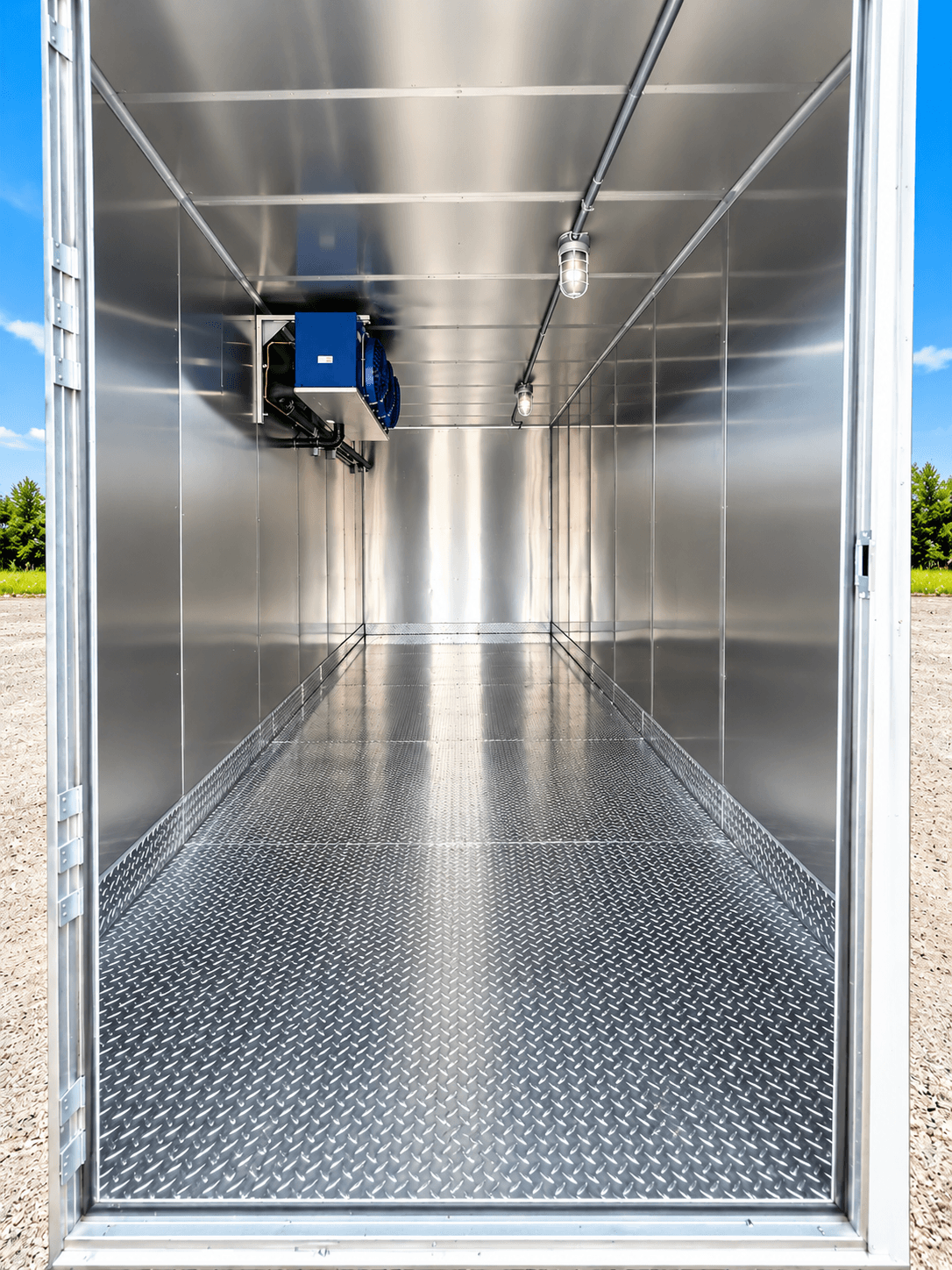
Compare the equipment
These published examples describe named company units. The supplied equipment, configuration and availability are confirmed for your project address.
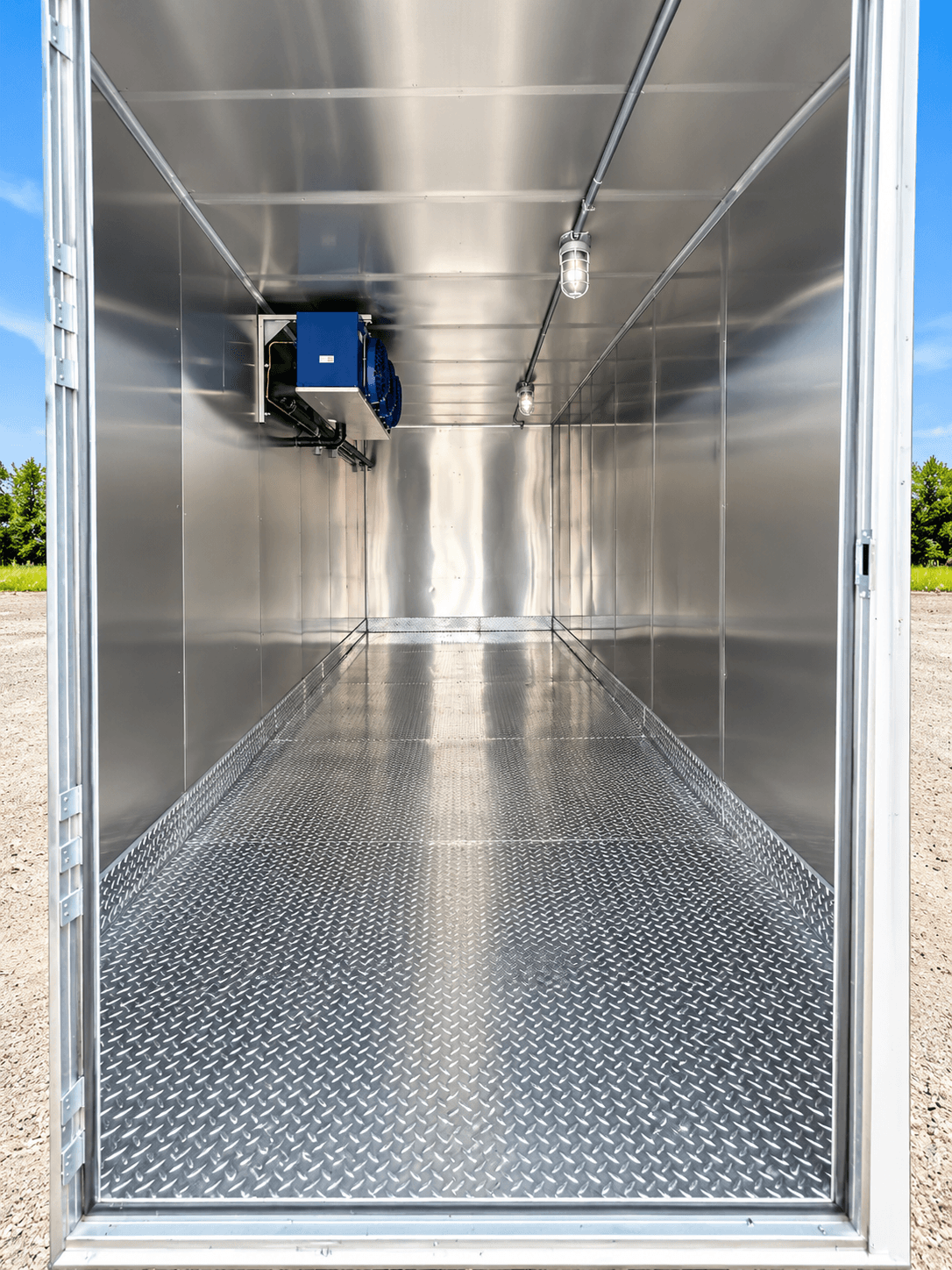
Listed refrigeration trailer equipment: condensing unit, amps panel, lighting.
Equipment records reviewed October 19, 2026. Temperature labels are inventory labels, not verified operating ranges. Nominal length is a model label, not a measure of usable space or site footprint.
If a school cafeteria in Lancaster loses refrigeration, a refrigerated trailer for rent can keep products cold while the permanent system is fixed or replaced. Whether you rent for a weekend event or lease through a multi-month renovation, the rental period, delivery coordination and setup are confirmed in your quote. Refrigeration trailers, portable coolers and freezers are the core of most requests, and a mobile kitchen trailer lease can be added when a kitchen is closed for repairs.
Every call about a failed commercial walk-in freezer or refrigeration system is an emergency call, and a person answers rental inquiries 24/7 so the problem can be described at any hour. Commercial kitchens, care facilities, school districts and industrial food operations can start an emergency rental request at any hour, since a person answers inquiries 24/7. Whether the site is in Lancaster, Harrisburg or Gettysburg, the inquiry asks for the address, the stock and the dates, and the team reviews rental or lease options for that location, including Allentown and nearby sites.
The eight-day Pennsylvania Farm Show in Harrisburg is described as the largest indoor agricultural exposition in the country and typically draws more than half a million visitors. Operators in Wormleysburg, Penbrook and Lemoyne use rentals, leases and trailers for rent in different ways, from one-night events to months of temporary facilities. Food producers in Palmyra and West York can ask about trailer leasing for seasonal stock or a temporary overflow. Portable refrigerated trailers and walk-in coolers are usually the first equipment discussed for event stock, with onsite power and access reviewed early. Refrigeration is an emergency need: every call about a failed commercial walk-in freezer or refrigeration unit is an emergency call. Dishwashing trailer rentals and warewashing capacity are quoted beside the kitchen and refrigeration when the whole food-service area is affected. Nothing here assumes available equipment or a delivery time; a person answers rental inquiries 24/7 and the quote confirms the details.
When the remnants of Tropical Storm Lee flooded the Susquehanna River in September 2011, about 75,000 people in Wilkes-Barre and nearby riverfront towns were ordered out, Harrisburg evacuated 6,000 to 10,000 residents of low-lying areas, and the river reached the second-highest level recorded at Wilkes-Barre. Grocers in Scranton, hotels in Taylor and commissaries in Dunmore often face the same emergency, a walk-in that stops cooling, and ask first about a refrigerated trailer for rent. A restaurant in Moosic or a food distributor in Bethlehem can call about emergency refrigeration rental as soon as a walk-in stops holding temperature. After an outage or storm, refrigerated trailers for rent and walk-in freezers protect frozen stock first, and the quote confirms equipment and delivery. Walk-in coolers hold chilled stock and walk-in freezers hold frozen stock, so the rental should match whichever one is needed. Mobile kitchens, dishwashing trailers and refrigerated trailers for rent can be quoted together as temporary facilities. The context above comes from public sources and does not describe a completed job; availability and delivery are confirmed in the quote.
PennDOT announced a record $655 million in 67 new road and bridge projects across northeast Pennsylvania for 2026, and $1.2 billion in 157 projects improving 197 miles of roads and 77 bridges across eastern Pennsylvania. Temporary facilities for a remodel in Williamsport, Catasauqua or Centralia usually combine refrigeration, a mobile kitchen for rent and, if dishes are affected, a dishwashing trailer lease. Renovation projects in Freemansburg may use a rented refrigeration trailer, and a dishwashing trailer for rent if the dish room is affected. On long projects, contractors compare a refrigerated trailer lease with a refrigeration container for bulk crew supplies. Commercial refrigeration rentals are quoted for the actual address, so power, access and the rental period are confirmed before delivery. A mobile dishwashing trailer and a mobile kitchen trailer are often requested together, with a refrigerated trailer for the stock. This is published public context, not company work; each request is quoted for its own address and dates. Walk-in freezer failures are the most urgent calls, because frozen stock has the least time.
Onsite temporary facilities can include portable refrigeration, a mobile kitchen trailer and, if dishes are affected, a dishwashing trailer. Outdoor walk-in refrigeration can be set up beside the building as temporary facilities, so staff keep working while the permanent walk-in cooler or walk-in freezer is repaired. Emergency refrigeration rental covers walk-in coolers, walk-in freezers and refrigerated trailers for commercial kitchens, warehouses and plants. Trailer rentals for emergencies are usually short-term, while trailer leasing for construction or seasonal work can run for months.
Kitchen, dishwashing and refrigeration rentals are separate equipment, and each can be rented short-term or leased long-term. Short-term or long-term, the same refrigerated trailer rental starts from the address, the stock and the dates. For Lancaster kitchens, plants and warehouses, trailer leasing and trailer rentals are two ways to get the same portable refrigerated storage. A mobile, modular or portable refrigeration setup in Lancaster is chosen to match the walk-in cooler or freezer that failed.
In Lancaster, emergency refrigeration usually means a refrigerated trailer, a refrigeration container or a portable walk-in cooler matched to the stock. Emergency refrigeration for commercial kitchens often starts with a portable refrigerated trailer and ends with a longer lease if repairs take time. Emergency refrigeration can be arranged as a refrigerated trailer, a refrigeration container or a portable walk-in cooler, depending on the stock and the site. A commercial walk-in freezer failure in Lancaster is an emergency call, and onsite temporary refrigeration is how most such calls begin.
A mobile kitchen trailer for rent can sit beside onsite refrigeration, so cooking and cold storage are planned together. Dishwashing and kitchen outages often arrive together, so dishwashing trailer rentals and a mobile kitchen for rent are quoted beside emergency refrigeration. A dishwashing trailer lease can be added to the same quote when returned dishes also need washing. A mobile dishwashing trailer and a mobile kitchen trailer are often requested together, with a refrigerated trailer for the stock.
Portable refrigerated trailers, refrigeration containers and outdoor walk-in refrigeration units can all be discussed for the same emergency. Trailer rentals, refrigerated trailers for rent and trailer leasing are all discussed with the address and the dates in hand. Refrigeration containers are often chosen for long-term storage, while refrigerated trailers are chosen for short-term emergencies; both can be rented. When cooking and dish washing stop with the walk-in freezer, a mobile kitchen, a dishwashing trailer and portable refrigeration can be one request.
Outdoor walk-in refrigeration needs level ground and power nearby, so a long-term lease starts with a site conversation. Modular and portable cold storage can be discussed in stages when a site needs more space than one refrigerated trailer provides.
A school kitchen project can move cold storage before it changes cooking or cleanup. Map the meals that continue, where ingredients arrive and how staff reach preparation during each stage. A temporary position should support those active routes rather than only fit an unused outside area.
For a food-service renovation in Millersville, the working storage period may begin before demolition and continue while permanent refrigeration is tested and handed over. Include that whole sequence in the inquiry. It gives the rental discussion an operating start and finish instead of relying on one broad construction window.
Normal service can resume before permanent storage is ready, making the later temporary requirement greater than the initial transfer. Describe that peak, with chilled and frozen conditions separated and any handling separation clear. Packages and carts should be compared with the actual doorway and layout.
For comparison, read what nearby cities emphasize. In Lebanon, the guide covers downtown operating transitions, citing the Lebanon entry “April 28, 2025 council minutes”; in York, it covers food-service projects. Bring the same practical questions about access, timing and storage to your Lancaster inquiry.
For a restaurant refit in East Petersburg, the busiest receiving period can also overlap with staff retrieving ingredients. Show that timing rather than only the stock left at the end of an average day. A longer lease inquiry is more useful when the equipment is assessed against the whole working cycle.
Industrial shift patterns in Lancaster or Millersville, Pennsylvania, can leave employee meal preparation and supplier receiving competing for access during a constrained facilities project. Request a clear boundary between meal supply movement and contractor activity, then review the arrangement with the people managing site access.
A catering project in Strasburg may receive ingredients before public service begins and hold remaining goods afterward. Identify the address storing the stock, the peak quantity there and the route to preparation. The event location can have a different role from the receiving or production kitchen.
For another comparison, the guide for operators in Reading covers shared commercial food-service. It is background reading, not a statement about Lancaster.
The proposed position should still work once other suppliers occupy the site. Consider shared access through setup, service and clearing, along with staff needing frequent ingredient retrieval. Include the final transfer back to permanent storage when discussing dates so a short-term arrangement follows the complete operation rather than only the public program.
If commercial refrigeration fails in Lancaster, identify products needing an alternative immediately and orders due during the repair. The contractor can assess the fault while the equipment discussion focuses on that complete load, required conditions and usable property space.
Keep updates connected to the same contact and the point when permanent storage can accept goods again. Repair completion may precede testing or a staged transfer back. Discuss that handover with the intended period instead of assuming an early repair estimate automatically establishes when temporary equipment can be cleared for collection.
NOAA describes Pennsylvania’s regional climate differences and severe-weather contexts including winter storms, flooding, snow, ice and heat. Include the rental season and known property drainage or access concerns when considering an outdoor unit. The actual equipment’s connections and placement requirements need their own review.
If cooking or dishwashing also needs temporary facilities, compare their staff routes with refrigeration while keeping each configuration and period distinct. Construction may change receiving later in the work, so the position should remain practical through those stages and collection. This gives the site team a coherent working layout to assess.
Request the actual equipment, agreed period, transport and site-dependent items in a current proposal. The estimate multiplies the published range by your number of periods; the written quote confirms where in that range the rate falls. Compare options against the same stock and operating route.
Discuss extensions, revised dates and collection before confirming. One contact connecting the property and food-service teams can keep the rental aligned with the permanent room’s readiness. Clear scope supports the final transfer and clearance as well as the first equipment delivery, giving the business a practical arrangement through the whole interruption.
Before you book
Include when ingredients need an alternative, when permanent refrigeration can take normal deliveries and when temporary goods will be cleared. Those operating milestones may differ from demolition or building completion. Confirm the intended period and the process for extensions or collection so the rental follows the actual working sequence.
Identify where stock is received and held, the load at that property and the route to preparation. A separate service location does not automatically establish where temporary refrigeration belongs. Describe each address’s role so the equipment and transport discussion addresses the actual proposed arrangement.
Give refrigeration, cooking and dishwashing distinct roles and dates while showing how staff move between them. The actual configurations and connections need individual review within a coordinated layout. This helps the operating and property teams assess a useful temporary arrangement without assuming every unit has identical requirements.
Rent a refrigerated trailer for a breakdown that will be fixed in days; lease it when the permanent cooler or freezer will be out of service for months. Give the address, the stock to be stored and any access limits for a delivery truck. Delivery timing, availability and the rental period are confirmed once the details are reviewed.
Mobile and modular refrigeration, from refrigerated trailers for rent to a refrigeration container lease, can be discussed for short-term or long-term needs. Modular, mobile or portable, the equipment is chosen to fit the work that continues at the site. Temporary facilities for a commercial site usually mean refrigeration first, then a mobile kitchen or dishwashing trailer if cooking or washing is also interrupted. Every call about a failed commercial walk-in freezer or refrigeration unit is an emergency call, and a person answers rental inquiries 24/7. Equipment, availability and delivery timing are confirmed in the quote.
These public references inform the planning examples; equipment availability and delivery arrangements are confirmed for your address.
Temporary refrigeration, kitchens and dishwashing can support many kinds of food-service operations. Each setting below starts with its own schedule, stock and site questions, and every project is reviewed individually.
Hotels, restaurants and resorts can plan temporary refrigeration around breakfast, banquet and dinner service when a walk-in cooler fails or a kitchen is refurbished.
Hospital, nursing home and care-facility kitchens can describe meal schedules, delivery times and displaced stock so temporary storage follows the food-service routine.
Municipal, county and public-building food-service teams can outline receiving arrangements, responsible contacts and project dates before a quote is prepared.
Dining facility managers can explain the products displaced, the receiving arrangements and the proposed period, then review availability and terms with our team.
Schools, colleges and universities can plan around term dates, serving windows and campus kitchen renovations so meal service can continue during repairs or construction.
Plant cafeterias and employee dining areas can describe shift patterns and staged building work so temporary cold storage can be reviewed against the working schedule.
Caterers and venues can plan preparation windows, event days and overflow ingredients, and describe how stock moves between storage, the kitchen and service.
Producers, wholesalers and distributors can describe loading, staging and storage needs when a cooler breaks down or demand temporarily exceeds capacity.
These examples describe planning situations. Equipment, availability and terms are confirmed in a project quote.
Cold storage is only one part of a project. These are the questions we work through with you before anything is booked.
Start with refrigerated containers and refrigeration trailers, then add a temporary kitchen or dishwashing trailer when the project needs one, all in a single conversation.
Access, utilities and the intended position are reviewed before delivery is arranged, so the equipment is matched to your site rather than the other way around.
Whether a walk-in cooler failed this morning or a renovation is months away, describe the real situation and plan around the stock, dates and people involved.
Planning guides cover all 50 states and more than 700 cities. Your address is then confirmed for equipment and delivery.
Use the rental calculator for a rate-range estimate and setup amount, then request a project quote that confirms availability, transport and the rental period.