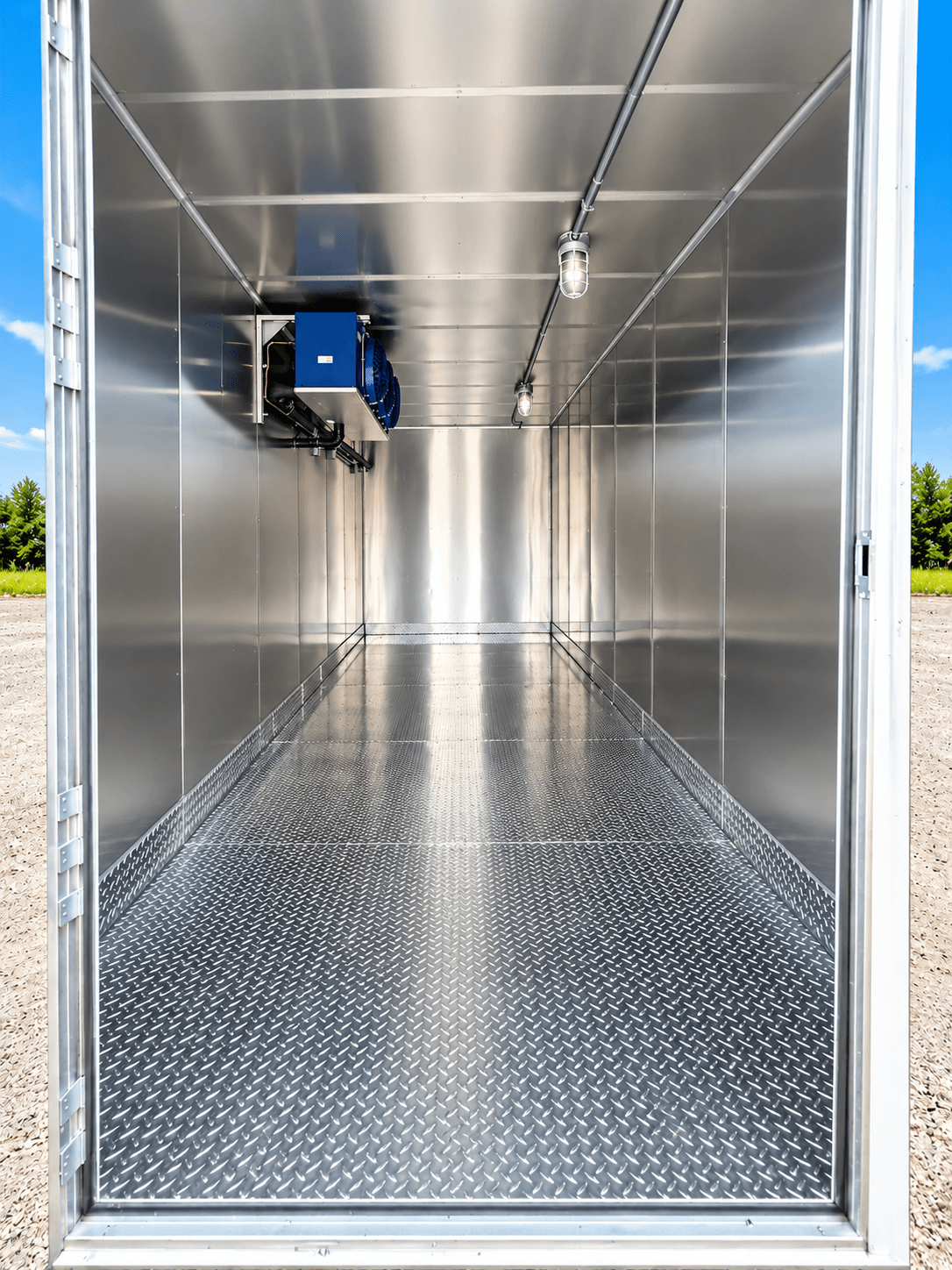
BXRT20–1Refrigerated trailer
- Nominal length
- 20ft
- Listed electrical supply
- 220V · single-phase · 40–60A
- Inventory temperature label
- 32°F
Temporary cold storage in Williamsport, Pennsylvania
Williamsport refrigerated container rentals can form part of a temporary service plan, with kitchen and dishwashing rentals considered when food operations also change. Emergency commercial cooler breakdowns can disrupt existing stock, while planned venue or building work allows transfers to be organized in advance. Short rentals and longer leasing periods can be discussed for institutions, industrial businesses, caterers, restaurants and other commercial users. Delivery coordination should identify the actual receiving route, approved placement and contact controlling access. Explain your refrigeration conditions, the peak goods held and the period before permanent facilities return. Request availability and an address-specific quote from Worldwide Refrigerated Container Rental Facilities for the intended operation.
Emergency cooler or freezer failure in Williamsport? A person answers rental inquiries 24/7. Availability and delivery timing are confirmed in your quote.
Plan your rental budget
Compare the equipment
These published examples describe named company units. The supplied equipment, configuration and availability are confirmed for your project address.
Listed refrigeration trailer equipment: condensing unit, amps panel, lighting.
Equipment records reviewed October 19, 2026. Temperature labels are inventory labels, not verified operating ranges. Nominal length is a model label, not a measure of usable space or site footprint.
NOAA’s 2022 Pennsylvania summary discusses Tropical Storm Agnes in 1972 as a major historical flooding event for the state. This background makes continuity planning relevant without establishing the conditions at a Williamsport property. If refrigeration fails or an activity pauses, assign the goods a current location before planning their next move. A cooler can hold unopened stock even when preparation has stopped. Kitchen and dishwashing activity may finish at different times, leaving staff handling returns after the last service. Identify which goods can remain in working equipment and which need a temporary destination. The inquiry should show the actual remaining load and the person authorized to decide its transfer, rather than assuming a closed event means an empty site.
If the inquiry concerns park and venue support operations, compare the plan with the 20ft Refrigerated Container guide, which explains after-hours access to the unit and how to organize stock for a longer stay.
Lycoming College’s October 19, 2023 announcement described its partnership with the City of Williamsport to construct a baseball field in Brandon Park. The owner’s 2025 magazine identifies the field as a 2024 construction project. These records illustrate local investment in a shared public setting, not a claim that rental food-service equipment was supplied there. An independent venue planning work should identify how receiving, public circulation and contractor activity share the property. Temporary refrigerated placement needs an approved role within that layout. Describe the operating period and stock movement directly rather than assuming the public project’s dimensions or construction dates determine another venue’s cold storage requirement.
For comparison, read what nearby cities emphasize. In State College, the guide covers busy-calendar receiving plans, citing the Penn State athletics entry “stadium renovation approval, May 21, 2024”; in Harrisburg, it covers commercial food-service handover. Those are separate sites with separate requirements, so use them only as prompts for your Williamsport request.
Education-sector procurement teams in Williamsport or Jersey Shore, Pennsylvania, may face a revised handover schedule after meal orders have already been placed with regular suppliers. Ask the dining lead to match the proposed menu with ingredient arrivals, available working space and the planned staff handover.
For a hypothetical Williamsport event operator refurbishing a permanent service area, the last public activity may be followed by several days of stock returns and equipment clearance. Kitchen preparation can end before all goods have left refrigeration, while dishwashing activity may continue during teardown. Mark the goods moving back to suppliers, those staying in working permanent rooms and those held for later use. Explain the freezer access needed while temporary fences or serving points are removed. Assign the final inventory check to a person rather than a date alone. This helps collection planning follow the actual operating handover instead of depending on an event team that may leave before stored goods have been cleared.
Operators near Williamsport can also compare Lebanon’s guide, which covers downtown operating transitions, citing the Lebanon entry “April 28, 2025 council minutes”. Check your own site details separately before relying on any comparison.
South Williamsport, Montoursville and Jersey Shore are nearby communities that may feature in supply arrangements, but a rented refrigerated unit needs one precise proposed property location. State where goods originate only when it explains their movement; identify separately where the equipment would stand. Show the gate, on-site turns and routes reserved for public or shared use. At a venue, access can change between setup and collection as parking and temporary facilities are removed. The authorized contact should understand both arrangements. Cold storage suitability and transport require address-specific review for the proposed dates, with present road conditions checked separately from historical project records or straight-line geographic proximity.
A refrigeration quote request should include quantities, packaging, required holding conditions and the largest simultaneous load. Add the earliest stock arrival, final clearance date and any milestone that could extend use beyond the public programme. Supply a marked placement photograph, site electrical information from an appropriate representative and the contact who can approve access. Ask the proposal to state the equipment basis, rental period, delivery and collection assumptions. If the event and building teams are different, nominate a person who remains responsible after teardown. Availability and final charges must be confirmed for the actual inquiry; the public park example provides dated local context and no present inventory or delivery promise.
Before you book
Yes, explain what remains after service ends and where it goes next. Unopened goods, reserve inventory and items awaiting transfer can extend the need for refrigerated storage. Identify the final stock owner and ask the proposed period to reflect that clearance plan.
Identify the person authorized to maintain access and answer questions after the event team leaves. Explain changes to gates, fencing and parking during teardown. Ask the transport arrangements to address the actual collection conditions rather than assuming setup staff and routes remain available.
Explain which goods move from each location and the single or multiple properties where equipment is proposed. Keep destination addresses and responsible contacts clear. The cold storage assessment should follow simultaneous stock at the intended site rather than adding quantities that never occupy it together.
These public references inform the planning examples; equipment availability and delivery arrangements are confirmed for your address.
Temporary refrigeration, kitchens and dishwashing can support many kinds of food-service operations. Each setting below starts with its own schedule, stock and site questions, and every project is reviewed individually.
Hotels, restaurants and resorts can plan temporary refrigeration around breakfast, banquet and dinner service when a walk-in cooler fails or a kitchen is refurbished.
Hospital, nursing home and care-facility kitchens can describe meal schedules, delivery times and displaced stock so temporary storage follows the food-service routine.
Municipal, county and public-building food-service teams can outline receiving arrangements, responsible contacts and project dates before a quote is prepared.
Dining facility managers can explain the products displaced, the receiving arrangements and the proposed period, then review availability and terms with our team.
Schools, colleges and universities can plan around term dates, serving windows and campus kitchen renovations so meal service can continue during repairs or construction.
Plant cafeterias and employee dining areas can describe shift patterns and staged building work so temporary cold storage can be reviewed against the working schedule.
Caterers and venues can plan preparation windows, event days and overflow ingredients, and describe how stock moves between storage, the kitchen and service.
Producers, wholesalers and distributors can describe loading, staging and storage needs when a cooler breaks down or demand temporarily exceeds capacity.
These examples describe planning situations. Equipment, availability and terms are confirmed in a project quote.
Cold storage is only one part of a project. These are the questions we work through with you before anything is booked.
Start with refrigerated containers and refrigeration trailers, then add a temporary kitchen or dishwashing trailer when the project needs one, all in a single conversation.
Access, utilities and the intended position are reviewed before delivery is arranged, so the equipment is matched to your site rather than the other way around.
Whether a walk-in cooler failed this morning or a renovation is months away, describe the real situation and plan around the stock, dates and people involved.
Planning guides cover all 50 states and more than 700 cities. Your address is then confirmed for equipment and delivery.
Use the rental calculator for a rate-range estimate and setup amount, then request a project quote that confirms availability, transport and the rental period.