BXRT20–1Refrigerated trailer
- Nominal length
- 20ft
- Listed electrical supply
- 220V · single-phase · 40–60A
- Inventory temperature label
- 32°F
Temporary cold storage in Battle Creek, Michigan
Battle Creek refrigerated container rentals start with the stock you need to protect, with kitchen and dishwashing rentals considered when food operations also move. A failed commercial cooler can call for emergency storage, while a planned building change allows a measured transfer. Short rentals and longer leasing periods suit different schedules for manufacturers, restaurants, schools and other commercial or institutional customers. Delivery coordination needs the receiving address, workable placement space and a contact who can authorize access. Tell us what requires refrigeration, when the space is needed and which parts of your operation remain active; request availability and an address-specific quote from Worldwide Refrigerated Container Rental Facilities.
Emergency cooler or freezer failure in Battle Creek? A person answers rental inquiries 24/7. Availability and delivery timing are confirmed in your quote.
Plan your rental budget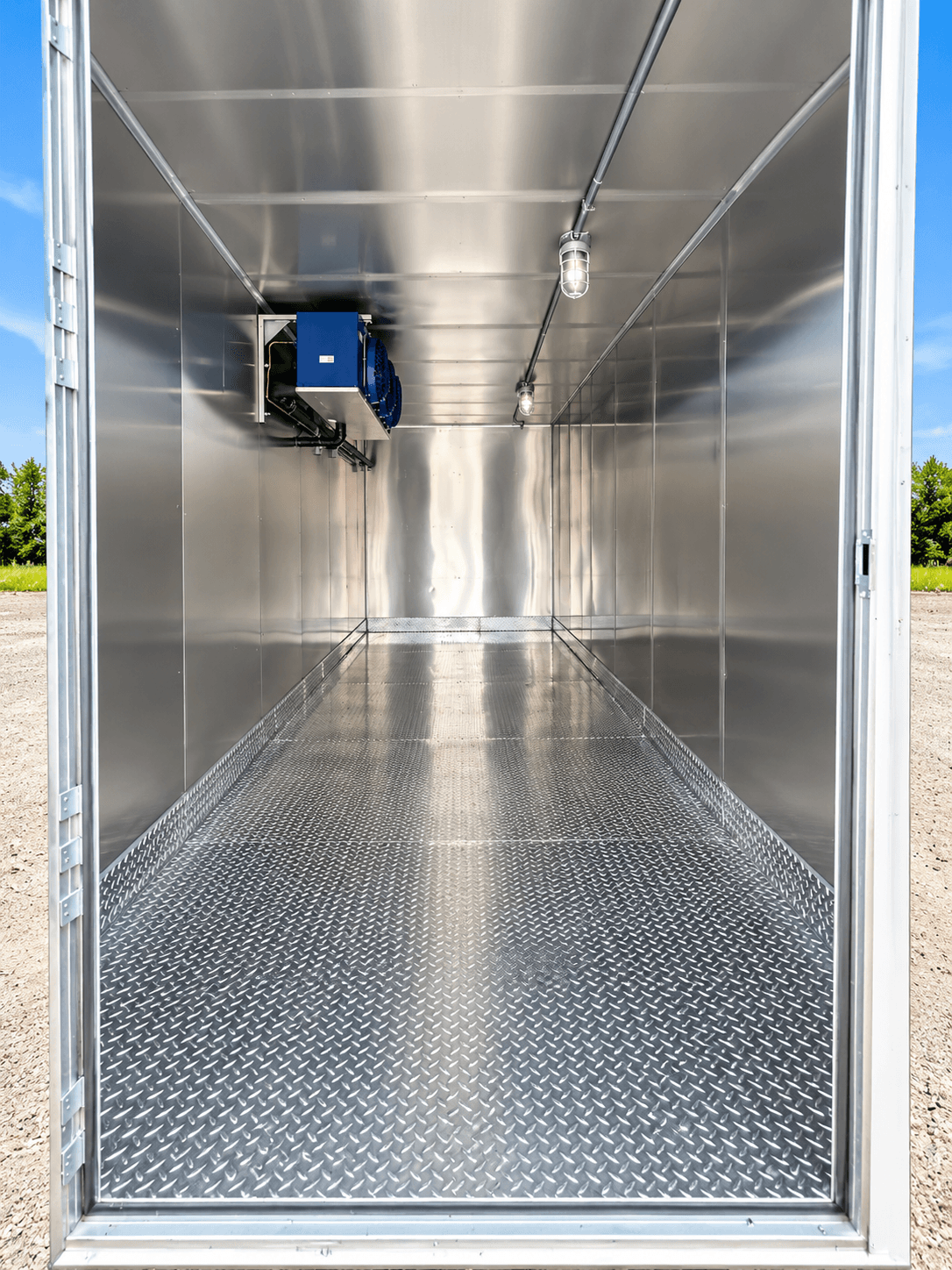
Compare the equipment
These published examples describe named company units. The supplied equipment, configuration and availability are confirmed for your project address.
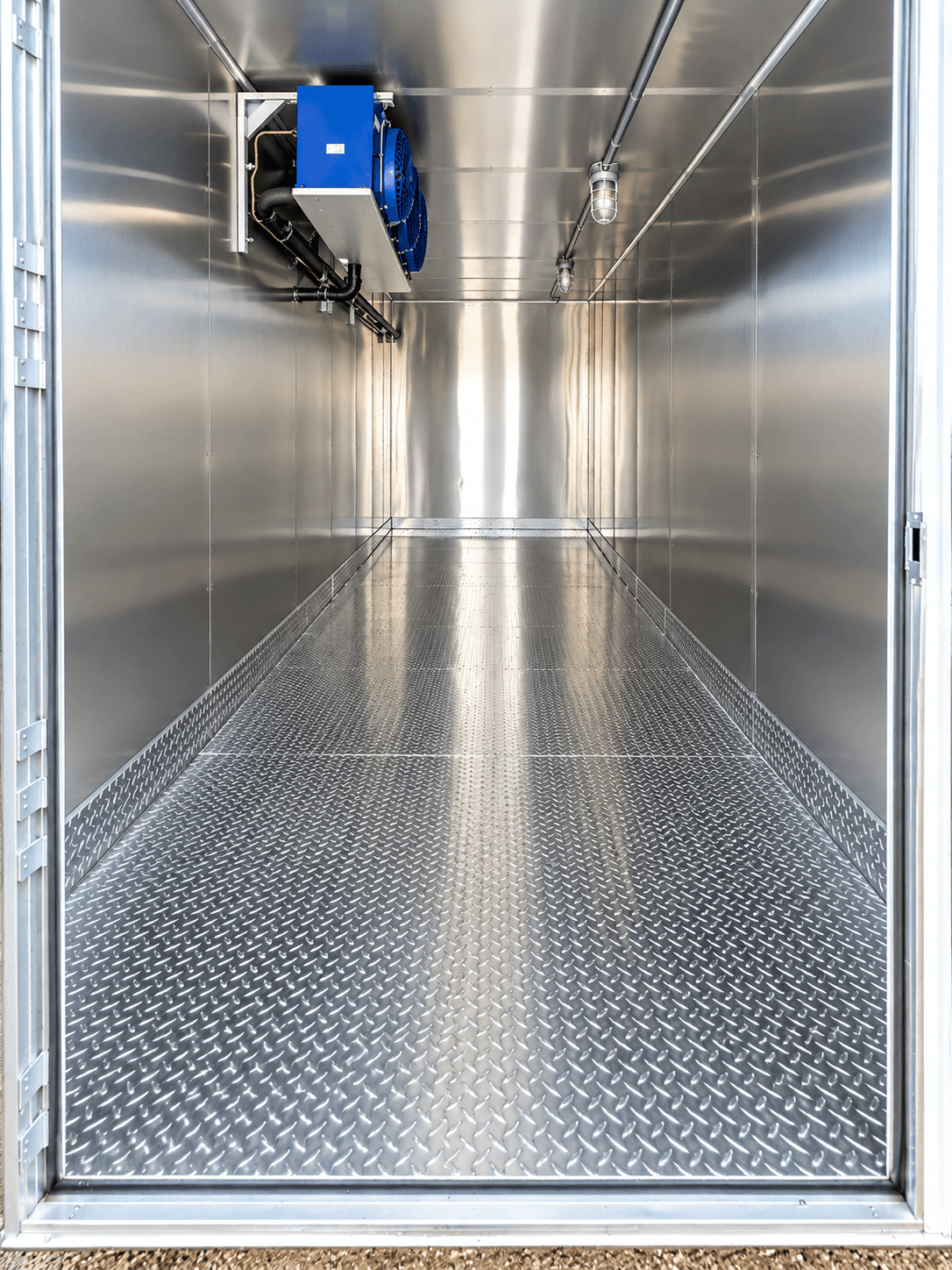
Listed refrigeration trailer equipment: condensing unit, amps panel, lighting.
Equipment records reviewed October 19, 2026. Temperature labels are inventory labels, not verified operating ranges. Nominal length is a model label, not a measure of usable space or site footprint.
Michigan’s 2022 NOAA climate summary records higher recent averages for heavy precipitation events, a statewide reason to retain interruption plans rather than evidence of a particular Battle Creek outage. A business facing a refrigeration failure needs a more immediate inventory decision: which pallets can remain in functioning storage, which need transfer, and who can release them. Identify the required holding conditions and the person responsible for accepting the temporary arrangement. If a kitchen stops cooking, the storage requirement may fall; if production continues, it may rise. Dishwashing needs follow the operating plan rather than the number of goods moved. Separate those decisions before asking for a replacement freezer, so the request describes the actual gap instead of the failed room’s footprint alone.
Because this guide centers on stock transfers and building changes, the 20ft Refrigerated Container guide is a useful companion: it covers one resting place for the whole project and the ground and drainage beneath the unit.
MEDC’s August 2022 account describes the transformation of the historic Heritage Tower into The Milton, following rehabilitation plans announced in 2018. That completed redevelopment is useful local context for the coordination an older mixed-use property can require; it does not establish a rental job or a present construction need. For a separate commercial refurbishment, map the cold storage transfer against contractor possession, utility isolation and the first day receiving can resume. Preparation equipment and wash facilities can have different commissioning dates. A refrigerated unit may still be needed after the visible building work finishes if shelving, checks or stock organization remain incomplete. Ask the project manager to mark those dependencies on the same schedule that purchasing uses.
Several neighboring guides cover situations that resemble parts of an inquiry from Battle Creek. Kalamazoo’s guide is organized around event and everyday storage plans, citing the Kalamazoo entry “Arcadia Creek Festival Place renovation”. A separate comparison is Jackson’s guide, which covers phased receiving changes, citing the City of Jackson entry “March 17, 2025 construction season notice”. Use them to prepare questions, not to infer availability or terms for Battle Creek.
Food production managers in Battle Creek or Springfield, Michigan, may need temporary equipment when a facilities handover leaves ingredient receiving and finished product movement on different schedules. Ask how the operator records returned goods and separates them from available stock before agreeing the proposed equipment position and product route.
An alteration that begins with one service room can change how an entire business receives goods. During a hypothetical Battle Creek renovation, mark a clean transfer route, the temporary refrigerated storage location and the boundary contractors cannot cross without permission. Do not use the temporary unit as spare construction storage: that makes stock counts harder and can obstruct retrieval. If kitchen work removes preparation space, decide whether fewer deliveries or a temporary operating arrangement fits the business. Where dishwashing equipment is disconnected, clarify how reusable items are handled without filling the storage route with returns. Keep cooler capacity, working aisles and the order of stock retrieval distinct on the sketch; nominal floor area alone will not explain the operation.
Another nearby guide, Lansing’s, covers its own planning questions. Its details belong to that city and do not describe Battle Creek.
A June 26, 2019 city notice recorded lane restrictions on Jackson Street for paving associated with The Milton project. This historical notice illustrates why an entrance address and a delivery entrance can be different pieces of information. Check present restrictions for your dates rather than reusing that old closure. For a request in Springfield, Marshall or Kalamazoo, send the exact property location and its own access details instead of describing it only as near Battle Creek. Include gate controls, the route to the proposed cold storage position and where receiving staff can meet a driver. If supply vehicles and collection vehicles share the yard, identify the periods when those movements leave room for the refrigeration delivery assessment.
A useful quote request shows the largest stock load expected during the overlap between old and new facilities. Send product and packaging descriptions, required temperature conditions, quantities, preferred rental dates and any uncertain reopening milestone. Add a marked photograph of the proposed refrigerated container position, electrical information supplied by your qualified site representative, and the person approving property use. Explain whether the unit would serve one stock transfer or repeated daily receiving. Those are different workflows even when the calendar duration is identical. Ask for equipment suitability, transport arrangements, the quoted rental period and collection conditions in writing. Availability and the final charges depend on the reviewed address and plan, rather than on the public redevelopment examples mentioned here.
Before you book
Describe the goods and their retrieval pattern first. A large room may be lightly stocked, while a smaller freezer may contain densely packed products that need frequent access. Ask for a reviewed layout rather than assuming matching room dimensions creates equivalent usable storage.
Yes, describe each address separately within the inquiry. State how much stock stays at each, whether transfers occur between them and who controls the gates. Separate site information allows the quote to explain which equipment and transport arrangements apply to each location.
Identify the point when permanent refrigeration is accepted and goods have actually moved back. A contractor’s finish date may precede that handover. Share both milestones and ask how extensions, a revised collection date or an earlier return would affect the written rental agreement.
These public references inform the planning examples; equipment availability and delivery arrangements are confirmed for your address.
Temporary refrigeration, kitchens and dishwashing can support many kinds of food-service operations. Each setting below starts with its own schedule, stock and site questions, and every project is reviewed individually.
Hotels, restaurants and resorts can plan temporary refrigeration around breakfast, banquet and dinner service when a walk-in cooler fails or a kitchen is refurbished.
Hospital, nursing home and care-facility kitchens can describe meal schedules, delivery times and displaced stock so temporary storage follows the food-service routine.
Municipal, county and public-building food-service teams can outline receiving arrangements, responsible contacts and project dates before a quote is prepared.
Dining facility managers can explain the products displaced, the receiving arrangements and the proposed period, then review availability and terms with our team.
Schools, colleges and universities can plan around term dates, serving windows and campus kitchen renovations so meal service can continue during repairs or construction.
Plant cafeterias and employee dining areas can describe shift patterns and staged building work so temporary cold storage can be reviewed against the working schedule.
Caterers and venues can plan preparation windows, event days and overflow ingredients, and describe how stock moves between storage, the kitchen and service.
Producers, wholesalers and distributors can describe loading, staging and storage needs when a cooler breaks down or demand temporarily exceeds capacity.
These examples describe planning situations. Equipment, availability and terms are confirmed in a project quote.
Cold storage is only one part of a project. These are the questions we work through with you before anything is booked.
Start with refrigerated containers and refrigeration trailers, then add a temporary kitchen or dishwashing trailer when the project needs one, all in a single conversation.
Access, utilities and the intended position are reviewed before delivery is arranged, so the equipment is matched to your site rather than the other way around.
Whether a walk-in cooler failed this morning or a renovation is months away, describe the real situation and plan around the stock, dates and people involved.
Planning guides cover all 50 states and more than 700 cities. Your address is then confirmed for equipment and delivery.
Use the rental calculator for a rate-range estimate and setup amount, then request a project quote that confirms availability, transport and the rental period.