BXRT20–1Refrigerated trailer
- Nominal length
- 20ft
- Listed electrical supply
- 220V · single-phase · 40–60A
- Inventory temperature label
- 32°F
Temporary cold storage in Bay City, Michigan
Bay City refrigerated container rentals can support a storage move, with kitchen and dishwashing rental inquiries included when a broader food-service interruption is involved. Emergency cooler breakdowns and planned renovations need different decisions about stock and timing. Short-term rentals or longer leasing periods can be discussed for commercial operators, industrial sites, care facilities and event businesses. Delivery coordination begins with the actual receiving entrance and the proposed equipment location, especially when a route crosses the river. Explain your refrigeration requirement, the operating schedule you want to maintain and any access limits, then request equipment availability and a quote from Worldwide Refrigerated Container Rental Facilities for the address.
Emergency cooler or freezer failure in Bay City? A person answers rental inquiries 24/7. Availability and delivery timing are confirmed in your quote.
Plan your rental budget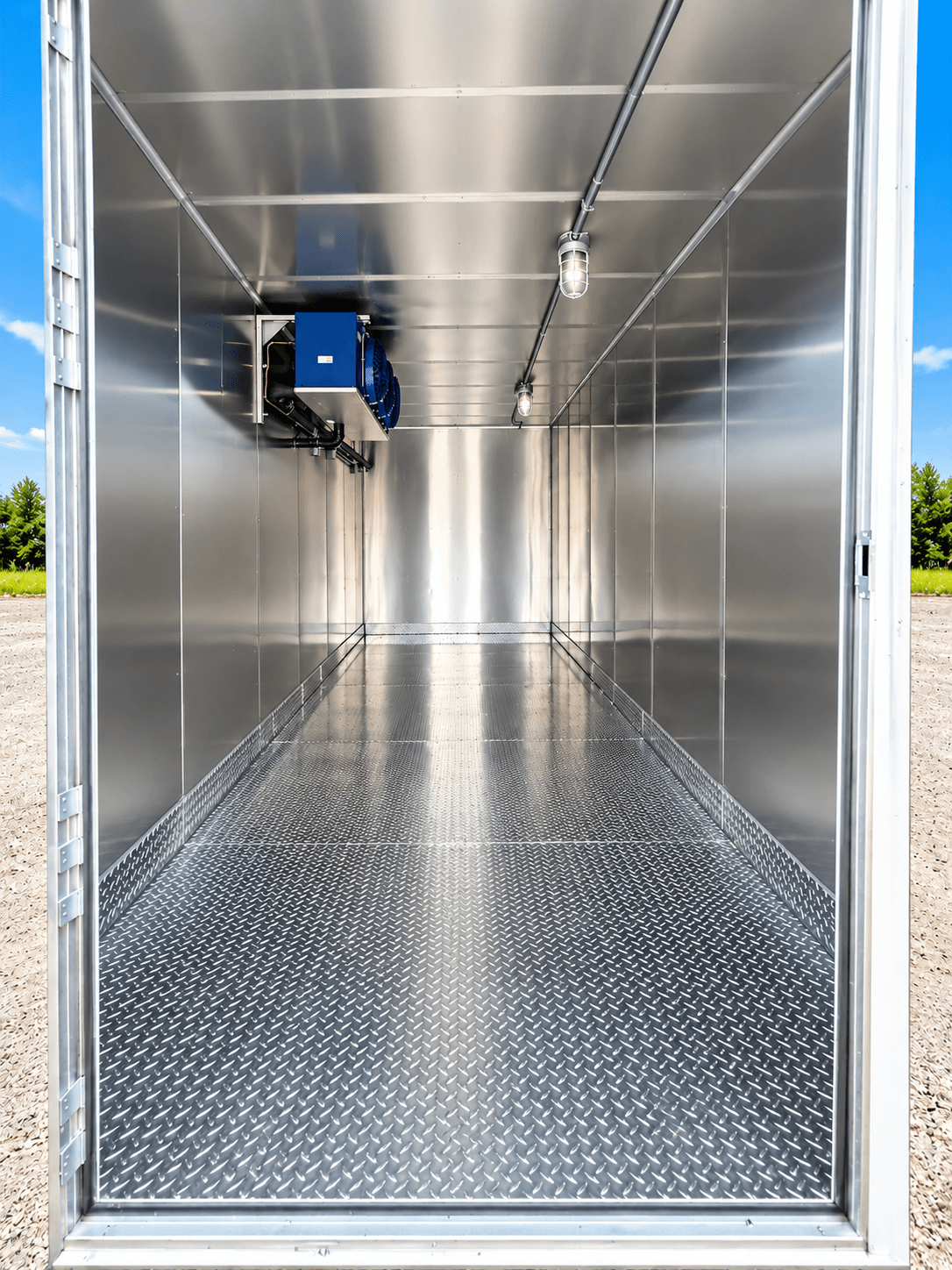
Compare the equipment
These published examples describe named company units. The supplied equipment, configuration and availability are confirmed for your project address.
Listed refrigeration trailer equipment: condensing unit, amps panel, lighting.
Equipment records reviewed October 19, 2026. Temperature labels are inventory labels, not verified operating ranges. Nominal length is a model label, not a measure of usable space or site footprint.
NOAA’s 2022 Michigan summary describes substantial variation in precipitation and lake levels over the historical record. That statewide background supports contingency planning but does not prove flooding or a power interruption at a Bay City business. If refrigeration does fail, first distinguish goods still protected by working equipment from goods needing another destination. A delivery inquiry is easier to assess when it names the freezer or cooler condition required and the quantity that cannot remain on site. A kitchen may be able to reduce purchasing temporarily while a repair is assessed. Dishwashing arrangements should reflect whether meals continue to be served. Giving the temporary storage decision an owner prevents several departments from requesting conflicting solutions for the same stock.
If the inquiry concerns river-crossing delivery plans, compare the plan with the 20ft Refrigerated Container guide, which explains one resting place for the whole project and protection for the power connection.
MDOT’s November 25, 2025 notice described maintenance on Bay City’s Veterans Memorial Bridge, including deck repairs, painting and mechanical work, with overnight lane restrictions planned from December 2025 into March 2026. The notice is historical project context, not a statement about present traffic. It shows why a refrigerated delivery plan should be checked against the date and entrance rather than a familiar commuting route. If building work also changes the receiving yard, send both sets of constraints together. Routine supply vehicles may differ from the rental transport, while collections can occupy the only turning area. Use an agreed site plan to resolve those conflicts before a transport arrangement is accepted.
Two nearby cities approach their projects differently. Midland’s guide addresses recovery and reopening milestones, citing the Midland entry “flood response and sewer improvements”, while the guide for operators in Flint addresses temporary operations during refurbishment, citing the Gloria Coles Flint Public Library entry “institutional history”. Treat each as background for your own questions rather than a description of conditions in Bay City.

For hospitality managers reviewing placement in Bay City or Essexville, Michigan, a doorway convenient for unloading may also serve guests, maintenance staff or other visiting suppliers. Ask the dining supervisor to identify frequently retrieved ingredients and describe how employees will reach them while other property activities continue.
Bay City’s fiscal 2014–2015 budget documents funding connected with City Hall renovation, a local example of investment in an existing public building. A private food-service renovation can likewise include several handovers rather than a single opening day, although no connection to that civic work is implied. If a refrigerated room is replaced, ask when its power, controls and shelving will each be ready for the operator’s checks. The preparation room may reopen before the full receiving volume returns. Conversely, wash-facility work may finish early while refrigerated stock still has nowhere permanent to go. Build the temporary arrangement around those differences so one department’s completion certificate does not become an unsupported instruction to remove everyone’s storage.
For a Bay City business drawing supplies from Essexville, Saginaw or Midland, the stock’s origin does not establish where rented cold storage should be positioned. Start with the address where staff will use it and identify the gate that actually admits equipment. Provide photographs showing the approach, turns and proposed refrigeration position, including any overhead obstructions or spaces reserved for public access. An event site may need a different receiving window from an industrial property. Note when kitchen deliveries or dishwashing returns occupy the entrance, and ask the property representative to approve any alternative placement. Present-day bridge restrictions and access permissions must be checked for the intended dates; the dated public works record cannot settle that assessment.
Send one coordinated inquiry containing the goods, packaging, operating temperature requirement and highest expected stock level. Distinguish your preferred installation date from the first day refrigerated storage must be usable. Give a likely end date and any uncertain milestones that could extend the rental. If several people approve the project, nominate one person to answer site questions and one to authorize the cost. Ask the quotation to state the equipment basis, rental period, delivery arrangements, collection assumptions and any items still needing confirmation. A bridge crossing alone is not a pricing formula. The final proposal must address the actual property and the storage workflow, with availability confirmed for the requested period.
Before you book
No. A route used by routine supply vehicles may not suit the equipment proposed for your request. Give the site entrance, photographs and known restrictions for review, and ask the transport assessment to identify any further measurements or permissions needed before arrangements are finalized.
Describe each phase and the largest stock load during the transition. You may need less refrigerated capacity after purchasing returns to normal. Ask how the proposed agreement handles the uncertain end date, rather than assuming every part of the business will reopen together.
Report the change before confirming transport. A different gate can alter the approach, placement position or required permissions even at the same postal address. Supply a revised sketch and ask whether the equipment recommendation, transport assessment or charges need to be updated.
These public references inform the planning examples; equipment availability and delivery arrangements are confirmed for your address.
Temporary refrigeration, kitchens and dishwashing can support many kinds of food-service operations. Each setting below starts with its own schedule, stock and site questions, and every project is reviewed individually.
Hotels, restaurants and resorts can plan temporary refrigeration around breakfast, banquet and dinner service when a walk-in cooler fails or a kitchen is refurbished.
Hospital, nursing home and care-facility kitchens can describe meal schedules, delivery times and displaced stock so temporary storage follows the food-service routine.
Municipal, county and public-building food-service teams can outline receiving arrangements, responsible contacts and project dates before a quote is prepared.
Dining facility managers can explain the products displaced, the receiving arrangements and the proposed period, then review availability and terms with our team.
Schools, colleges and universities can plan around term dates, serving windows and campus kitchen renovations so meal service can continue during repairs or construction.
Plant cafeterias and employee dining areas can describe shift patterns and staged building work so temporary cold storage can be reviewed against the working schedule.
Caterers and venues can plan preparation windows, event days and overflow ingredients, and describe how stock moves between storage, the kitchen and service.
Producers, wholesalers and distributors can describe loading, staging and storage needs when a cooler breaks down or demand temporarily exceeds capacity.
These examples describe planning situations. Equipment, availability and terms are confirmed in a project quote.
Cold storage is only one part of a project. These are the questions we work through with you before anything is booked.
Start with refrigerated containers and refrigeration trailers, then add a temporary kitchen or dishwashing trailer when the project needs one, all in a single conversation.
Access, utilities and the intended position are reviewed before delivery is arranged, so the equipment is matched to your site rather than the other way around.
Whether a walk-in cooler failed this morning or a renovation is months away, describe the real situation and plan around the stock, dates and people involved.
Planning guides cover all 50 states and more than 700 cities. Your address is then confirmed for equipment and delivery.
Use the rental calculator for a rate-range estimate and setup amount, then request a project quote that confirms availability, transport and the rental period.