BXRT20–1Refrigerated trailer
- Nominal length
- 20ft
- Listed electrical supply
- 220V · single-phase · 40–60A
- Inventory temperature label
- 32°F
Temporary cold storage in Burlington, North Carolina
Burlington refrigerated rentals help commercial and industrial food operators arrange another storage plan when a walk-in cooler or refrigeration unit breaks down. Mobile kitchen and dishwashing trailer requirements can be considered where preparation and cleaning are displaced too. Short-term rentals may bridge an emergency repair; longer leasing can support a planned refurbishment. Bakeries, institutional caterers, restaurants and industrial dining teams should describe their products and the production that must continue. Provide the Burlington address, preferred dates and working access so equipment needs and delivery coordination can be reviewed together. Request availability and a quote from Worldwide Refrigerated Container Rental Facilities that reflects your operating sequence.
Emergency cooler or freezer failure in Burlington? A person answers rental inquiries 24/7. Availability and delivery timing are confirmed in your quote.
Plan your rental budget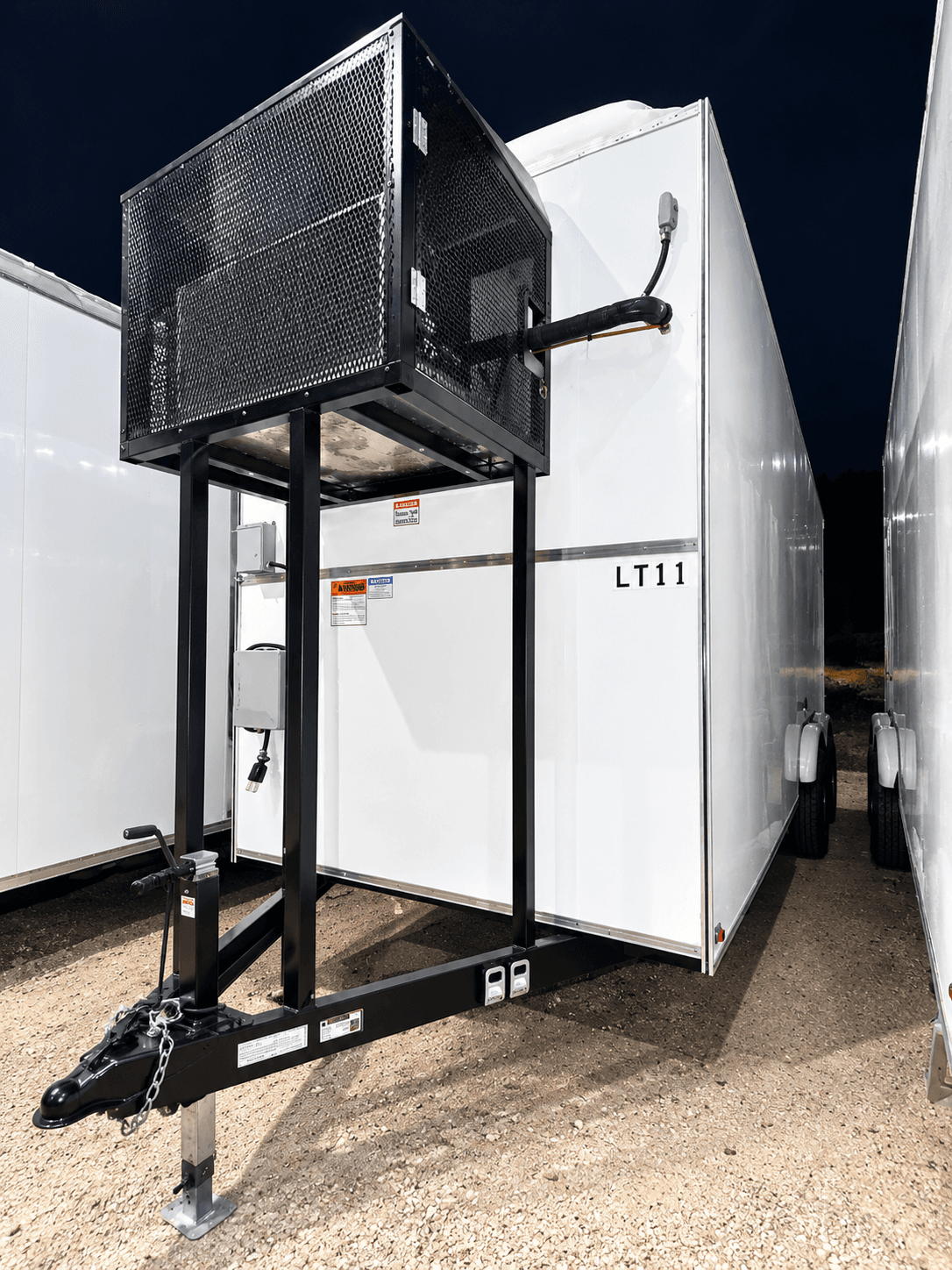
Compare the equipment
These published examples describe named company units. The supplied equipment, configuration and availability are confirmed for your project address.
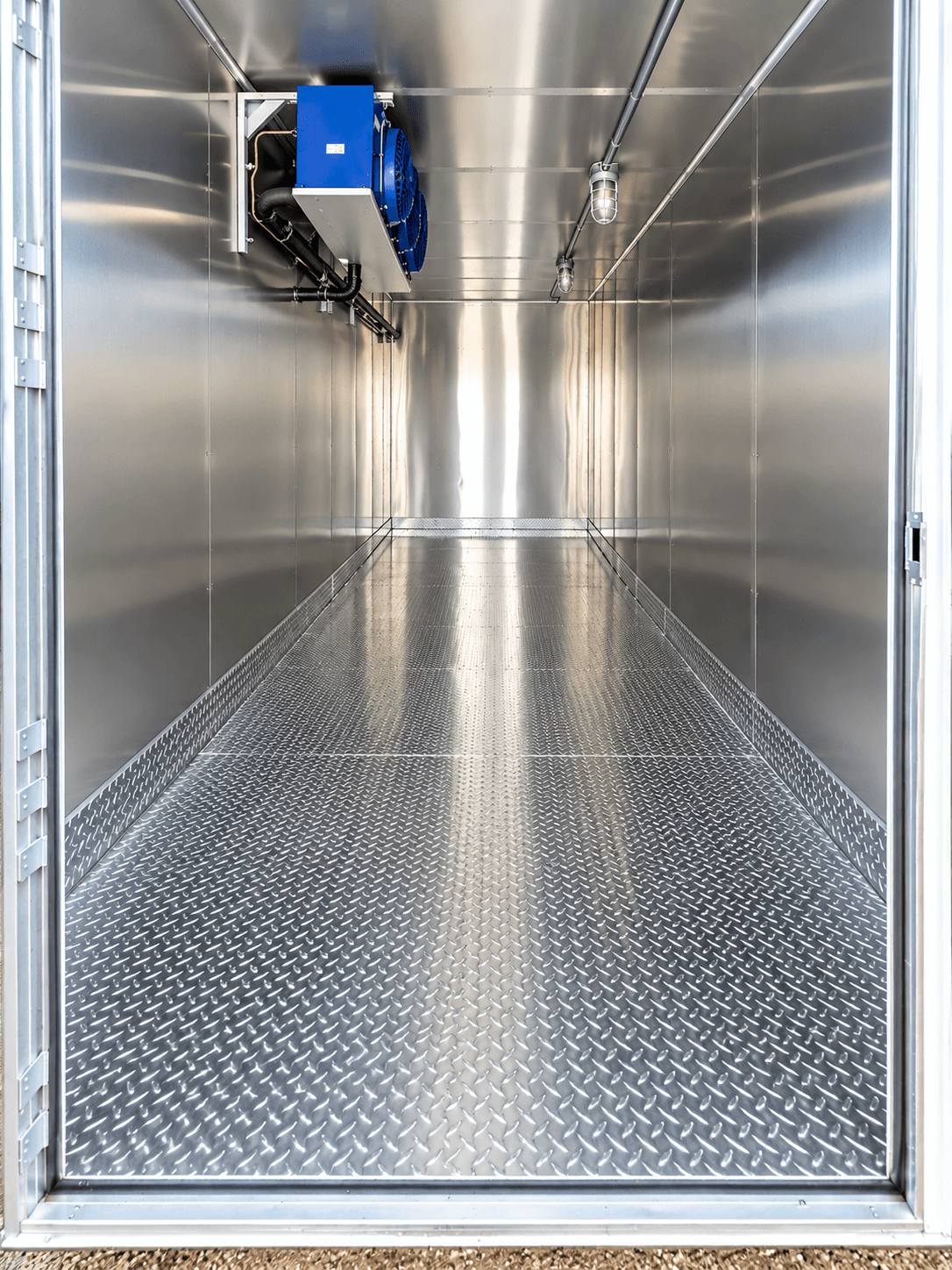
Listed refrigeration trailer equipment: condensing unit, amps panel, lighting.
Equipment records reviewed October 19, 2026. Temperature labels are inventory labels, not verified operating ranges. Nominal length is a model label, not a measure of usable space or site footprint.
Emergency refrigeration rental in Burlington often starts with one decision: whether the stock belongs in a portable refrigerated trailer for rent or in a different format, such as a rented walk-in freezer. The same equipment can be rented for a few days or leased for several months, depending on how long the permanent storage will be out of service. Cold storage is the usual starting point, and the same team can discuss a mobile kitchen rental or a dishwashing trailer lease if the interruption is wider.
Onsite temporary refrigeration facilities can be rented short term or leased long term, whether the need is an emergency breakdown, a mobile cold room for an event or commercial storage during construction. Restaurants, hospitals, schools, hotels, caterers and food producers can describe the problem to a person who answers rental inquiries 24/7. Facilities in Cary, Winston-Salem and Raleigh often ask the same questions as Burlington operators: how long the rental will last, whether a lease makes sense and what the site needs for power and truck access.
The North Carolina State Fair in Raleigh drew 998,926 visitors in 2024, the sixth-biggest turnout in its 156-year history, according to Spectrum News. Hospitality groups in Knightdale, Garner and Morrisville may rent mobile refrigeration for a banquet season or lease modular cold storage during a hotel renovation. Events and food producers in Apex can ask about trailer leasing or a short-term refrigeration rental for seasonal stock. Event refrigeration is quoted by the day or the week: portable refrigerated trailers for a weekend, trailer leasing for a full season. Kitchen, dishwashing and refrigeration rentals are separate equipment, and each can be rented short-term or leased long-term. The context above comes from public sources and does not describe a completed job; availability and delivery are confirmed in the quote.
After Hurricane Helene in September 2024, flooding washed out the main and backup pipes at one of the water treatment plants serving the Asheville area, residents were told to expect dry faucets for days or weeks, and Duke Energy brought in extra crews to restore power to tens of thousands of customers in western North Carolina. Grocers in Woodfin, hotels in Weaverville and commissaries in Fletcher often face the same emergency, a walk-in that stops cooling, and ask first about a refrigerated trailer for rent. A hotel or grocery in Hickory with a failed cooler can ask about renting a refrigerated trailer. After an outage or storm, refrigerated trailers for rent and walk-in freezers protect frozen stock first, and the quote confirms equipment and delivery. Refrigerated trailers for rent, refrigeration containers for lease and walk-in coolers for short-term use are the three questions most callers start with. When cooking and dish washing stop together, a mobile kitchen, a dishwashing trailer and portable refrigeration can be one request. Dishwashing trailer rentals and warewashing capacity are quoted beside the kitchen and refrigeration when the whole food-service area is affected. Nothing here assumes available equipment or a delivery time; a person answers rental inquiries 24/7 and the quote confirms the details.
North Carolina State University’s January 2026 capital projects list shows a $180 million STEM building, Woodson Hall, with a September 14, 2026 date and a $66.25 million Mann Hall renovation with a May 18, 2027 date. Temporary facilities for a remodel in Holly Springs, Chapel Hill or Carrboro usually combine refrigeration, a mobile kitchen for rent and, if dishes are affected, a dishwashing trailer lease. Trailer leasing covers the length of a project: a refrigerated trailer for supplies and a refrigeration container for bulk stock, short-term or long-term. Commercial refrigeration rentals are quoted for the actual address, so power, access and the rental period are confirmed before delivery. This is published public context, not company work; each request is quoted for its own address and dates.
NCDOT’s $1.8 billion I-26 Connector in Asheville has construction under way on both its north and south sections, with the overall project expected to be completed in late 2031. Renovation projects in Charlotte, Concord and Granite Falls can use a rented refrigeration trailer while permanent coolers are rebuilt, with a mobile kitchen trailer added if the cooking line is closed too. A long-term refrigeration trailer lease keeps supplies cold on site for the whole project, with power and access reviewed before delivery. A short-term emergency rental can become a long-term lease at the same address, as long as the quote says so. A dishwashing trailer lease can be added to the same quote when returned dishes also need washing. These are public facts about the area, not a record of company jobs; equipment, availability and delivery are confirmed in the quote. Refrigerated containers and refrigerated trailers differ in size and layout, so the quote names the one proposed for the site.
Refrigeration containers are often chosen for long-term storage, while refrigerated trailers are chosen for short-term emergencies; both can be rented. Emergency refrigeration rental covers walk-in coolers, walk-in freezers and refrigerated trailers for commercial kitchens, warehouses and plants. Dishwashing and kitchen outages often arrive together, so dishwashing trailer rentals and a mobile kitchen for rent are quoted beside emergency refrigeration. A mobile dishwashing trailer and a mobile kitchen trailer are often requested together, with a refrigerated trailer for the stock.
A commercial kitchen closed for repairs may need a mobile kitchen trailer lease, a dishwashing trailer and emergency refrigeration at the same time. Kitchen, dishwashing and refrigeration rentals are separate equipment, and each can be rented short-term or leased long-term. Onsite temporary facilities can include portable refrigeration, a mobile kitchen trailer and, if dishes are affected, a dishwashing trailer. Mobile kitchens, dishwashing trailers and refrigerated trailers for rent can be quoted together as temporary facilities.
A portable refrigerated trailer suits most emergency calls, while a refrigeration container fits a longer, more stationary need. Outdoor walk-in refrigeration can be set up beside the building as temporary facilities, so staff keep working while the permanent walk-in cooler or walk-in freezer is repaired. Emergency refrigeration can be arranged as a refrigerated trailer, a refrigeration container or a portable walk-in cooler, depending on the stock and the site. Short-term or long-term, the same refrigerated trailer rental starts from the address, the stock and the dates.
In Burlington, emergency refrigeration usually means a refrigerated trailer, a refrigeration container or a portable walk-in cooler matched to the stock. Modular and portable cold storage can be discussed in stages when a site needs more space than one refrigerated trailer provides. Portable refrigerated trailers, refrigeration containers and outdoor walk-in refrigeration units can all be discussed for the same emergency. Trailer rentals for emergencies are usually short-term, while trailer leasing for construction or seasonal work can run for months.
Short-term or long-term, trailers for rent in Burlington are quoted for the address, the stock and the dates. When cooking and dish washing stop with the walk-in freezer, a mobile kitchen, a dishwashing trailer and portable refrigeration can be one request. A commercial walk-in freezer failure in Burlington is an emergency call, and onsite temporary refrigeration is how most such calls begin. Emergency refrigeration, onsite and temporary, is meant to bridge the gap until the commercial walk-in freezer is repaired or replaced.
Trailer rentals, refrigerated trailers for rent and trailer leasing are all discussed with the address and the dates in hand. For Burlington kitchens, plants and warehouses, trailer leasing and trailer rentals are two ways to get the same portable refrigerated storage.
North Carolina’s NOAA climate summary records major historical flood events, including those associated with Hurricane Florence in 2018. This statewide account does not establish flooding at a Burlington bakery. It does explain why a storage contingency should ask about usable premises as well as the failed refrigeration equipment. A repair estimate alone cannot answer either question.
For an overnight production team, identify ingredients already weighed for the next batch separately from unopened reserve stock. Tell the coordinator which products need repeated retrieval and which can stay undisturbed. The cold-storage request should follow the production sequence agreed by the operator. If ingredients cannot be released for use, keep that decision distinct from the rental discussion rather than treating equipment placement as permission to continue production.
If the inquiry concerns bakery and food-service work, compare the plan with the 12ft Refrigerated Trailer guide, which explains which stock must move first and the power connection to confirm before delivery.
Burlington reports that a September 8, 2025 Parks in Progress open house presented draft plans for City Park, the arboretum and a downtown pocket park. Draft designs are not construction completion or evidence that those facilities needed our rentals. The dated event illustrates a useful separation between a project vision and the point when an operator can rely on a finished space.
For comparison, read what nearby cities emphasize. In Greensboro, the guide covers reliable meal preparation; in High Point, it covers commercial food-service continuity. Each reflects its own property and schedule, so confirm your Burlington details separately.
A commercial refurbishment deserves the same separation. List design approval, contractor access and acceptance of permanent refrigeration as different decisions. Do not send the first ingredient delivery to a reopened room solely because the building programme calls it complete. The production manager needs an agreed stock-return point that fits testing, cleaning and the operator’s own release process.
For military meal service teams in Burlington or Elon, North Carolina, supplier receiving windows and employee ingredient collection can create different demands on the same proposed equipment position. Request a written proposal for the dining requirement, identifying the equipment period, transport arrangements and responsibilities that remain subject to confirmation.
A bakery replacing its storage-room floor may retain its ovens and sales counter. The temporary layout should support that narrower closure. Estimate the refrigerated stock present when the next flour, dairy or prepared-product delivery overlaps the move, then explain the handling method. Avoid combining products with different conditions into an unexplained total.
Another nearby guide, Durham’s, covers phased food-service work. It describes a different property and is useful mainly for the questions it raises.
A bakery dispatching products to Elon, Gibsonville and Graham may need ingredients at the Burlington production site before those outlets open. Ask the kitchen lead to identify that early retrieval period separately from retail demand. Dishwashing of reusable trays can continue after the dispatch vehicles return. Place both activities on the working drawing so the temporary arrangement fits the production day, rather than the quieter hours used for an initial site visit.
The equipment approach and the bakery’s ordinary van loading area may be different. Photograph both and show how the proposed refrigerated unit position affects vehicle movements. Ask the property owner to confirm the space and identify gate or overhead restrictions. A plan based on the quiet daytime yard may overlook the crowded period before dispatch.
Give the delivery coordinator an authorized site contact and utility information from the responsible premises team. Record where suppliers wait and how staff reach cold storage while builders are present. Keep collection access in the later work drawings, especially if permanent parking or paving returns before every product has moved back inside. Changes need review before transport is agreed.
Supply the full address, product conditions, expected maximum quantities and preferred period. Explain the next production deadline and which repair decisions remain uncertain. Ask the refrigeration quotation to distinguish equipment rental from transport and any additional charges. Confirm availability and the process for reviewing an extension rather than treating a preliminary repair estimate as a fixed commitment.
Include mobile kitchen or dishwashing facilities where those functions require temporary support, with their actual tasks stated separately. Ask who prepares the placement and who accepts it. A practical proposal connects the storage interruption to production, receiving and the final return inside, so both the contractor and the food operator can work from the same assumptions.
Before you book
Explain the next batch, retrieval frequency and stock already committed to incoming deliveries. The temporary storage arrangement should support that working sequence, with the operator responsible for product-use decisions.
Provide separate figures and addresses when needs differ. A refrigeration request for the production premises is not automatically the right arrangement for a retail outlet elsewhere.
Agree the permanent system’s acceptance and final stock move before collection. Visible completion of the room does not itself establish that the cooler is ready for normal operation.
Yes, a mobile kitchen for rent can be quoted alongside a portable refrigerated trailer for Burlington, and a dishwashing trailer lease can be added if the dish room is affected. Tell the team the address, what is stored, the target temperature and when the permanent unit should be back. Delivery timing, availability and the rental period are confirmed once the details are reviewed.
Commercial customers can ask about refrigerated trailers for rent, refrigeration containers, portable walk-in coolers and walk-in freezers, with onsite delivery coordination. Outdoor walk-in refrigeration needs level ground and power nearby, so a long-term lease starts with a site conversation. Temporary facilities can be arranged onsite for an event, a renovation or an emergency, and collected when the permanent kitchen is ready. A commercial walk-in freezer or refrigeration breakdown is an emergency, so call at any hour; a person answers rental inquiries 24/7, and the quote confirms the equipment and delivery for your address.
These public references inform the planning examples; equipment availability and delivery arrangements are confirmed for your address.
Temporary refrigeration, kitchens and dishwashing can support many kinds of food-service operations. Each setting below starts with its own schedule, stock and site questions, and every project is reviewed individually.
Hotels, restaurants and resorts can plan temporary refrigeration around breakfast, banquet and dinner service when a walk-in cooler fails or a kitchen is refurbished.
Hospital, nursing home and care-facility kitchens can describe meal schedules, delivery times and displaced stock so temporary storage follows the food-service routine.
Municipal, county and public-building food-service teams can outline receiving arrangements, responsible contacts and project dates before a quote is prepared.
Dining facility managers can explain the products displaced, the receiving arrangements and the proposed period, then review availability and terms with our team.
Schools, colleges and universities can plan around term dates, serving windows and campus kitchen renovations so meal service can continue during repairs or construction.
Plant cafeterias and employee dining areas can describe shift patterns and staged building work so temporary cold storage can be reviewed against the working schedule.
Caterers and venues can plan preparation windows, event days and overflow ingredients, and describe how stock moves between storage, the kitchen and service.
Producers, wholesalers and distributors can describe loading, staging and storage needs when a cooler breaks down or demand temporarily exceeds capacity.
These examples describe planning situations. Equipment, availability and terms are confirmed in a project quote.
Cold storage is only one part of a project. These are the questions we work through with you before anything is booked.
Start with refrigerated containers and refrigeration trailers, then add a temporary kitchen or dishwashing trailer when the project needs one, all in a single conversation.
Access, utilities and the intended position are reviewed before delivery is arranged, so the equipment is matched to your site rather than the other way around.
Whether a walk-in cooler failed this morning or a renovation is months away, describe the real situation and plan around the stock, dates and people involved.
Planning guides cover all 50 states and more than 700 cities. Your address is then confirmed for equipment and delivery.
Use the rental calculator for a rate-range estimate and setup amount, then request a project quote that confirms availability, transport and the rental period.