BXRT20–1Refrigerated trailer
- Nominal length
- 20ft
- Listed electrical supply
- 220V · single-phase · 40–60A
- Inventory temperature label
- 32°F
Temporary cold storage in Goldsboro, North Carolina
Goldsboro cold storage rentals help commercial and industrial teams organize continuity when a walk-in freezer or refrigeration unit fails. Mobile kitchen and dishwashing trailers can be reviewed if cooking and cleaning need temporary accommodation too. Short-term rentals may bridge emergency repairs; longer leasing can support planned work in an institutional dining operation or commercial facility. Schools, caterers, restaurants and industrial meal-service managers should identify the stock and services displaced. Share the Goldsboro address, project stages and delivery restrictions so equipment requirements and transport coordination can be considered together. Ask for availability and a quotation from Worldwide Refrigerated Container Rental Facilities tailored to the actual site.
Emergency cooler or freezer failure in Goldsboro? A person answers rental inquiries 24/7. Availability and delivery timing are confirmed in your quote.
Plan your rental budget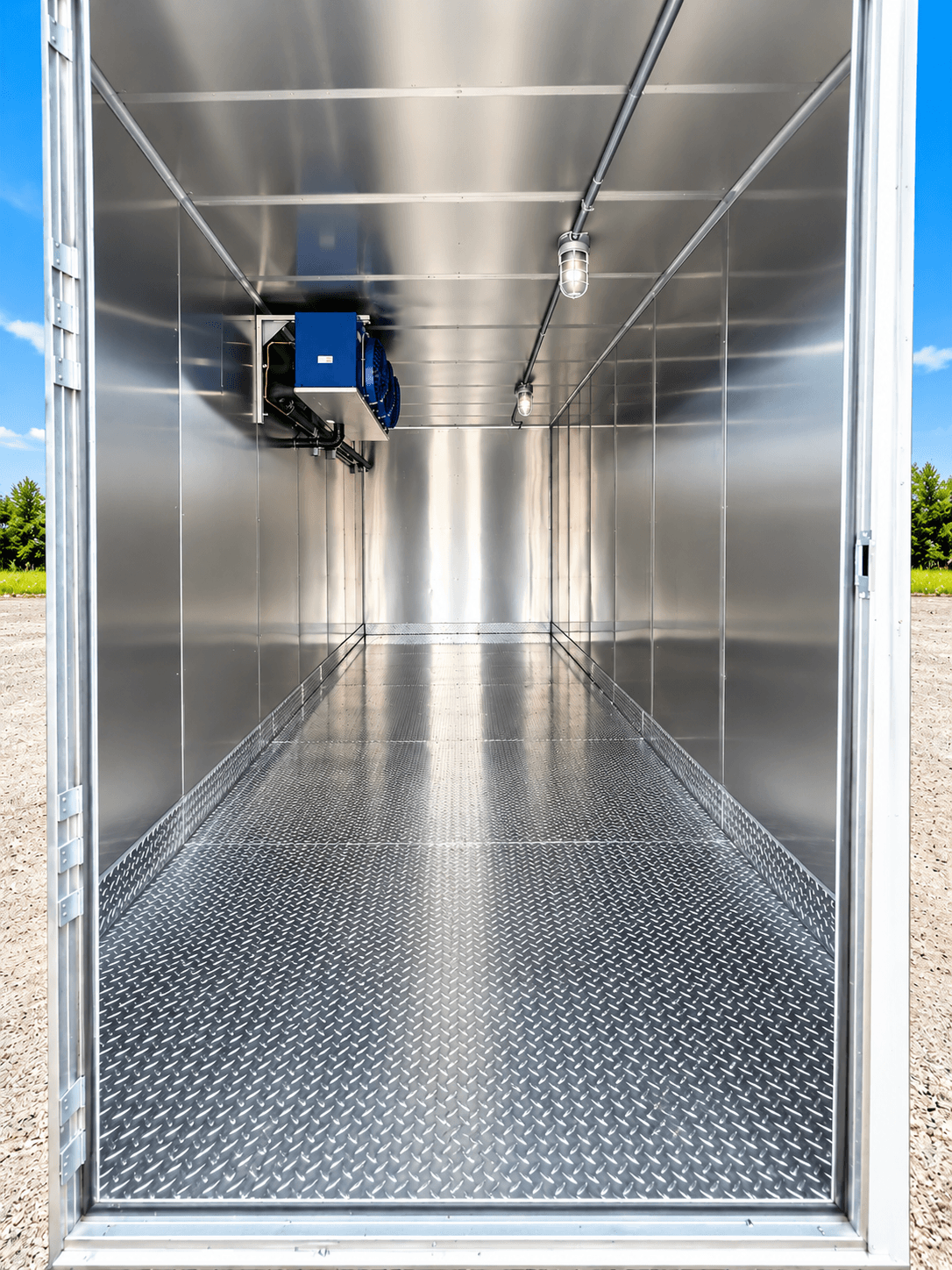
Compare the equipment
These published examples describe named company units. The supplied equipment, configuration and availability are confirmed for your project address.
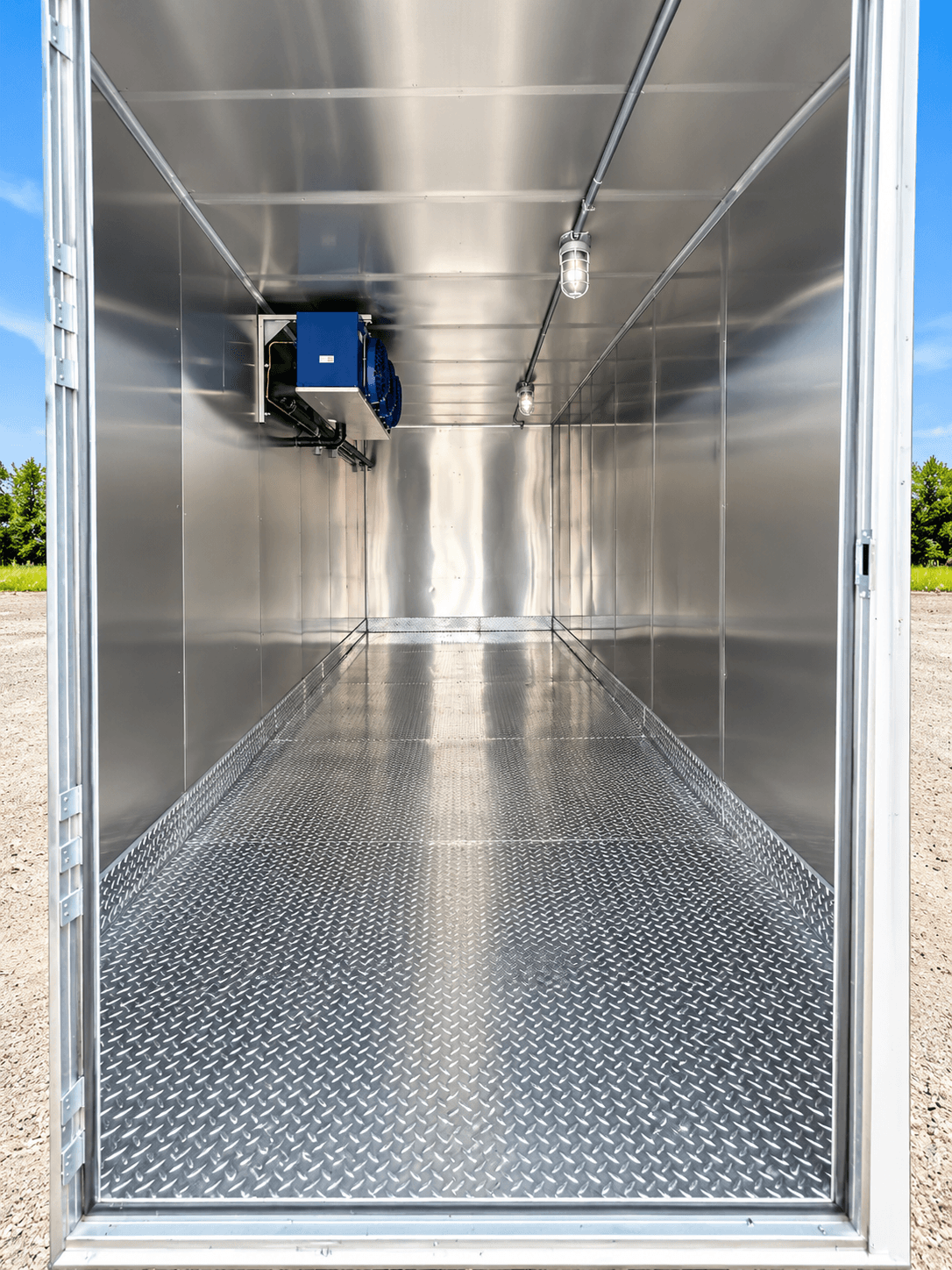
Listed refrigeration trailer equipment: condensing unit, amps panel, lighting.
Equipment records reviewed October 19, 2026. Temperature labels are inventory labels, not verified operating ranges. Nominal length is a model label, not a measure of usable space or site footprint.
Renting a mobile refrigeration trailer in Goldsboro gives a catering commissary somewhere to put chilled and frozen stock while a failed compressor, door or walk-in is repaired. Tell the team whether you expect to rent for one repair or lease for a longer project, and the options can be compared in the quote. Cold storage is the usual starting point, and the same team can discuss a mobile kitchen rental or a dishwashing trailer lease if the interruption is wider.
Refrigeration is an emergency need: when a commercial walk-in freezer or refrigeration unit breaks down, the call is an emergency, and a person answers rental inquiries 24/7. The quote lists the equipment, the delivery arrangements and the rental terms for the specific site. Refrigeration rentals range from a portable walk-in cooler for a few days to a refrigeration container leased for months. Whatever the hour, a person answers rental inquiries, so a failed commercial freezer in Goldsboro does not have to wait for business hours to be reported. Teams working in Cary, Jacksonville and Fayetteville, as well as Goldsboro, can ask for trailer rental or leasing details for their own address, since equipment and delivery are reviewed site by site.
The North Carolina State Fair in Raleigh drew 998,926 visitors in 2024, the sixth-biggest turnout in its 156-year history, according to Spectrum News. Hospitality groups in Knightdale, Garner and Durham may rent mobile refrigeration for a banquet season or lease modular cold storage during a hotel renovation. Packers and distributors in Morrisville can compare a short rental with a longer lease for seasonal stock. Refrigerated trailers for rent and portable walk-in coolers hold drinks, produce and prepared food at crowded events, and a refrigeration container suits a longer festival run. Kitchen, dishwashing and refrigeration rentals are separate equipment, and each can be rented short-term or leased long-term. The context above comes from public sources and does not describe a completed job; availability and delivery are confirmed in the quote.
After Hurricane Helene in September 2024, flooding washed out the main and backup pipes at one of the water treatment plants serving the Asheville area, residents were told to expect dry faucets for days or weeks, and Duke Energy brought in extra crews to restore power to tens of thousands of customers in western North Carolina. When a compressor fails at a grocery in Woodfin, a school in Weaverville or a care facility in Fletcher, an emergency walk-in cooler or freezer rental can protect the food while repairs are arranged. A grocery or distributor in Hickory can call about emergency refrigeration rental as soon as a walk-in stops holding temperature. After an outage or storm, refrigerated trailers for rent and walk-in freezers protect frozen stock first, and the quote confirms equipment and delivery. Portable refrigerated trailers, refrigeration containers and outdoor walk-in refrigeration units can all be discussed for the same job. Mobile kitchens, dishwashing trailers and refrigerated trailers for rent can be quoted together as temporary facilities. When cooking and dish washing stop together, a mobile kitchen, a dishwashing trailer and portable refrigeration can be one request. This is published public context, not company work; each request is quoted for its own address and dates.
North Carolina State University’s January 2026 capital projects list shows a $180 million STEM building, Woodson Hall, with a September 14, 2026 date and a $66.25 million Mann Hall renovation with a May 18, 2027 date. Construction crews and facility managers near Apex, Holly Springs and Chapel Hill may lease refrigerated containers to hold food for a work site or a temporary dining area. On long projects, contractors compare a refrigerated trailer lease with a refrigeration container for bulk crew supplies. Onsite temporary facilities can include portable refrigeration, trailers for rent and, if dishes are affected, a dishwashing trailer. These are public facts about the area, not a record of company jobs; equipment, availability and delivery are confirmed in the quote.
NCDOT’s $1.8 billion I-26 Connector in Asheville has construction under way on both its north and south sections, with the overall project expected to be completed in late 2031. Construction managers in Charlotte, Concord and Granite Falls sometimes lease a refrigerated container for the length of a project, with a mobile kitchen trailer added when the crew or the public still needs meals. Trailer leasing covers the length of a project: a refrigerated trailer for supplies and a refrigeration container for bulk stock, short-term or long-term. A mobile dishwashing trailer and a mobile kitchen trailer are often requested together, with a refrigerated trailer for the stock. Dishwashing trailer rentals and warewashing capacity are quoted beside the kitchen and refrigeration when the whole food-service area is affected. A dishwashing trailer lease can be added to the same quote when returned dishes also need washing. Nothing here assumes available equipment or a delivery time; a person answers rental inquiries 24/7 and the quote confirms the details. Outdoor walk-in refrigeration and refrigerated trailers are discussed first when stock is at risk. Most calls are about refrigeration: a failed cooler, a warm freezer or a compressor that will not restart.
A commercial walk-in freezer failure in Goldsboro is an emergency call, and onsite temporary refrigeration is how most such calls begin. Modular and portable cold storage can be discussed in stages when a site needs more space than one refrigerated trailer provides. A mobile dishwashing trailer and a mobile kitchen trailer are often requested together, with a refrigerated trailer for the stock. Emergency refrigeration can be arranged as a refrigerated trailer, a refrigeration container or a portable walk-in cooler, depending on the stock and the site.
Outdoor walk-in refrigeration needs level ground and power nearby, so a long-term lease starts with a site conversation. Refrigeration containers are often chosen for long-term storage, while refrigerated trailers are chosen for short-term emergencies; both can be rented. Short-term or long-term, the same refrigerated trailer rental starts from the address, the stock and the dates. Emergency refrigeration, onsite and temporary, is meant to bridge the gap until the commercial walk-in freezer is repaired or replaced.
Outdoor walk-in refrigeration can be set up beside the building as temporary facilities, so staff keep working while the permanent walk-in cooler or walk-in freezer is repaired. Portable refrigerated trailers, refrigeration containers and outdoor walk-in refrigeration units can all be discussed for the same emergency. Dishwashing and kitchen outages often arrive together, so dishwashing trailer rentals and a mobile kitchen for rent are quoted beside emergency refrigeration. Kitchen, dishwashing and refrigeration rentals are separate equipment, and each can be rented short-term or leased long-term.
A dishwashing trailer lease can be added to the same quote when returned dishes also need washing. A portable refrigerated trailer suits most emergency calls, while a refrigeration container fits a longer, more stationary need. Temporary facilities can be arranged onsite for an event, a renovation or an emergency, and collected when the permanent kitchen is ready. Emergency refrigeration rental covers walk-in coolers, walk-in freezers and refrigerated trailers for commercial kitchens, warehouses and plants.
Dishwashing trailer rentals and kitchen trailer rentals can be quoted alongside refrigerated trailers for rent when the whole kitchen is down. Trailer rentals, refrigerated trailers for rent and trailer leasing are all discussed with the address and the dates in hand. When cooking and dish washing stop with the walk-in freezer, a mobile kitchen, a dishwashing trailer and portable refrigeration can be one request. Short-term or long-term, trailers for rent in Goldsboro are quoted for the address, the stock and the dates.
Modular, mobile or portable, the equipment is chosen to fit the work that continues at the site. Emergency refrigeration for commercial kitchens often starts with a portable refrigerated trailer and ends with a longer lease if repairs take time.
NOAA’s North Carolina summary describes the state’s history of severe flooding. That context supports advance continuity planning, but it cannot establish damage or utility availability at a Goldsboro institution. An emergency refrigeration inquiry should distinguish the equipment fault from broader building restrictions and identify who has assessed the stock and premises.
An institutional operator may have ingredients allocated to several meal periods before a freezer fails. Begin with those commitments, including deliveries already on order. State which products need another approved storage location and which remain in accepted permanent space. Cold-storage planning should give the next shift a usable record, without letting an informal repair prediction become the only basis for the meal-service plan.
Because this guide centers on institutional food service, the 20ft Refrigerated Trailer guide is a useful companion: it covers simple rules when several teams share one unit and the route and turning space a longer vehicle needs.
Goldsboro’s May 6, 2024 council packet includes an annual action plan proposing public-facility infrastructure activity for the N. E. Minor development. The record identifies a planning and funding step. It does not establish present construction conditions, a food-service requirement or work supplied by our company. Public investment documents must not be mistaken for an operator’s commissioning schedule.
Several neighboring guides cover situations that resemble parts of an inquiry from Goldsboro. Greenville’s guide is organized around commercial dining projects, citing the East Carolina University entry “November 22, 2024 medical education groundbreaking”. A separate comparison is Rocky Mount’s guide, which covers commercial service gaps, citing the City of Rocky Mount entry “October 14, 2024 council packet”. Use them to prepare questions, not to infer availability or terms for Goldsboro.
For a comparable institutional upgrade, identify which decisions release the premises for use. An authorized project and a functioning cooler are different milestones. The dining team should know when deliveries resume, where reserve stock waits and who confirms that permanent storage is ready. Temporary equipment dates can then follow the working programme rather than an early funding or approval announcement.
Food production operators in Goldsboro or Selma, North Carolina, may need an alternative product route when planned work restricts movement between receiving, preparation and dispatch areas. Keep receiving instructions and stock allocation notes together so staff can trace a product from arrival through its next planned handover.
A dining facility may renovate preparation and storage on different dates. Separate the food held for immediate use from bulk reserves, and show the anticipated peak when incoming stock overlaps the move. A refrigerated container inquiry should describe how products are handled, including carts or cases, so usable access is considered alongside the amount stored.
For another comparison, the guide for operators in Raleigh covers planning during food-service work. Use it as a prompt for your own questions about timing, access and storage.
If a Goldsboro institution borrows staff from Mount Olive while purchasing is coordinated through Selma, explain who gives the kitchen team its final delivery instruction. A Kinston colleague helping with the project should see the same stock record instead of an older regional order. Dishwashing returns can be assigned to a different receiving point during the move. Clear responsibilities matter most when temporary staff do not know the usual routine.
Institutional delivery access often involves an owner-defined check-in or escort process. Provide that procedure, the authorized receiver and photographs of the actual equipment approach. Show the proposed refrigerated unit position, gates and any overhead restriction. A general institutional address does not identify the correct working entrance or establish permission to occupy a service area.
Ask the site manager how suppliers and staff will circulate after placement. Utility details should be supplied by the responsible building team for review, including planned isolations during the works. Protect access to cold storage throughout the meal-service schedule. Collection also needs a working route after contractors reinstate fencing, surfaces or parking at the end of their programme.
Send the exact address, required conditions, expected maximum stock and the desired start and finish. Explain which dates depend on repair acceptance or another project stage. Ask the refrigeration proposal to state its equipment basis, transport arrangements and other charges, with a clear process for reviewing changed dates. Confirm availability before coordinating dependent closures.
If mobile kitchen or dishwashing facilities are required, describe their tasks and operating periods separately. Clarify who prepares the site and who can approve the arrangement. The resulting quote should be understandable to both the institutional operator and contractor, with storage responsibilities and assumptions visible. That clarity is more useful than a generic request tied only to the building’s anticipated reopening.
Before you book
Provide the address, next meal-service commitments and stock categories, then identify the person who can confirm access. A refrigeration request benefits from a clear operating plan as well as quantities.
Yes, if access or utilities are isolated. Ask the premises team which functions are actually affected before requesting equipment, rather than assuming every room becomes unavailable together.
The responsible operator should accept the permanent cooler and agree the transfer. A contractor’s last day alone does not establish that the storage system is ready for normal use.
Yes, a mobile kitchen for rent can be quoted alongside a mobile refrigeration trailer for Goldsboro, and a dishwashing trailer lease can be added if the dish room is affected. Share the location, the products to be held and how long you expect to need the equipment, including whether dates may change. The quote confirms the equipment, the delivery timing and the rental terms for your site.
Portable refrigerated trailers, refrigeration containers, outdoor walk-in refrigeration, and portable walk-in coolers or walk-in freezers can be discussed for onsite, short-term or long-term use. When a commercial walk-in cooler fails, the emergency is the stock inside it, which is why the first call should describe the product and the temperature. Refrigeration is an emergency need, so describe the failed commercial unit and the stock at risk. The quote confirms availability, delivery and the rental period for the site.
These public references inform the planning examples; equipment availability and delivery arrangements are confirmed for your address.
Temporary refrigeration, kitchens and dishwashing can support many kinds of food-service operations. Each setting below starts with its own schedule, stock and site questions, and every project is reviewed individually.
Hotels, restaurants and resorts can plan temporary refrigeration around breakfast, banquet and dinner service when a walk-in cooler fails or a kitchen is refurbished.
Hospital, nursing home and care-facility kitchens can describe meal schedules, delivery times and displaced stock so temporary storage follows the food-service routine.
Municipal, county and public-building food-service teams can outline receiving arrangements, responsible contacts and project dates before a quote is prepared.
Dining facility managers can explain the products displaced, the receiving arrangements and the proposed period, then review availability and terms with our team.
Schools, colleges and universities can plan around term dates, serving windows and campus kitchen renovations so meal service can continue during repairs or construction.
Plant cafeterias and employee dining areas can describe shift patterns and staged building work so temporary cold storage can be reviewed against the working schedule.
Caterers and venues can plan preparation windows, event days and overflow ingredients, and describe how stock moves between storage, the kitchen and service.
Producers, wholesalers and distributors can describe loading, staging and storage needs when a cooler breaks down or demand temporarily exceeds capacity.
These examples describe planning situations. Equipment, availability and terms are confirmed in a project quote.
Cold storage is only one part of a project. These are the questions we work through with you before anything is booked.
Start with refrigerated containers and refrigeration trailers, then add a temporary kitchen or dishwashing trailer when the project needs one, all in a single conversation.
Access, utilities and the intended position are reviewed before delivery is arranged, so the equipment is matched to your site rather than the other way around.
Whether a walk-in cooler failed this morning or a renovation is months away, describe the real situation and plan around the stock, dates and people involved.
Planning guides cover all 50 states and more than 700 cities. Your address is then confirmed for equipment and delivery.
Use the rental calculator for a rate-range estimate and setup amount, then request a project quote that confirms availability, transport and the rental period.