BXRT20–1Refrigerated trailer
- Nominal length
- 20ft
- Listed electrical supply
- 220V · single-phase · 40–60A
- Inventory temperature label
- 32°F
Temporary cold storage in Winston-Salem, North Carolina
Winston-Salem refrigeration rentals can support a regular meal schedule after a commercial walk-in cooler or freezer fails and during planned repairs or replacement work. Worldwide Refrigerated Container Rental Facilities offers refrigerated containers, refrigeration trailers, portable coolers and freezers for the ingredients that still need holding. Schools, hospitality businesses and institutional dining teams can explore short-term rentals or longer leases. A mobile kitchen and dishwashing trailer have separate roles if preparation or cleanup also moves. Equipment selection and delivery coordination follow the products, working address and project dates. Contact our team to request availability and a quote.
Emergency cooler or freezer failure in Winston-Salem? A person answers rental inquiries 24/7. Availability and delivery timing are confirmed in your quote.
Plan your rental budget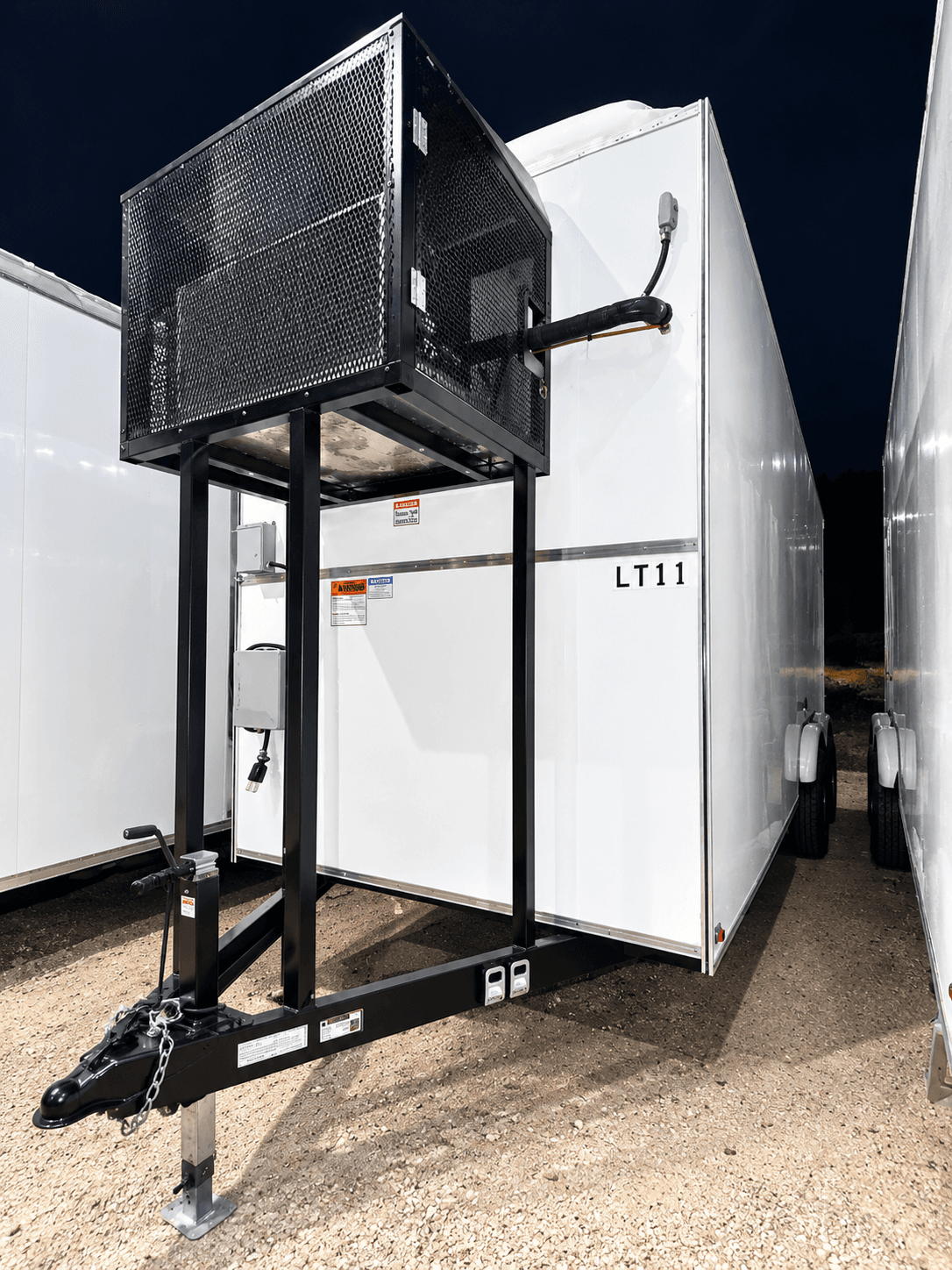
Compare the equipment
These published examples describe named company units. The supplied equipment, configuration and availability are confirmed for your project address.
Listed refrigeration trailer equipment: condensing unit, amps panel, lighting.
Equipment records reviewed October 19, 2026. Temperature labels are inventory labels, not verified operating ranges. Nominal length is a model label, not a measure of usable space or site footprint.
If a food-processing plant in Winston-Salem loses refrigeration, a mobile refrigeration trailer for rent can keep products cold while the permanent system is fixed or replaced. Emergency rentals and planned leases are quoted from the same details: the product, the temperature it must hold, the address and the dates. Kitchen outages often bring more than one need: a mobile kitchen for rent for cooking, a dishwashing trailer lease for warewashing and refrigerated storage for the ingredients.
Refrigeration is an emergency need: when a commercial walk-in freezer or refrigeration unit breaks down, the call is an emergency, and a person answers rental inquiries 24/7. Whatever the hour, a person answers rental inquiries, so a failed commercial freezer in Winston-Salem does not have to wait for business hours to be reported. If your project is closer to Concord, Hickory and Charlotte, say so when you reach out. Emergency refrigeration rental, trailer leasing and mobile kitchen options are discussed for the actual address rather than the nearest large city.
The North Carolina State Fair in Raleigh drew 998,926 visitors in 2024, the sixth-biggest turnout in its 156-year history, according to Spectrum News. Food producers in Cary, Knightdale and Garner can ask about leasing a refrigerated container for seasonal stock or a temporary overflow. Events in Durham can rent portable cold storage for a weekend and release it afterward. Refrigerated trailers for rent and portable walk-in coolers hold drinks, produce and prepared food at crowded events, and a refrigeration container suits a longer festival run. Short-term rental suits a repair or an event, and long-term leasing suits a renovation, so ask the quote to say which applies. A dishwashing trailer lease can be added to the same quote when returned dishes also need washing. This is published public context, not company work; each request is quoted for its own address and dates.
After Hurricane Helene in September 2024, flooding washed out the main and backup pipes at one of the water treatment plants serving the Asheville area, residents were told to expect dry faucets for days or weeks, and Duke Energy brought in extra crews to restore power to tens of thousands of customers in western North Carolina. Teams in Woodfin, Weaverville and Fletcher can describe a failed walk-in cooler at any hour to a person who answers rental inquiries 24/7, then compare a short rental with a lease in the quote. A hotel or grocery in Granite Falls with a failed cooler can ask about renting a refrigerated trailer. A failed commercial walk-in freezer after an outage is an emergency call, and walk-in coolers, walk-in freezers and refrigerated trailers are the first rentals discussed. A walk-in cooler and a walk-in freezer can be rented together when a commercial site needs both. Kitchen, dishwashing and refrigeration rentals are separate equipment, and each can be rented short-term or leased long-term. A mobile dishwashing trailer and a mobile kitchen trailer are often requested together, with a refrigerated trailer for the stock. Nothing here assumes available equipment or a delivery time; a person answers rental inquiries 24/7 and the quote confirms the details.
North Carolina State University’s January 2026 capital projects list shows a $180 million STEM building, Woodson Hall, with a September 14, 2026 date and a $66.25 million Mann Hall renovation with a May 18, 2027 date. Hospitals in Morrisville, hotels in Apex and school districts in Holly Springs schedule kitchen upgrades around busy periods, and a trailer lease can hold stock until the permanent walk-in is ready. On long projects, contractors compare a refrigerated trailer lease with a refrigeration container for bulk crew supplies. Onsite temporary facilities can include portable refrigeration, trailers for rent and, if dishes are affected, a dishwashing trailer. When cooking and dish washing stop together, a mobile kitchen, a dishwashing trailer and portable refrigeration can be one request. The context above comes from public sources and does not describe a completed job; availability and delivery are confirmed in the quote.
NCDOT’s $1.8 billion I-26 Connector in Asheville has construction under way on both its north and south sections, with the overall project expected to be completed in late 2031. Construction crews and facility managers near Long View, Fontana Dam and Lake Santeetlah may lease refrigerated containers to hold food for a work site or a temporary dining area. Trailer leasing covers the length of a project: a refrigerated trailer for supplies and a refrigeration container for bulk stock, short-term or long-term. Outdoor walk-in refrigeration needs level ground and power nearby, so a long-term lease starts with a site conversation. Dishwashing trailer rentals and warewashing capacity are quoted beside the kitchen and refrigeration when the whole food-service area is affected. These are public facts about the area, not a record of company jobs; equipment, availability and delivery are confirmed in the quote. Outdoor walk-in refrigeration and refrigerated trailers are discussed first when stock is at risk. Walk-in freezer failures are the most urgent calls, because frozen stock has the least time. Refrigerated containers and trailers can hold product cold while the permanent cooler or freezer is repaired.
Emergency refrigeration, onsite and temporary, is meant to bridge the gap until the commercial walk-in freezer is repaired or replaced. Kitchen, dishwashing and refrigeration rentals are separate equipment, and each can be rented short-term or leased long-term. Refrigerated trailers for rent, refrigeration containers for lease and walk-in coolers for short-term use are the three questions most callers start with. Short-term or long-term, the same refrigerated trailer rental starts from the address, the stock and the dates.
Modular, mobile or portable, the equipment is chosen to fit the work that continues at the site. Dishwashing trailer rentals and kitchen trailer rentals can be quoted alongside refrigerated trailers for rent when the whole kitchen is down. Portable refrigerated trailers, refrigeration containers and outdoor walk-in refrigeration units can all be discussed for the same emergency. Emergency refrigeration rental, trailer rentals and trailer leasing are all handled through one inquiry, so one call can cover every option.
A short-term emergency rental can become a long-term lease at the same address, as long as the quote says so. Dishwashing and kitchen outages often arrive together, so dishwashing trailer rentals and a mobile kitchen for rent are quoted beside emergency refrigeration. A commercial walk-in freezer failure in Winston-Salem is an emergency call, and onsite temporary refrigeration is how most such calls begin. Onsite temporary facilities can include portable refrigeration, a mobile kitchen trailer and, if dishes are affected, a dishwashing trailer.
Emergency refrigeration can be arranged as a refrigerated trailer, a refrigeration container or a portable walk-in cooler, depending on the stock and the site. A mobile, modular or portable refrigeration setup in Winston-Salem is chosen to match the walk-in cooler or freezer that failed. A mobile kitchen trailer for rent can sit beside onsite refrigeration, so cooking and cold storage are planned together. Mobile kitchens, dishwashing trailers and refrigerated trailers for rent can be quoted together as temporary facilities.
Emergency refrigeration rental covers walk-in coolers, walk-in freezers and refrigerated trailers for commercial kitchens, warehouses and plants. A dishwashing trailer lease can be added to the same quote when returned dishes also need washing. A portable refrigerated trailer suits most emergency calls, while a refrigeration container fits a longer, more stationary need. For Winston-Salem kitchens, plants and warehouses, trailer leasing and trailer rentals are two ways to get the same portable refrigerated storage.
Portable refrigeration is not a permanent fix; it is a set of temporary facilities for the weeks between a failure and a repaired walk-in freezer. A mobile dishwashing trailer and a mobile kitchen trailer are often requested together, with a refrigerated trailer for the stock.
For a Winston-Salem meal operation, an average daily requirement can conceal the receiving peak. A new supplier order may arrive while previous stock remains, and packaging can change how that quantity uses space. Describe the largest amount held together, the required chilled or frozen conditions and what employees use repeatedly during preparation. This gives the equipment request more meaning than a meal count alone. Include the final receiving day before each delivery, when stock is lower, so the team can understand both the peak load and the repeated working routine.
If the permanent kitchen retains some refrigeration, explain how the two arrangements divide the workload. The rental might hold reserves while daily ingredients remain inside, or become the main preparation store during replacement work. Those roles create different access patterns. Review the offered entrance and layout against the task, including any handling equipment employees intend to use and what is actually included in the quotation.
To turn this local picture of commercial meal service into an equipment shortlist, start with the 12ft Refrigerated Trailer guide and its notes on which stock must move first and the power connection to confirm before delivery.
A Winston-Salem team preparing meals for activity in Walkertown should identify where ingredients are received and stored before service. A rental beside the preparation kitchen serves a different purpose from a reserve at the receiving property. Explain the point where stock waits and who needs to reach it, rather than use the destination of the meals as a substitute for the storage address.
Nearby guides can help frame your questions. High Point’s guide covers commercial food-service continuity. For a different working situation, Greensboro’s guide covers reliable meal preparation. Use them to prepare questions, not to infer availability or terms for Winston-Salem.
At a Wallburg property, the immediate concern may be supplies displaced by a walk-in repair. A Clemmons refurbishment can instead involve several planned storage stages. Include those circumstances when discussing the regional requirement. Each property needs its own stock plan and placement review, even when a single purchasing contact manages the inquiry.
A healthcare dining operation in Winston-Salem or Wallburg, North Carolina, may need to review its temporary arrangement when an ordinary supplier order arrives before earlier ingredients are used. Record who receives food supplies and who approves their movement, then include those responsibilities in the temporary equipment and rental discussion.
Receiving employees know when cartons arrive and where packaging is handled. Preparation staff know which supplies generate repeated trips. Ask both groups to review the proposed position with the property contact. A place that looks convenient for equipment unloading can still interrupt normal movement once the unit is loaded and suppliers continue using the area.
Another nearby guide, Burlington’s, covers bakery and food-service work, citing the City of Burlington entry “Parks in Progress”. Use it as a prompt for your own questions about timing, access and storage.
Where work affects cooking or washing, show how ingredients move between the remaining and temporary facilities. Keep the specific requirements of each unit clear instead of assuming one equipment order establishes every connection. For longer use, discuss the intended months and whether construction later changes access. State climate context is a prompt for that review, not a technical approval of the selected position.
The storage period begins when products need another location and ends when they can leave it. Explain those milestones alongside building work, including any overlap to organize temporary stock or return to permanent refrigeration. If a repair date is provisional, review the process for continued use before planning meals around additional time.
Ask for a proposal that explains equipment, period, site responsibilities, delivery and collection items. Compare arrangements against the same products and operating dates. The calculator estimates a range from published rates and adds a setup and delivery starting amount, while collection, taxes and site charges stay separate.
Before you book
Suppliers may arrive in batches that temporarily exceed the stock used in one day. Explaining the largest overlap helps describe the useful space required. Include packaging and access as well, since the same quantity can be handled differently in reserve storage and a frequently used preparation store.
Explain which products stay inside and the specific job of the additional store. That division may support a temporary receiving peak or separate supplies during construction. Review the actual layout and staff route so the extra capacity addresses a defined task throughout the project.
Give them the products, storage role, intended use period and practical site questions agreed by the operating team. Use that same scope to request and compare proposals. This helps avoid selecting a total that covers a different configuration or only part of the storage transition.
Rent a mobile refrigeration trailer for a breakdown that will be fixed in days; lease it when the permanent cooler or freezer will be out of service for months. Include the address, how a truck can reach the site, the power available and the temperature the product must hold. The quote confirms the equipment, the delivery timing and the rental terms for your site.
Portable refrigerated trailers, refrigeration containers, outdoor walk-in refrigeration, and portable walk-in coolers or walk-in freezers can be discussed for onsite, short-term or long-term use. Temporary facilities for a commercial site usually mean refrigeration first, then a mobile kitchen or dishwashing trailer if cooking or washing is also interrupted. Refrigeration is an emergency need: every call about a failed commercial walk-in freezer or refrigeration unit is an emergency call. A commercial walk-in freezer or refrigeration breakdown is an emergency, so call at any hour; a person answers rental inquiries 24/7, and the quote confirms the equipment and delivery for your address.
These public references inform the planning examples; equipment availability and delivery arrangements are confirmed for your address.
Temporary refrigeration, kitchens and dishwashing can support many kinds of food-service operations. Each setting below starts with its own schedule, stock and site questions, and every project is reviewed individually.
Hotels, restaurants and resorts can plan temporary refrigeration around breakfast, banquet and dinner service when a walk-in cooler fails or a kitchen is refurbished.
Hospital, nursing home and care-facility kitchens can describe meal schedules, delivery times and displaced stock so temporary storage follows the food-service routine.
Municipal, county and public-building food-service teams can outline receiving arrangements, responsible contacts and project dates before a quote is prepared.
Dining facility managers can explain the products displaced, the receiving arrangements and the proposed period, then review availability and terms with our team.
Schools, colleges and universities can plan around term dates, serving windows and campus kitchen renovations so meal service can continue during repairs or construction.
Plant cafeterias and employee dining areas can describe shift patterns and staged building work so temporary cold storage can be reviewed against the working schedule.
Caterers and venues can plan preparation windows, event days and overflow ingredients, and describe how stock moves between storage, the kitchen and service.
Producers, wholesalers and distributors can describe loading, staging and storage needs when a cooler breaks down or demand temporarily exceeds capacity.
These examples describe planning situations. Equipment, availability and terms are confirmed in a project quote.
Cold storage is only one part of a project. These are the questions we work through with you before anything is booked.
Start with refrigerated containers and refrigeration trailers, then add a temporary kitchen or dishwashing trailer when the project needs one, all in a single conversation.
Access, utilities and the intended position are reviewed before delivery is arranged, so the equipment is matched to your site rather than the other way around.
Whether a walk-in cooler failed this morning or a renovation is months away, describe the real situation and plan around the stock, dates and people involved.
Planning guides cover all 50 states and more than 700 cities. Your address is then confirmed for equipment and delivery.
Use the rental calculator for a rate-range estimate and setup amount, then request a project quote that confirms availability, transport and the rental period.