BXRT20–1Refrigerated trailer
- Nominal length
- 20ft
- Listed electrical supply
- 220V · single-phase · 40–60A
- Inventory temperature label
- 32°F
Temporary cold storage in Raleigh, North Carolina
A commercial walk-in cooler or freezer failure can leave Raleigh food-service teams needing temporary refrigeration while meals still need preparation. Planned renovations can create a similar gap as permanent rooms close in stages. Worldwide Refrigerated Container Rental Facilities helps commercial kitchens plan refrigerated container, trailer, cooler and freezer rentals. Related kitchen and dishwashing options can be reviewed if preparation or cleaning also moves. Restaurants, hospitality businesses, schools and caterers can explore short-term rentals or longer leases. Share product conditions, the delivery address, access details and dates so equipment selection and delivery coordination follow the work. Request current availability and a project quote.
Emergency cooler or freezer failure in Raleigh? A person answers rental inquiries 24/7. Availability and delivery timing are confirmed in your quote.
Plan your rental budget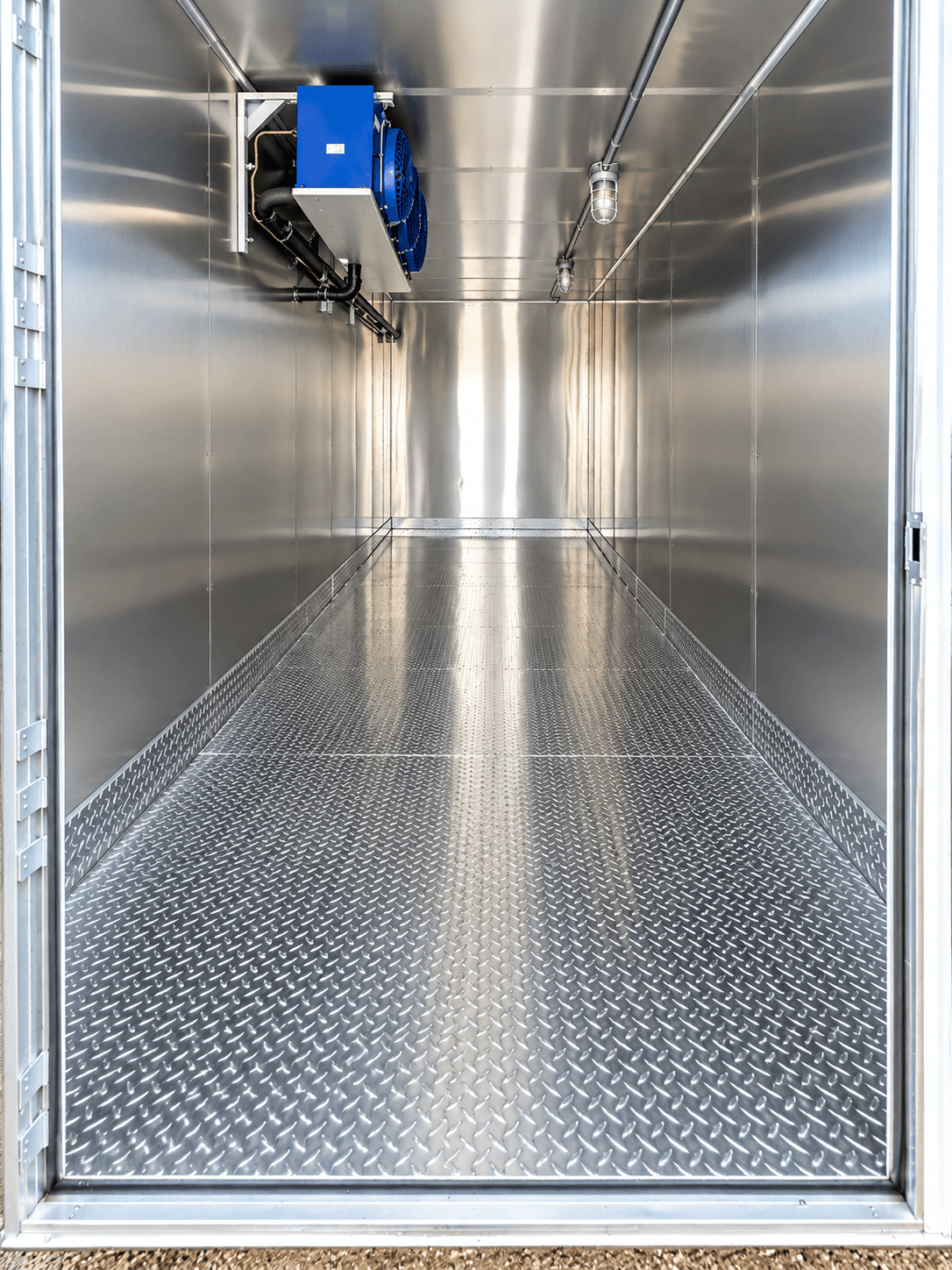
Compare the equipment
These published examples describe named company units. The supplied equipment, configuration and availability are confirmed for your project address.
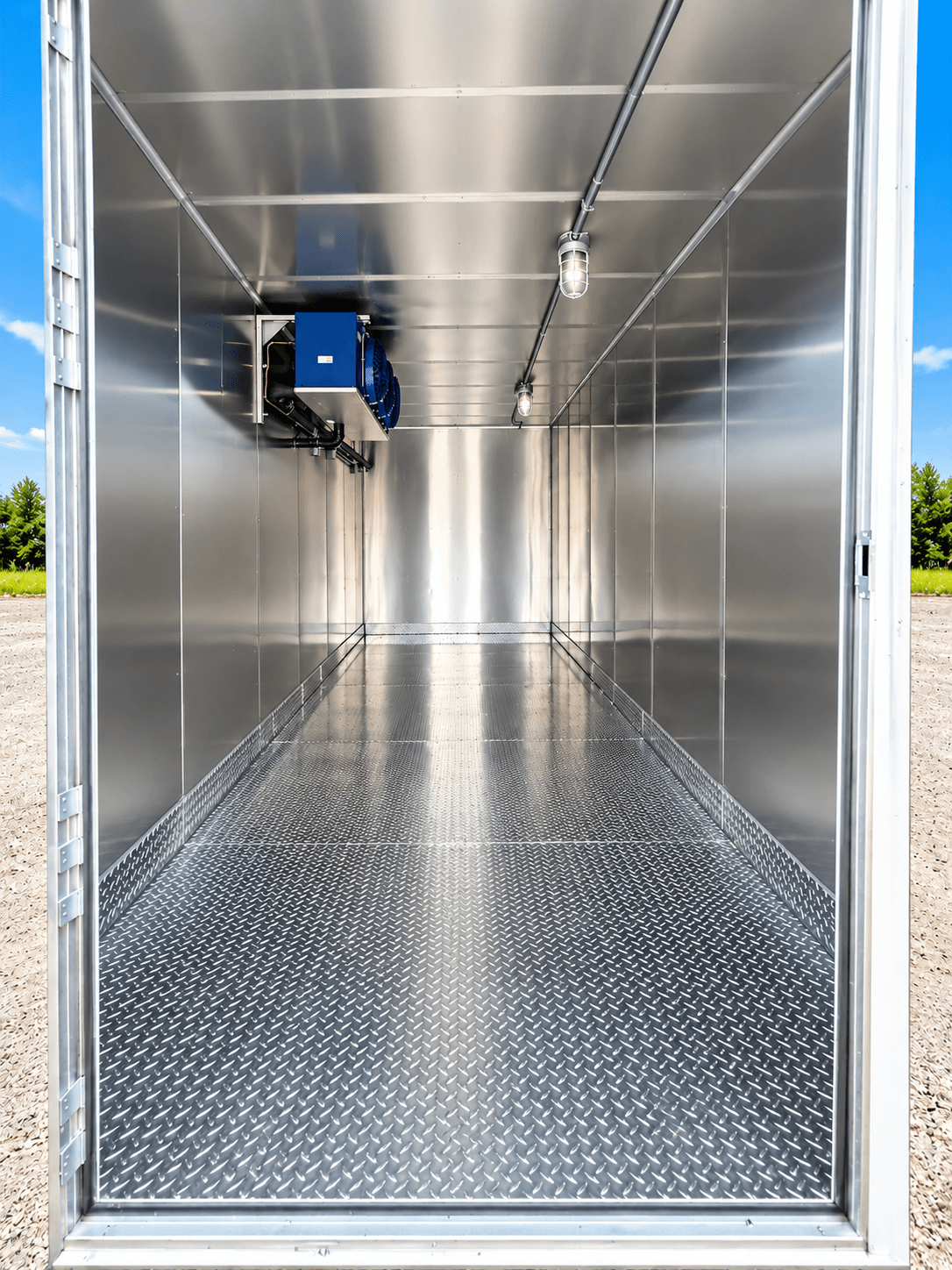
Listed refrigeration trailer equipment: condensing unit, amps panel, lighting.
Equipment records reviewed October 19, 2026. Temperature labels are inventory labels, not verified operating ranges. Nominal length is a model label, not a measure of usable space or site footprint.
NC State’s Pack Essentials partnership page describes bulk produce arriving from its Agroecology Education Farm and surplus food recovered from campus dining. It separately lists shelf-stable groceries delivered by Interfaith Food Shuttle, including canned vegetables, shelf-stable milk and peanut butter. These are different receiving streams. For a comparable campus operation undergoing work, a temporary cold-storage requirement follows the food that needs controlled conditions; it is not the total quantity of groceries delivered to the building.
The 20ft Refrigerated Container is one nominal model to compare when permanent storage closes. Its usable capacity, temperature capability and electrical requirements need confirmation for the offered unit. Bulk ingredients waiting for preparation and supplies ready to pass to another service point create different retrieval patterns. Compare the supplied interior and doorway against packaging and staff movement, with dry groceries kept outside the assumed refrigeration load where appropriate.
BXRT20–1, a named example in the 20ft Refrigerated Trailer guide, lists a condensing unit, amps panel, lighting and 220V single-phase power at 40–60A. Its 32°F inventory label is not a verified operating range. Exact NEMA plug configuration and usable capacity remain unconfirmed. The offered configuration still needs to match the products’ required conditions and the supply at its working position.
Inter-Faith Food Shuttle’s February 26, 2025 grant account reports that Raleigh Dream Center received an electric pallet truck, truck lift gate and freezer. The same account describes refrigerated vehicles supplied to other partner agencies for retail food recovery. These examples distinguish moving donated food from holding it after receipt. A stationary refrigeration rental can provide temporary storage; it does not replace the organization’s collection vehicle or automatically include a lift gate, pallet truck or handling service.
For a comparable food operation, incoming loads need somewhere to wait while staff move smaller quantities into preparation or distribution. A pallet moved as one load and cases retrieved individually need different entrance and turning space. Useful refrigeration capacity is the stock staff can store and reach during that routine, rather than an exterior length or an assumed number of pallets.
For another preparation or service address, continue with Durham or Rocky Mount. Knightdale, Garner and Cary inquiries should identify the premises that actually need the temporary store, even when one buyer coordinates food moving between several locations.
For events spanning different service periods in Raleigh or Cary, North Carolina, the last supplier arrival may occur before staff know which ingredients each preparation team needs. Describe the intended setup and handback sequence in the rental inquiry, including ingredient receiving, preparation activity and responsibility for final collection.
A renovation can leave cooking available while only the cooler closes. Temporary refrigeration then serves the displaced ingredients instead of moving the entire meal operation. Keep working permanent freezer space in the comparison, and include supplier arrivals that overlap with reserve stock. The highest load may occur after the first room closes, when ordinary receiving continues alongside the project.
When preparation moves as well, the 26ft Mobile Kitchen Trailer’s P1 example lists sinks, a prep table, reach-in refrigerator and freezer, and a water heater. Its documented list does not establish cooking appliances. A cooking-equipped model serves a different role from that prep layout or a refrigerated store.
Dishwashing follows reusable items returned from service. A separate dishwashing facility needs a practical scraping, washing and return route, rather than relying on the same doorway staff use to collect ingredients. Cooking, refrigeration and dishwashing can support one food operation while retaining different equipment and connection requirements. DTC1, the named example in the 38ft Conveyor Dishwashing Trailer guide, is a high-temperature conveyor dishwasher with a soil tray, sinks, prep table, racks and water heater. It lists 220V single-phase power at 300A; that is a unit-specific requirement, rather than a standard supply for every temporary facility.
For an emergency walk-in interruption, separate goods needing another store from ingredients that remain in working refrigeration. A person answers rental inquiries 24/7. Repair uncertainty belongs alongside the immediate storage requirement when exploring equipment and delivery coordination.
As permanent rooms reopen, ingredients can return in stages while later supplies remain in temporary cold storage. Keep the unit’s supply and staff approach available until its final stock clears, with collection following the agreed arrangement. Contact our team for Raleigh availability and a complete quote for the actual equipment, working period and transport, whether you need a short rental or a longer lease.
Before you book
That depends on which functions close. Explain whether preparation, cooking and washing remain available when permanent refrigeration is removed. A focused storage rental may address the gap; broader work can require separate facilities reviewed around the complete meal-production routine.
Compare the offered configuration against packaged stock, staff access, available space and the actual connections at the property. Exterior resemblance to the permanent room is not enough. Discuss the loaded working arrangement and what the quote includes for the proposed option.
Use the date when ingredients can leave temporary storage after the permanent arrangement is ready for receiving. That can differ from a building milestone. Include the final transfer in the discussion and confirm the agreed collection terms rather than assuming those events coincide.
These public references inform the planning examples; equipment availability and delivery arrangements are confirmed for your address.
Temporary refrigeration, kitchens and dishwashing can support many kinds of food-service operations. Each setting below starts with its own schedule, stock and site questions, and every project is reviewed individually.
Hotels, restaurants and resorts can plan temporary refrigeration around breakfast, banquet and dinner service when a walk-in cooler fails or a kitchen is refurbished.
Hospital, nursing home and care-facility kitchens can describe meal schedules, delivery times and displaced stock so temporary storage follows the food-service routine.
Municipal, county and public-building food-service teams can outline receiving arrangements, responsible contacts and project dates before a quote is prepared.
Dining facility managers can explain the products displaced, the receiving arrangements and the proposed period, then review availability and terms with our team.
Schools, colleges and universities can plan around term dates, serving windows and campus kitchen renovations so meal service can continue during repairs or construction.
Plant cafeterias and employee dining areas can describe shift patterns and staged building work so temporary cold storage can be reviewed against the working schedule.
Caterers and venues can plan preparation windows, event days and overflow ingredients, and describe how stock moves between storage, the kitchen and service.
Producers, wholesalers and distributors can describe loading, staging and storage needs when a cooler breaks down or demand temporarily exceeds capacity.
These examples describe planning situations. Equipment, availability and terms are confirmed in a project quote.
Cold storage is only one part of a project. These are the questions we work through with you before anything is booked.
Start with refrigerated containers and refrigeration trailers, then add a temporary kitchen or dishwashing trailer when the project needs one, all in a single conversation.
Access, utilities and the intended position are reviewed before delivery is arranged, so the equipment is matched to your site rather than the other way around.
Whether a walk-in cooler failed this morning or a renovation is months away, describe the real situation and plan around the stock, dates and people involved.
Planning guides cover all 50 states and more than 700 cities. Your address is then confirmed for equipment and delivery.
Use the rental calculator for a rate-range estimate and setup amount, then request a project quote that confirms availability, transport and the rental period.