BXRT20–1Refrigerated trailer
- Nominal length
- 20ft
- Listed electrical supply
- 220V · single-phase · 40–60A
- Inventory temperature label
- 32°F
Temporary cold storage in Cary, North Carolina
Cary kitchens and catering teams can plan rental refrigeration around the ingredients they need before, during and after a temporary change. Extra receiving space for a function and an everyday store during refurbishment have different working patterns. Worldwide Refrigerated Container Rental Facilities serves Cary with refrigeration trailer, refrigerated container, cooler and freezer inquiries for commercial customers. Discuss a short-term rental or longer lease for planned work, event preparation or an emergency storage interruption. If cooking or washing also needs another location, include those facilities in the conversation. The quote should follow the products, property and intended operating dates.
Emergency cooler or freezer failure in Cary? A person answers rental inquiries 24/7. Availability and delivery timing are confirmed in your quote.
Plan your rental budget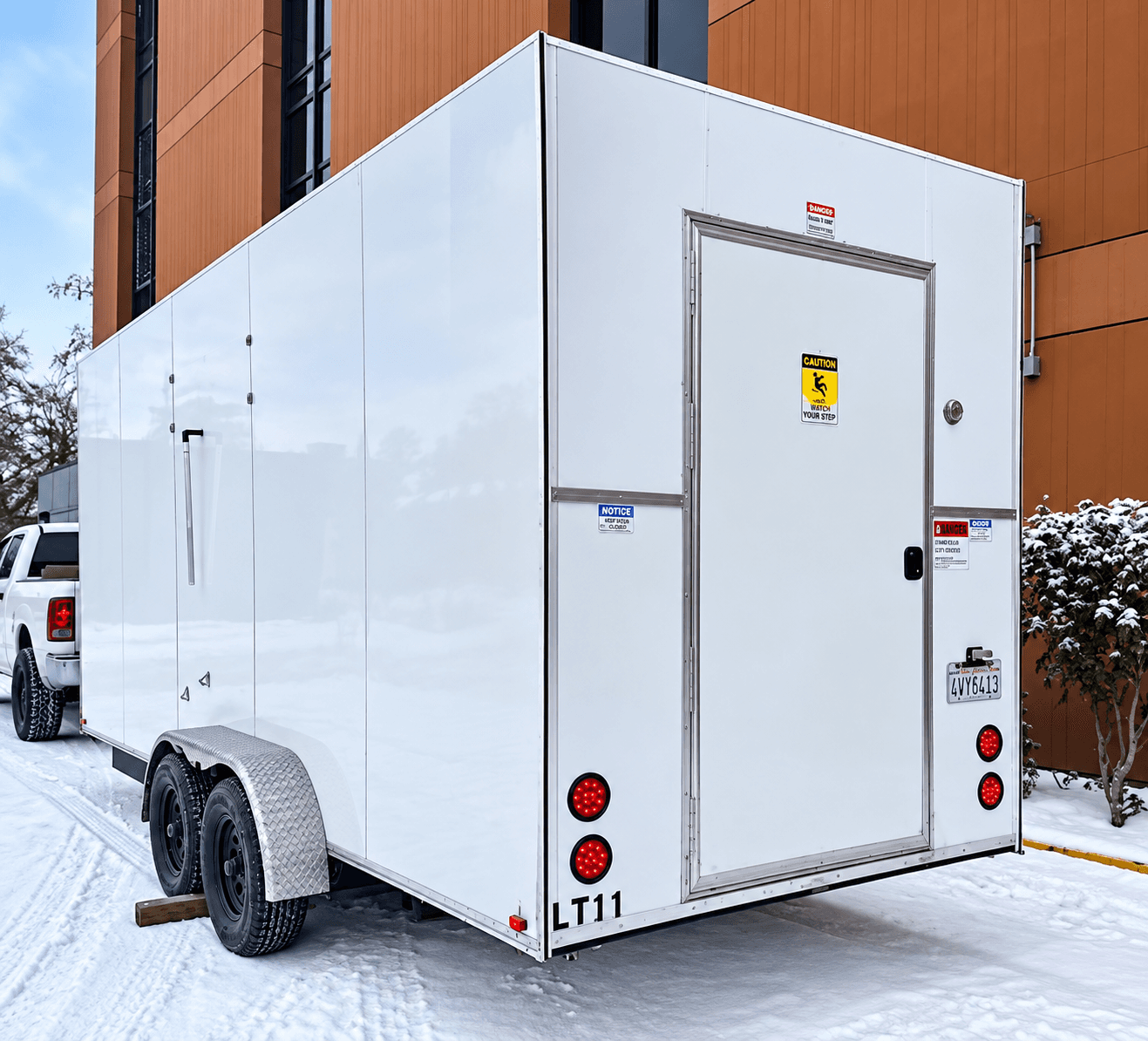
Compare the equipment
These published examples describe named company units. The supplied equipment, configuration and availability are confirmed for your project address.
Listed refrigeration trailer equipment: condensing unit, amps panel, lighting.
Equipment records reviewed October 19, 2026. Temperature labels are inventory labels, not verified operating ranges. Nominal length is a model label, not a measure of usable space or site footprint.
When the commercial walk-in freezer or cooler fails at a catering commissary in Cary, an emergency mobile refrigeration trailer rental can hold the affected stock while the permanent unit is repaired. Tell the team whether you expect to rent for one repair or lease for a longer project, and the options can be compared in the quote. Restaurants and institutional kitchens sometimes pair a rented mobile kitchen with refrigerated storage, adding a dishwashing trailer when dishes still need washing.
Every call about a failed commercial walk-in freezer or refrigeration system is an emergency call, and a person answers rental inquiries 24/7 so the problem can be described at any hour. Calls about a failed walk-in cooler or freezer are answered by a person around the clock, and delivery timing and equipment availability are confirmed once the details are reviewed. If your project is closer to Fayetteville, Pinehurst and Goldsboro, say so when you reach out. Emergency refrigeration rental, trailer leasing and mobile kitchen options are discussed for the actual address rather than the nearest large city.
The North Carolina State Fair in Raleigh drew 998,926 visitors in 2024, the sixth-biggest turnout in its 156-year history, according to Spectrum News. Food distributors in Knightdale, Garner and Chapel Hill can ask about leasing a refrigeration trailer for overflow stock when permanent coolers are full. Hospitality operators in Carrboro can rent mobile refrigeration for an event or lease modular cold storage during a renovation. Refrigerated trailers for rent and portable walk-in coolers hold drinks, produce and prepared food at crowded events, and a refrigeration container suits a longer festival run. Refrigerated trailers for rent, refrigeration containers for lease and walk-in coolers for short-term use are the three questions most callers start with. These are public facts about the area, not a record of company jobs; equipment, availability and delivery are confirmed in the quote.

After Hurricane Helene in September 2024, flooding washed out the main and backup pipes at one of the water treatment plants serving the Asheville area, residents were told to expect dry faucets for days or weeks, and Duke Energy brought in extra crews to restore power to tens of thousands of customers in western North Carolina. If a hospital kitchen in Woodfin, a university dining hall in Weaverville or a distribution center in Fletcher loses its cooler, a portable refrigerated unit can be rented while the repair is scheduled. A grocery or distributor in Hickory can call about emergency refrigeration rental as soon as a walk-in stops holding temperature. A failed commercial walk-in freezer after an outage is an emergency call, and walk-in coolers, walk-in freezers and refrigerated trailers are the first rentals discussed. Onsite temporary facilities can include portable refrigeration, trailers for rent and, if dishes are affected, a dishwashing trailer. When cooking and dish washing stop together, a mobile kitchen, a dishwashing trailer and portable refrigeration can be one request. The context above comes from public sources and does not describe a completed job; availability and delivery are confirmed in the quote.
North Carolina State University’s January 2026 capital projects list shows a $180 million STEM building, Woodson Hall, with a September 14, 2026 date and a $66.25 million Mann Hall renovation with a May 18, 2027 date. Seasonal refits in Selma, Rocky Mount and Nashville can be covered by a lease that starts before demolition and ends after the stock moves back indoors. On long projects, contractors compare a refrigerated trailer lease with a refrigeration container for bulk crew supplies. A walk-in cooler and a walk-in freezer can be rented together when a commercial site needs both. Nothing here assumes available equipment or a delivery time; a person answers rental inquiries 24/7 and the quote confirms the details.
NCDOT’s $1.8 billion I-26 Connector in Asheville has construction under way on both its north and south sections, with the overall project expected to be completed in late 2031. Temporary facilities for a remodel in Charlotte, Concord or Granite Falls usually combine refrigeration, a mobile kitchen for rent and, if dishes are affected, a dishwashing trailer lease. A long-term refrigeration trailer lease keeps supplies cold on site for the whole project, with power and access reviewed before delivery. Dishwashing trailer rentals and warewashing capacity are quoted beside the kitchen and refrigeration when the whole food-service area is affected. Mobile kitchens, dishwashing trailers and refrigerated trailers for rent can be quoted together as temporary facilities. This is published public context, not company work; each request is quoted for its own address and dates.
Refrigeration containers are often chosen for long-term storage, while refrigerated trailers are chosen for short-term emergencies; both can be rented. Temporary facilities can be arranged onsite for an event, a renovation or an emergency, and collected when the permanent kitchen is ready. A portable refrigerated trailer suits most emergency calls, while a refrigeration container fits a longer, more stationary need. Emergency refrigeration, onsite and temporary, is meant to bridge the gap until the commercial walk-in freezer is repaired or replaced.
A commercial walk-in freezer that fails overnight is an emergency, and so is a commercial refrigeration system that stops holding temperature. Short-term or long-term, trailers for rent in Cary are quoted for the address, the stock and the dates. Short-term or long-term, the same refrigerated trailer rental starts from the address, the stock and the dates. Kitchen, dishwashing and refrigeration rentals are separate equipment, and each can be rented short-term or leased long-term.
Dishwashing trailer rentals and kitchen trailer rentals can be quoted alongside refrigerated trailers for rent when the whole kitchen is down. A mobile kitchen trailer for rent can sit beside onsite refrigeration, so cooking and cold storage are planned together. Emergency refrigeration rental, trailer rentals and trailer leasing are all handled through one inquiry, so one call can cover every option. Refrigerated trailers for rent, refrigeration containers for lease and walk-in coolers for short-term use are the three questions most callers start with.
Onsite temporary facilities can include portable refrigeration, a mobile kitchen trailer and, if dishes are affected, a dishwashing trailer. Outdoor walk-in refrigeration can be set up beside the building as temporary facilities, so staff keep working while the permanent walk-in cooler or walk-in freezer is repaired. Emergency refrigeration for commercial kitchens often starts with a portable refrigerated trailer and ends with a longer lease if repairs take time. Emergency refrigeration can be arranged as a refrigerated trailer, a refrigeration container or a portable walk-in cooler, depending on the stock and the site.
Mobile kitchens, dishwashing trailers and refrigerated trailers for rent can be quoted together as temporary facilities. Modular and portable cold storage can be discussed in stages when a site needs more space than one refrigerated trailer provides. A mobile dishwashing trailer and a mobile kitchen trailer are often requested together, with a refrigerated trailer for the stock. Dishwashing and kitchen outages often arrive together, so dishwashing trailer rentals and a mobile kitchen for rent are quoted beside emergency refrigeration.
A dishwashing trailer lease can be added to the same quote when returned dishes also need washing. Portable refrigerated trailers, refrigeration containers and outdoor walk-in refrigeration units can all be discussed for the same emergency.
A Cary event can place its greatest load on refrigeration before any guests arrive. Deliveries may overlap while staff prepare ingredients and permanent cold rooms continue supporting ordinary service. Identify the maximum products present, their packaging and which supplies actually move into the rental. The menu and receiving sequence describe useful capacity more accurately than attendance on its own. If separate suppliers bring products at different times, show the overlap rather than add every order without regard to when ingredients leave storage for preparation.
Decide whether the unit acts as a reserve or supports repeated ingredient retrieval throughout service. A store holding large unopened cases can be used differently from one feeding preparation continually. Ask the team to review the offered entrance and internal arrangement around that work. Explain any handling equipment your employees expect to use, then confirm the equipment and accessories included in the proposal.
If the inquiry concerns refrigeration trailer rentals for events and kitchen projects, compare the plan with the 20ft Refrigerated Trailer guide, which explains a load estimate before choosing a length and floor height for carts and hand trucks.
A caterer organizing a Morrisville function might prepare ingredients in Cary and need only a smaller reserve at the service property. Describe where products remain at each stage and which address needs equipment. Treating the whole operation as one attendance figure can conceal the more useful stock requirement at the receiving kitchen.
Nearby guides can help frame your questions. Raleigh’s guide covers planning during food-service work. For a different working situation, Durham’s guide covers phased food-service work. Use them to prepare questions, not to infer availability or terms for Cary.
A kitchen project in Apex may instead need daily refrigeration while a permanent room closes. For a Holly Springs opening, supplier deliveries can begin before the first customer service. Explain those different working periods in the inquiry so the selected equipment follows the actual storage use, rather than an assumption based on the community or the date public activity begins.
A government or civic food-service manager in Cary or Apex, North Carolina, can describe supplier arrivals alongside the periods when staff collect ingredients for preparation and service. Show where supplies arrive and where employees collect them, with a property representative responsible for reviewing any shared access or placement questions.
Include the venue or property contact when reviewing shared access. Suppliers, staff and other equipment can use an area that appears empty when equipment first arrives. Follow the ingredient path into preparation and consider whether the store's role changes as service progresses. Available connections and the selected configuration need to be discussed together for the proposed position.
For another comparison, the guide for operators in Burlington covers bakery and food-service work, citing the City of Burlington entry “Parks in Progress”. Use it as a prompt for your own questions about timing, access and storage.
If the rental continues through renovation, show any later work that affects access or the receiving routine. A temporary position convenient in the first phase may be needed for construction later. Discuss the intended season as well; North Carolina's generally humid climate and very warm summers are broad context for those site questions, not a substitute for reviewing the property.
Use the first stock arrival to describe the beginning of the requirement. At the end, identify when remaining ingredients can leave and staff can restore normal storage. The public event hours may cover only part of that period. Where another function follows, explain whether stock remains in place or the rental's role changes between services.
Review the full proposal for the equipment, actual use dates, site responsibilities and delivery or collection items. Confirm how schedule changes are handled before relying on extra time. The estimate multiplies the published range by your number of periods; the written quote confirms where in that range the rate falls.
Before you book
Describe the extra ingredients and how they overlap with ordinary stock. Explain which products stay inside and which supplies need temporary space. A clear reserve role can help the equipment discussion focus on the event load without automatically moving the whole working kitchen into the rental.
Explain the washing task and its connection to preparation alongside the refrigeration requirement. Separate facilities should be reviewed around the workflow with their own configurations, connections and quoted scope. A refrigeration request alone does not establish the equipment needed to support other kitchen functions.
Ingredients and supplies may still need refrigeration while employees clear the function and reorganize the normal kitchen. Describe that last stock movement before agreeing the release date. This helps collection planning follow actual equipment use rather than assume it can begin when the final guests leave.
Rent a mobile refrigeration trailer for a breakdown that will be fixed in days; lease it when the permanent cooler or freezer will be out of service for months. Useful details are the address, the quantity of stock, the required temperature and the expected dates. The quote confirms the equipment, the delivery timing and the rental terms for your site.
Commercial customers can ask about refrigerated trailers for rent, refrigeration containers, portable walk-in coolers and walk-in freezers, with onsite delivery coordination. Modular, mobile or portable, the equipment is chosen to fit the work that continues at the site. Walk-in coolers hold chilled stock and walk-in freezers hold frozen stock, so the rental should match whichever one failed. Refrigeration is an emergency need, so describe the failed commercial unit and the stock at risk. The quote confirms availability, delivery and the rental period for the site.
These public references inform the planning examples; equipment availability and delivery arrangements are confirmed for your address.
Temporary refrigeration, kitchens and dishwashing can support many kinds of food-service operations. Each setting below starts with its own schedule, stock and site questions, and every project is reviewed individually.
Hotels, restaurants and resorts can plan temporary refrigeration around breakfast, banquet and dinner service when a walk-in cooler fails or a kitchen is refurbished.
Hospital, nursing home and care-facility kitchens can describe meal schedules, delivery times and displaced stock so temporary storage follows the food-service routine.
Municipal, county and public-building food-service teams can outline receiving arrangements, responsible contacts and project dates before a quote is prepared.
Dining facility managers can explain the products displaced, the receiving arrangements and the proposed period, then review availability and terms with our team.
Schools, colleges and universities can plan around term dates, serving windows and campus kitchen renovations so meal service can continue during repairs or construction.
Plant cafeterias and employee dining areas can describe shift patterns and staged building work so temporary cold storage can be reviewed against the working schedule.
Caterers and venues can plan preparation windows, event days and overflow ingredients, and describe how stock moves between storage, the kitchen and service.
Producers, wholesalers and distributors can describe loading, staging and storage needs when a cooler breaks down or demand temporarily exceeds capacity.
These examples describe planning situations. Equipment, availability and terms are confirmed in a project quote.
Cold storage is only one part of a project. These are the questions we work through with you before anything is booked.
Start with refrigerated containers and refrigeration trailers, then add a temporary kitchen or dishwashing trailer when the project needs one, all in a single conversation.
Access, utilities and the intended position are reviewed before delivery is arranged, so the equipment is matched to your site rather than the other way around.
Whether a walk-in cooler failed this morning or a renovation is months away, describe the real situation and plan around the stock, dates and people involved.
Planning guides cover all 50 states and more than 700 cities. Your address is then confirmed for equipment and delivery.
Use the rental calculator for a rate-range estimate and setup amount, then request a project quote that confirms availability, transport and the rental period.